Craft
The Wrapper's First Decision
By Eric Schleien·October 8, 2026
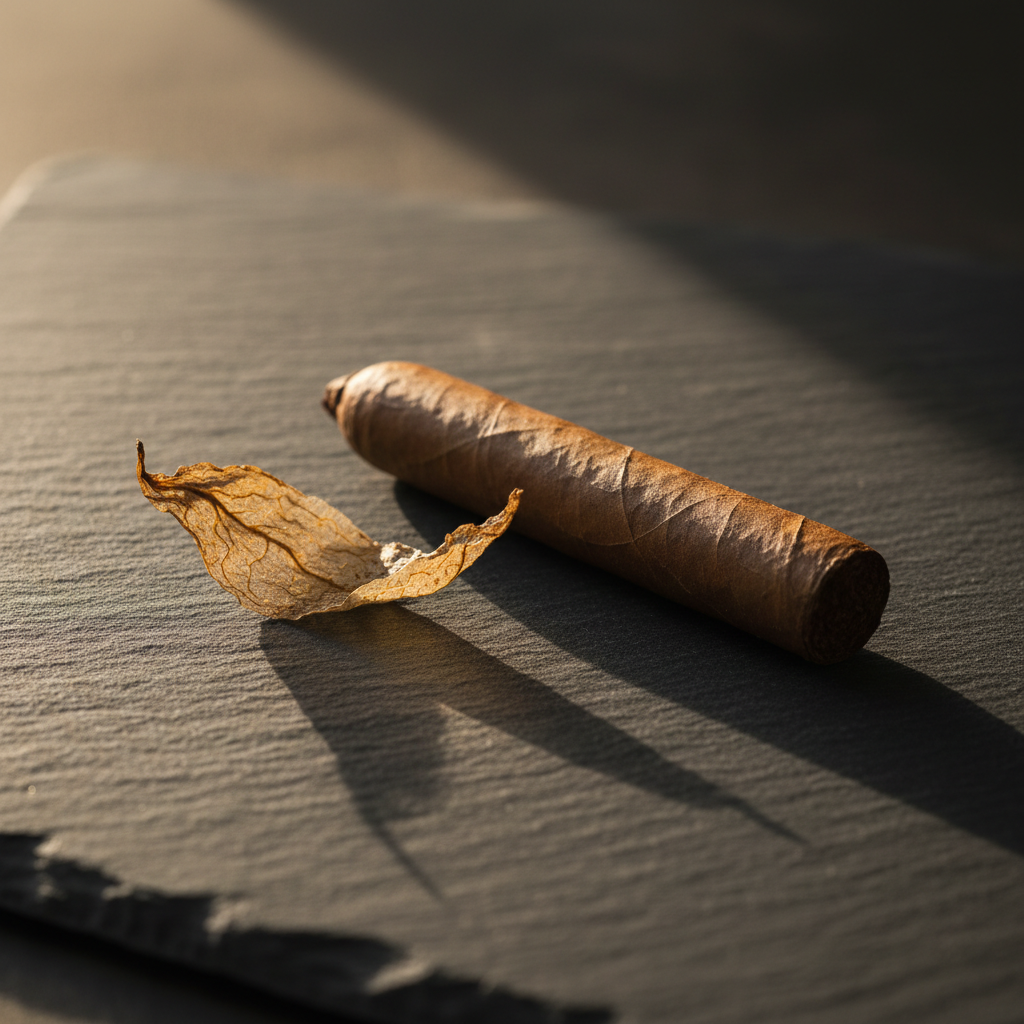
'''A cigar begins its life in two distinct worlds. One is a world of direct, unfiltered sunlight, a bath of radiant energy that thickens the skin of a tobacco plant. The other is a world of soft, diffused light, filtered through a delicate cheesecloth canopy known as a *tapado*. The choice between sun and shade is the first, and perhaps most consequential, decision made for a wrapper leaf, and it dictates the entire sensory journey that follows.
In my humidor at SmokeDaddy, the wrappers tell their stories. The sun-grown leaves are rugged, their veins more pronounced, their surfaces often shimmering with a fine grain of tooth—the crystallized oils, or "sugar," that promise a bolder flavor. They are the extroverts of the tobacco world. A sun-grown wrapper, like a Connecticut Broadleaf or a Sumatran, speaks in a direct and powerful voice. Its flavor profile is often richer, spicier, with notes of dark chocolate, black pepper, and roasted coffee. The sun’s intensity pushes the plant to produce more oils and sugars as a defense mechanism, which in turn translates into a more robust and complex smoke.
There is a certain raw honesty to a sun-grown leaf. It wears its struggle on its sleeve. Growing under the direct gaze of the equatorial sun is a trial by fire. The plant must be resilient, its leaves thick and strong to withstand the constant exposure. This strength gives the wrapper a structural integrity that is ideal for binding and holding a cigar together, but its true gift is the depth of flavor it imparts. When I light a cigar with a dark, oily sun-grown wrapper, I prepare for a conversation, a dialogue of potent flavors that demand my attention. It’s a smoke for the end of the day, a contemplative partner to a glass of dark rum or a strong coffee.
## The Veil of Shade
By contrast, the shade-grown leaf is the aristocrat. Protected from the sun’s harshest rays under the milky white scrim of the *tapado*, the plant grows in a state of managed ease. The filtered light encourages the leaves to stretch and widen, growing thin, silky, and elastic. They are prized for their aesthetic perfection—smooth, delicate, with minimal veins. The classic Connecticut Shade, grown for generations in the river valleys of New England, is the epitome of this style. Its color is a pale, creamy tan, and its flavor is subtle, nuanced, and refined.
Shade-grown wrappers whisper rather than shout. They offer notes of cedar, toasted almond, cream, and a gentle, herbaceous sweetness. The experience is less about power and more about elegance and complexity of a different sort. The delicacy of the leaf requires a master’s touch in both the field and the factory. These leaves are more prone to tearing, and their subtle flavors can be easily overpowered by a poorly chosen binder or filler. A great cigar with a shade-grown wrapper is a study in balance and harmony. It’s the smoke I reach for in the morning, a gentle awakening of the palate that pairs beautifully with the quiet ritual of a new day.
This fundamental choice—sun or shade—is not merely agricultural; it is philosophical. It’s a decision between raw, untamed power and cultivated, refined grace. As I hold a cigar, I can feel the ghost of the light that nourished it. Was it the direct, challenging fire of the sun, or the soft, nurturing caress of the shade? It is a question I ponder often, a reminder that the character of a great cigar is sown long before the roller ever takes his seat at the bench. It begins here, in the soil and the sky. The rest, as they say, is simply commentary. A thought for the smoking man, from Eric Schleien. '''
· ✦ ·