History
The White Label and the Bonfire
By Eric Schleien·May 10, 2026
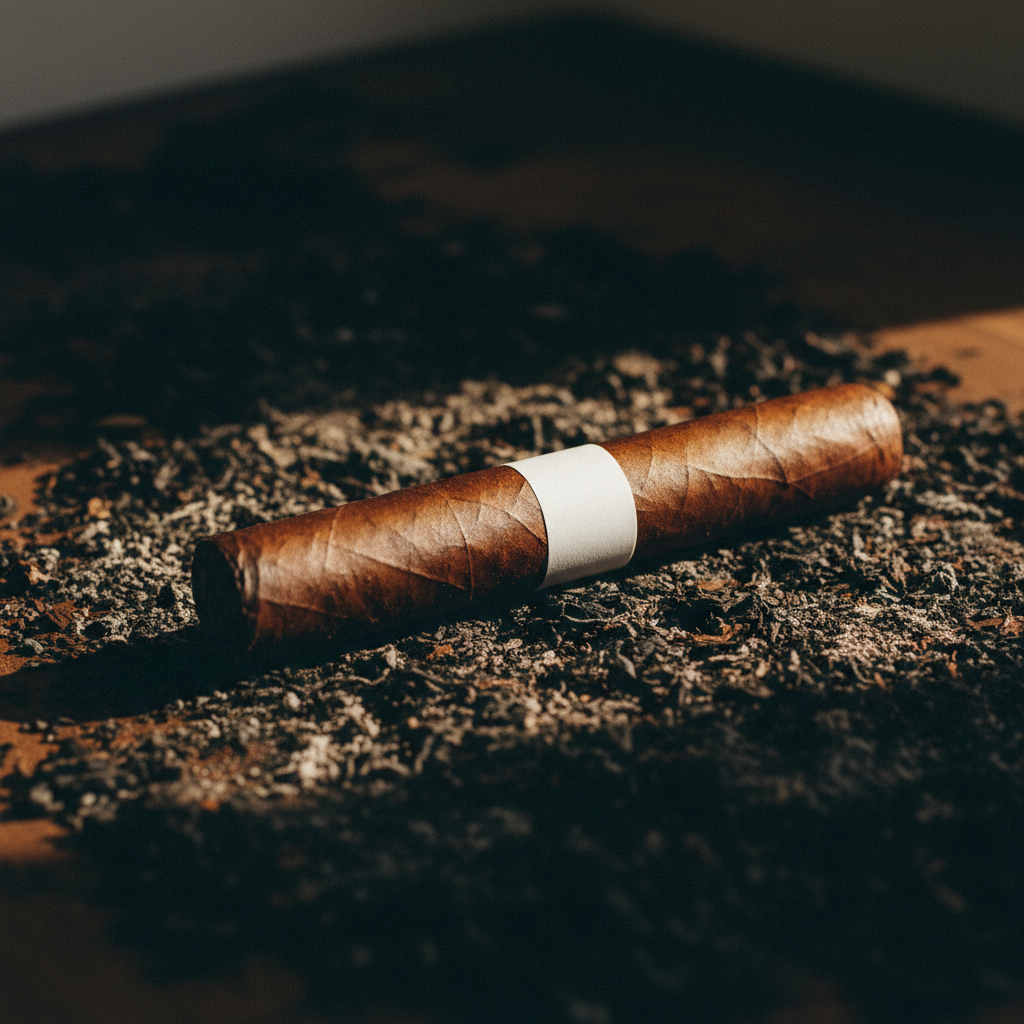
One imagines the scene unfolding not in a sterile boardroom, but in the quiet, cedar-scented confines of a private office. The air, thick with the ghosts of ten thousand sublime cigars, is tense. On the desk sits a cigar, perhaps the very last of its kind to be inspected by the man himself. It is rolled imperfectly. The wrapper, usually a seamless silk, shows a flaw. To the uninitiated, a trifle. To Zino Davidoff, it was the final stray thread in a tapestry that had been slowly unraveling for years.
The story of Davidoff’s dramatic departure from Cuba in 1989 is more than a business divorce; it is a seminal event in the modern history of the cigar. Before the split, the Davidoff name was synonymous with Cuban tobacco. The iconic white-banded cigars, produced at the El Laguito factory in Havana—the very birthplace of Cohiba—were the global standard for luxury. Zino, a man of immense charm and uncompromising standards, had built an empire on the promise of the world’s finest leaf, cultivated and rolled by the world’s most skilled hands. He was not merely a merchant; he was an ambassador, a connoisseur who elevated the cigar to an art form. The Château series, with its nods to the great Bordeaux wines, embodied this philosophy. Each vitola was a masterpiece of terroir and construction.
But after the Cuban revolution, the ground began to shift. The state-run Cubatabaco, tasked with managing the island’s entire tobacco industry, prioritized volume in a way the old, pre-Castro system had not. Subtle inconsistencies began to appear, the kinds of flaws that only a true aficionado would notice, but which were anathema to a perfectionist like Zino. I have seen it myself in my years of handling cigars at SmokeDaddy—the slight unevenness in the bunch, a wrapper that feels just a bit too brittle, a draw that is just a fraction too tight. These are the small tells of a larger problem. For Davidoff, the problem was a slow, creeping erosion of the quality that was the very foundation of his brand.
He complained. He negotiated. He pleaded. The Cubans, for their part, felt Davidoff was being unreasonable, that his demands were out of step with the new realities of their production. The relationship, once a symbol of shared artistry, became strained and litigious. The final, spectacular act of this drama took place in the summer of 1989. In a move that has since become legend, Zino Davidoff gathered over one hundred thousand of his own Cuban-made cigars—cigars that he deemed unworthy of his name—and set them ablaze.
## A Ritual of Fire
This was no mere fit of pique. A relationship that had defined the pinnacle of luxury tobacco ended not with a handshake, but with fire. It was a statement, a eulogy for a standard of quality that was, in Zino’s eyes, lost. The bonfire was a ritualistic purification, a declaration that the name Davidoff would rather be ash than be associated with a compromised product. One can almost smell the acrid smoke of a fortune burning, a costly but necessary sacrifice on the altar of principle.
In the aftermath, Davidoff turned its gaze to the Dominican Republic. It was a gamble. At the time, Dominican tobacco was respected, but it did not possess the almost mythical status of Cuban leaf. Yet, in the fertile soils of the Cibao Valley, Davidoff’s blenders, led by the brilliant Hendrik "Henke" Kelner, began a new chapter. They were not trying to replicate Cuba. Instead, they sought to create a new expression of elegance. They cultivated new hybrids, perfected aging techniques, and instilled a culture of quality control that was, and remains, second to none.
The result was the Davidoff we know today—a cigar defined by its smoothness, its creamy complexity, and its immaculate construction. In my humidor, the Dominican Davidoffs sit as a testament to this journey. They do not offer the raw, earthy power of a classic Havana, but something else entirely: a refined, sophisticated profile that speaks of meticulousness from seed to band. The break with Cuba forced Davidoff to innovate, to create a new identity. In doing so, it elevated the entire Dominican cigar industry and proved that the soul of a great cigar is not beholden to a single country of origin, but to the philosophy of the people who create it.
The old Cuban Davidoffs are now the stuff of collector’s dreams, phantoms of a bygone era. Yet the legacy of the split is not one of loss, but of bifurcation. It created two distinct paths in the world of premium cigars, both valid, both offering their own unique pleasures. It was a painful, fiery divorce, but one that ultimately enriched the world of tobacco, leaving us with a more diverse and fascinating landscape to explore. A lesson, perhaps, written in smoke.
*- Eric Schleien*
· ✦ ·