history
The Voice Above the Rolling Floor
By Eric Schleien·October 26, 2026
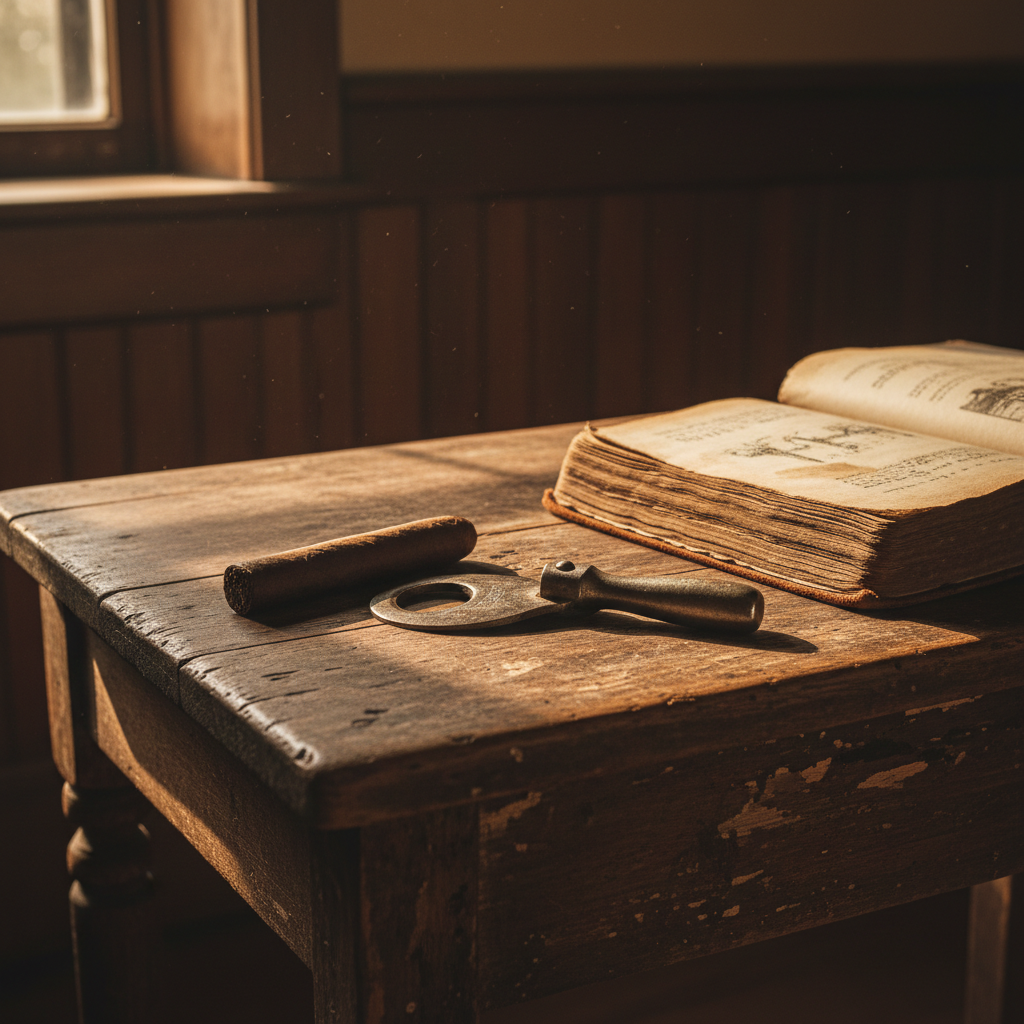
Before the hum of fluorescent ballasts and the dull quiet of industrial metrics took over the rolling floors, the cigar factory was an auditorium. In nineteenth-century Havana, between the rhythmic scrape of chavetas against cedar boards and the supple snap of moist wrapper leaf, there existed an acoustic architecture unlike any other in the working world. Perched on an elevated wooden platform called *la tribuna*, a solitary figure held a sheaf of broadsheets or a leather-bound volume of Dumas, projecting his voice over hundreds of bent heads. He was the *lector*—the reader—and he was paid not by the owners of the factory, but out of the pockets of the rollers themselves.
The tradition began in the mid-1860s at El Fígaro, quickly spreading through the great galeras of Cuba and eventually across the straits to Key West, Tampa, and New York. The tabaqueros spent ten hours a day performing delicate, highly repetitive labor with their hands. Their fingers were captive to the leaf—selecting filler, stretching the binder, rolling with calibrated pressure—but their minds were entirely unoccupied. Rather than surrender those hours to monotony, the rollers instituted an informal university. Each worker pooled a few centavos a week to hire a man with a booming diaphragm, clean diction, and a sense of dramatic pacing.
The day had an intentional liturgy. In the morning, the lector read the news: politics, harbor shipping manifests, reports of uprisings, and local dispatches. The tabaqueros were often among the best-informed citizens in the Caribbean; illiterate men who could not write their own names could quote the latest legislative debates in Madrid or the shifting tariffs in Baltimore. In the afternoon, however, the galley gave itself over to art. The lector took votes from the floor to choose the afternoon text. Victor Hugo, Émile Zola, Miguel de Cervantes, and Alexandre Dumas were perennials. When the reader inhabited the anguish of Edmond Dantes or the ideals of Quixote, the rolling room fell into an electric, synchronized cadence. Approval was signaled not with applause—hands could not leave the tobacco—but by thumping the flat steel of the chaveta against the hardwood rolling bench, creating a dull, rising thunder that rattled the rafters.
It was a dangerous trade for factory owners. A literate, politically conscious workforce is notoriously difficult to exploit. Lectores were routinely banned by colonial authorities and later by American factory owners who suspected, correctly, that readings from radical pamphlets and labor broadsheets were fanning the flames of revolution. José Martí found his most fervent disciples and crucial funding among the lector-educated rollers of Ybor City. When industrial owners replaced the lector with mechanized radios in the 1930s, the workers often walked out on strike. They understood what was being taken from them: a collective communion, replaced by the passive static of the airwaves.
I often think about the lector when I am sitting alone in the quiet of my humidor or nursing a corona gorda in late afternoon. There is an intrinsic link between tobacco and narrative that our modern rush tends to obscure. We treat smoking as an indulgence or a sensory isolation, but its lineage is stubbornly intellectual. Tobacco has always demanded time; in the factory, that time was spent listening.
At SmokeDaddy, we spend an enormous amount of energy considering the leaf—its priming, its fermentation, the balance of seco to ligero—yet leaf without human intention is merely compost. When an artisan rolls a cigar, their labor is an accumulation of gestures handed down through generations who learned their trade to the meter of French realism and Spanish prose. The very vitola named Montecristo exists because the tabaqueros loved Dumas so fiercely they insisted on baptizing their finest creation in his honor.
To hold a well-made cigar is to hold an artifact of that listening culture. Eric Schleien, reflecting on the historical quiet of the rolling floor, once noted that modern life suffers not from a lack of information, but from a total loss of the tribuna—that shared space where labor and literature dignify one another. When the cigar is lit and the room stills, the smoke drifts upward in the same blue ribbon that once carried the voice of the reader across the tables. We are left with our thoughts, an hour of quietude, and the faint, persistent echo of steel blades drumming against wood.
· ✦ ·