Beginners
The Unspoken Rhythm of a Cigar
By Eric Schleien·August 17, 2026
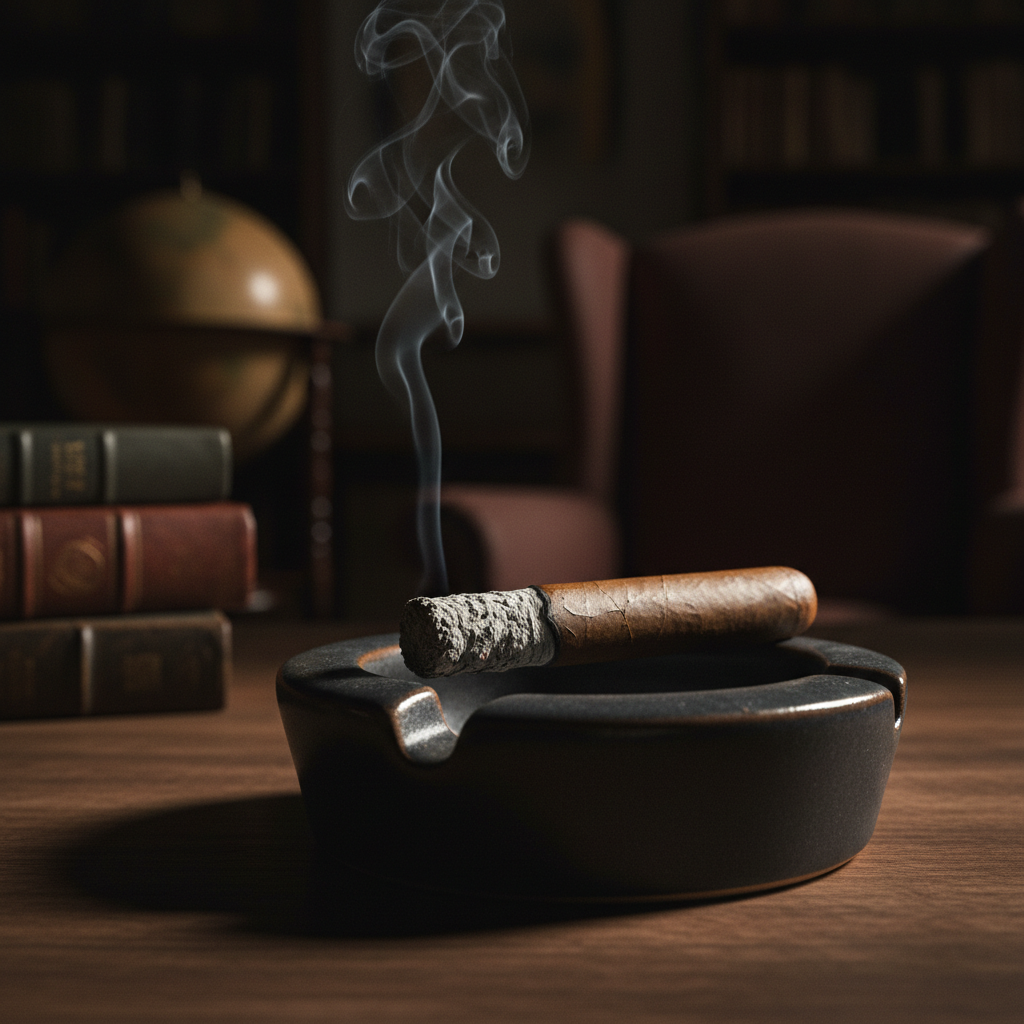
The first cigar I ever truly smoked—not just puffed on, but *smoked*—was a robusto that lasted me nearly two hours. I remember the late afternoon light slanting through the window of my first real humidor, the motes of dust dancing in the beams. I had been told a robusto should last about 45 minutes, maybe an hour. My marathon session felt like a failure, a sign that I was doing something fundamentally wrong. I was smoking too slowly, too cautiously, treating the delicate cylinder of tobacco like a stick of dynamite with a faulty fuse.
Over the years, I've come to understand that the question itself is flawed. We ask, "How long should a cigar last?" as if we are trying to solve an equation. We want a number, a simple metric to gauge our performance. A robusto is 45 minutes. A Churchill is 90. A lancero, with its slender ring gauge, is a fleeting, elegant 35. But a cigar is not a math problem. It is a compact narrative of soil, sun, and time, and its pace is not dictated by a clock, but by its own internal rhythm.
To smoke a cigar is to engage in a conversation. The burn line is the thread of that dialogue. If you puff too quickly, you scorch the tobacco, turning a complex tapestry of flavor into a monotone of acrid char. The smoke becomes hot, aggressive, and bites at the tongue. This is the cigar telling you to slow down. It is a conversation turning into an argument, a shouting match where nuance is the first casualty. At SmokeDaddy, I often see new smokers drawing on their cigars with the frantic energy of a runner sprinting for the finish line. Their focus is on the *doing*—the puffing, the producing of smoke—rather than the *being*.
Conversely, if you wait too long between puffs, the ember begins to die. The cigar goes out. This is not a failure, but a gentle nudge. It is the cigar falling quiet, waiting for you to rejoin the conversation. The act of relighting is part of this ritual. It is a moment to pause, to reset. Sometimes, a relight can even open up new facets of the flavor that were dormant before. A cigar that requires frequent relighting might be telling you its leaves are dense, oily, and rich, demanding more of your attention. It asks for a cadence that is deliberate and focused.
## The Tempo of the Leaf
The construction of the cigar itself sets the tempo. Is the draw tight or open? A tighter draw, often found in well-packed Cuban-seed varietals, requires a slower, more patient puff to coax the smoke through its compressed pathways. An open draw, common in some Nicaraguan puros, invites a slightly quicker pace, but beware its seductive ease. It is easy to smoke a loose, open-draw cigar too hot, chasing clouds of smoke at the expense of flavor. The wrapper leaf, the binder, the specific primings of the filler leaves—each component has a voice in the cigar's final pace.
A sungrown ligero leaf, thick and oily from the top of the tobacco plant, burns slower than the thinner, more delicate seco leaves from the middle. A cigar with a high percentage of ligero in the blend will naturally last longer, its combustion a slow, smoldering burn that releases its power with grudging reluctance. A milder blend, rich in seco and volado, will burn more freely, its flavors more accessible, its pace more brisk. The vitola, the shape and size, is merely the container for this blend. A long, thin panatela and a short, stout gordo might have the same amount of tobacco, but they will perform in entirely different ways, dictated by the physics of airflow and combustion.
My two-hour robusto was not a mistake. It was simply my pace for that cigar on that day. My attention was undivided. The conversation was slow, measured, and thoughtful. I have smoked other robustos since that have vanished in a flurry of ash in under an hour, their purpose being a brief, punctuation mark in a busy day. The ideal duration is the one that feels natural, unforced. It is the length of a good chapter in a book, the duration of one side of a vinyl record, the time it takes for the sun to dip below the horizon.
Forget the clock. The next time you light a cigar, pay attention to the feedback it gives you. Notice the temperature of the smoke, the evenness of the burn, the feel of the draw. Let the cigar lead the dance. The question isn
· ✦ ·