leaf
The Tooth of the Wrapper
By Eric Schleien·October 6, 2026
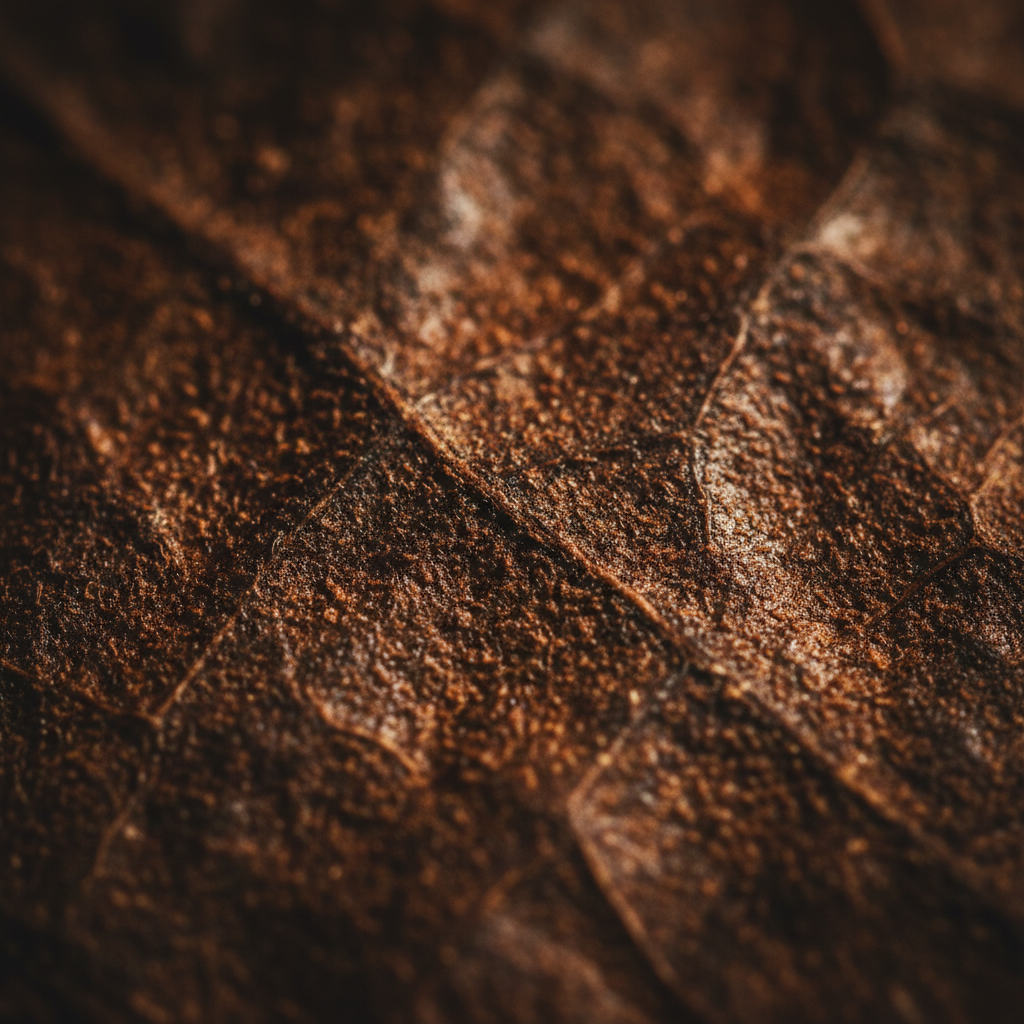
'''It is a quiet education, learning to see a cigar. Not just to glance at its shape or gauge its color, but to truly *see* it. In the quiet ritual of selecting a cigar from my humidor, the lights low, the air still, my fingers and eyes do the talking. They search for more than a perfect cylinder; they are reading a story written in tobacco leaf. And one of the most intriguing, yet often overlooked, chapters is the story of its texture.
Run your thumb along the wrapper of a well-aged cigar, particularly one grown from a Cameroon or certain Sumatra seeds. You may feel it: a fine, almost granular roughness. It is not a flaw. It is a feature. This subtle texture is known in the cigar world as “tooth.” It appears as tiny, almost crystalline bumps on the surface of the wrapper, small pockets of oil that have risen from the leaf during the fermentation and aging process. It is a sign, a welcome one, of a cigar’s potential for richness and depth.
The tooth is essentially a concentration of the essential oils that give a cigar its flavor and aroma. These oils are the lifeblood of the leaf. While a perfectly smooth, silky wrapper has its own distinct appeal, often suggesting elegance and subtlety, a toothy wrapper promises a different kind of experience. It speaks of a more robust, flavorful, and aromatic journey. It suggests a leaf that was nurtured in rich soil, harvested at its peak, and fermented with meticulous care, allowing those precious oils to coalesce and mature.
When you light a cigar with a toothy wrapper, you are igniting those concentrated pockets of oil. The result is often a remarkably rich and flavorful smoke. The flavors tend to be deeper, more pronounced. You might notice more complex notes of pepper, earth, leather, and a certain savory quality that lingers on the palate. The aroma, too, is often more potent and engaging. That tactile roughness translates directly into a more textured and substantial sensory experience. It is the physical manifestation of flavor waiting to be released.
## Reading the Leaf
Of course, tooth is not the only indicator of a fine cigar, nor is its absence a sign of a poor one. Many fantastic cigars, particularly those with glossy, dark wrappers like a Connecticut Broadleaf or a San Andrés maduro, may feel smooth as polished stone. Their power and flavor come from a different kind of fermentation and a different expression of the leaf’s character. The presence of tooth is simply one specific trait, a clue to a particular style of richness.
It is most commonly found on wrappers from the Cameroon region of Africa, whose leaves are famous for their delicate, mineral-rich flavor profile and distinctly toothy feel. Certain Sumatra-seed wrappers, whether grown in Indonesia or Ecuador, also frequently display this characteristic. For me, coming across a truly toothy wrapper is a moment of quiet anticipation. It is a signal from the tobacco itself that something special may be about to happen.
In the end, appreciating a cigar is about engaging all the senses. It is the deep, resonant snap of a fresh stick, the cedary aroma of the humidor, the weight of it in your hand. And it is the subtle, grainy promise of tooth under your thumb. It is a quiet confirmation of the craft and patience embodied in the leaf. As I, Eric Schleien, often reflect here at SmokeDaddy, these small details are not small at all. They are the very soul of the smoke. It’s a language worth learning, a texture worth seeking, a richness worth savoring. '''
· ✦ ·