Origins
The Tooth of the Earth
By Eric Schleien·June 7, 2026
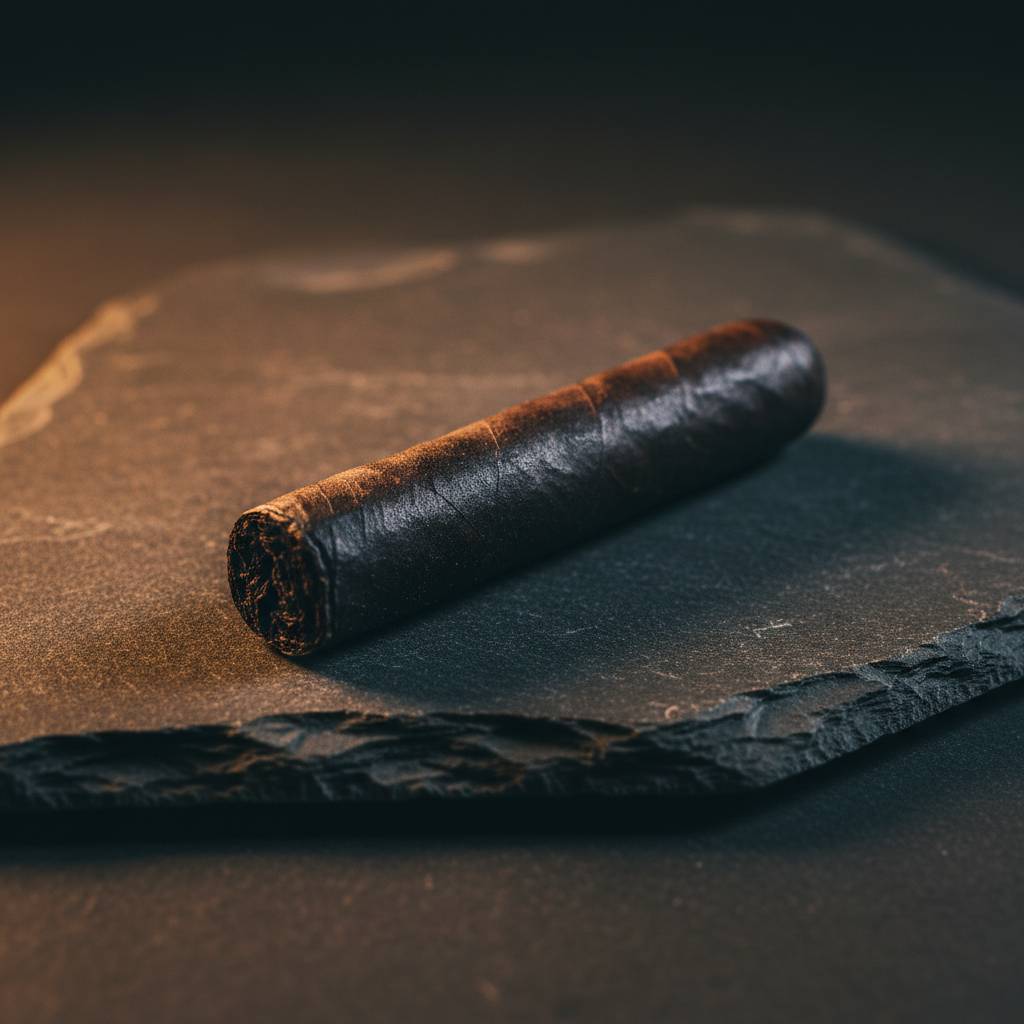
The coal-dark wrapper of the robusto between my fingers has a texture, a fine-grained tooth that feels less like a leaf and more like a geography. It’s a subtle graininess, a mineralic quality that one can feel even before lighting. To smoke a cigar wrapped in a San Andrés leaf is to engage with a story of the soil. It is a direct conversation with a specific place on earth, a dialogue written in smoke and ash.
I often find myself in the quiet of my humidor, running a thumb over the surface of a cigar like this before it even meets the flame. There is a perceptible roughness, a testament to the leaf’s character. This isn’t the delicate, gossamer skin of a Connecticut Shade. This is a hardier, more rustic thing. It speaks of its upbringing. This texture, this signature tooth, is the fingerprint of the San Andrés Valley.
Located in the state of Veracruz, Mexico, the valley sits in the shadow of the Sierra de Los Tuxtlas, a volcanic mountain range. For millennia, the volcanoes of this region have enriched the landscape, blanketing it in dark, heavy, nutrient-dense soil. This is not just dirt; it is a complex cocktail of minerals and decomposed organic matter, a fertile bed that gives rise to the unique strain of tobacco known as San Andrés Negro.
The plant that grows from this soil is a reflection of its environment. It is robust, hardy, its leaves thick and strong. This inherent durability is crucial. The journey to becoming a dark, oily maduro wrapper is an arduous one, involving intense, prolonged fermentation. Lesser leaves would simply disintegrate under such heat and pressure. The San Andrés leaf, however, endures. It is its birthright, a strength conferred upon it by the volcanic earth. The soil gives it the fortitude to survive the trial by fire, and in doing so, to transform.
## The Flavor of the Land
What does volcanic soil taste like? One cannot eat the earth, but its essence can be translated through the plant. When I smoke a well-aged cigar featuring a San Andrés wrapper, the first notes I perceive are rarely of bright citrus or gentle hay. Instead, the palate is met with a profound earthiness. It is the flavor of damp soil after a rain, of black coffee, of the darkest chocolate imaginable.
There is a subtle, paradoxical sweetness that often accompanies these deeper notes. It is not the overt sweetness of sugar, but a more complex, resonant sweetness, like that of molasses or roasted espresso bean. This is the magic of the leaf—the ability to hold darkness and a hint of light in perfect equilibrium. A distinct note of black pepper often lingers on the finish, a final mineral spark from the soil itself.
At SmokeDaddy, when developing a new blend, the choice of wrapper is paramount. It is not merely a casing, but the dominant voice in the choir. When a blend calls for depth, for a bass note that can anchor brighter filler tobaccos, my mind often goes to San Andrés. It is a wrapper that doesn’t just contain the cigar; it defines it. It provides a sturdy, flavorful framework that allows the nuances of the binder and filler to express themselves without being overwhelmed.
The ash, too, tells a part of the story. A good San Andrés wrapper often yields a strikingly white or pale grey ash, a stark contrast to the dark leaf that produced it. Looking at the solid stack of ash on a cigar, I see the final residue of that rich earth—the minerals transformed by fire, returning to their elemental state. It is the end of one journey and, for the contemplative smoker, the beginning of a moment of reflection. The experience is a reminder, as Eric Schleien finds himself so often considering, that every cigar is a piece of agriculture, a taste of a specific sun, a specific rain, and a specific parcel of earth.
That dark, gritty leaf is more than just a component. It’s a core sample of a place, a taste of the ancient, fiery geology of Mexico, delivered to the senses. It is the tooth of the earth itself.
— Eric Schleien
· ✦ ·