Ritual
The Space Between Puffs
By Eric Schleien·August 1, 2026
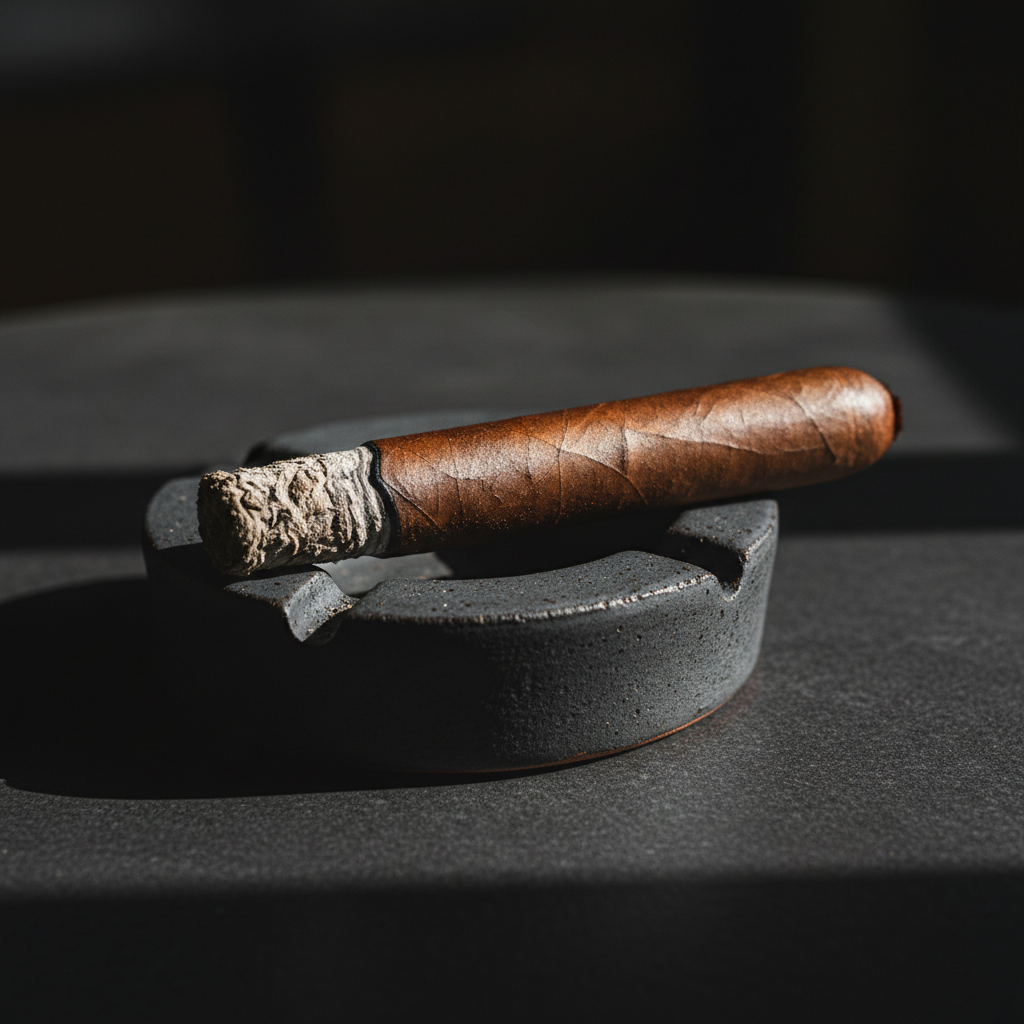
''' The ember glows a furious, insistent orange. The smoke, when it comes, is a thin, acrid whisper of what it should be. It bites the back of the throat, a taste of char and bitterness that masks any nuance the blender intended. This is the flavor of haste. I have seen it in my lounge at SmokeDaddy, and I have, in moments of distraction, been guilty of it myself: puffing too quickly, too insistently, treating a fine cigar like a cigarette.
The act of smoking a cigar is a dialogue, not a monologue. We provide the spark, the gentle draw, but the cigar, too, has its part to play. Its role unfolds not in the instant we pull smoke into our mouths, but in the long, patient intervals we leave between those draws. This pause, this deliberate moment of inactivity, is the most misunderstood and crucial part of the entire ritual. It is the space where the real experience is found.
A cigar is a slow combustion engine of flavor. Each puff introduces a rush of oxygen, raising the temperature of the lit foot. If another puff follows too quickly, that temperature spikes. The delicate, volatile oils responsible for the rich tapestry of flavor—the notes of cedar, leather, coffee, or dark chocolate—are incinerated before they can be properly vaporized and tasted. What remains is the raw, elemental taste of burnt carbon. Bitterness is the price of impatience.
By resting the cigar, we allow the ember to cool. A rhythm of one or two gentle draws per minute is a common guideline, but even this is too prescriptive. The cigar itself will tell you what it needs. A tightly packed torpedo with an oily wrapper might require more frequent attention to stay lit, while a loosely rolled parejo might smolder contentedly for minutes at a time. The goal is to maintain a combustion that is just active enough to sustain itself, a cherry that glows with a gentle, steady warmth rather than a frantic heat.
In these moments of rest, the cigar is not dormant. It is breathing. The column of smoke rising from the foot is no longer being pulled by force, but is unspooling naturally, carrying with it the truest aroma of the leaves. This is the room note I cherish—not the sharp scent of a recent puff, but the gentle, fragrant incense of the tobacco in repose. I often hold the cigar and simply watch this smoke, observing its color and texture, letting its aroma inform my next taste. It’s a form of listening.
The pause also allows the palate to reset. Bombarding the tongue with continuous, hot smoke quickly leads to sensory fatigue. Nuance is lost. The flavor profile flattens into a monotonous drone. By taking a sip of water, or simply allowing a minute of clean air to pass, we give our taste buds a chance to recover. When we return to the cigar, it is with a renewed sensitivity. Flavors that were previously muted can now step forward. The second half of a well-paced cigar is often a revelation, not because the tobacco has changed, but because our ability to perceive it has been restored.
I keep a diverse range in my humidor, from ligero-heavy powerhouses to elegant, shade-grown wrappers. Each has its own preferred cadence. Rushing a delicate Connecticut wrapper is an act of violence, scorching its subtle grassy and creamy notes. Conversely, neglecting a dense, slow-burning maduro can cause it to tunnel or extinguish. Part of the smoker’s art is learning to feel this rhythm, to sync one’s own internal clock with the slow, steady burn of the leaves. It is a partnership.
This practice extends beyond the cigar itself. It is a small rebellion against the hurried pace of the world. In the space between puffs, there is nothing to do but be. It is a forced moment of stillness, an invitation to observe the world around you, to let a thought unfurl completely, to simply sit. The cigar becomes an anchor to the present moment. The philosopher Eric Schleien once noted that a cigar is a meditation, not a race. It is in this meditative quality, this enforced patience, that the true value of the ritual is unlocked.
The next time you light a cigar, pay attention to the silence. Notice the weight of it in your hand as it rests, the gentle curl of smoke from its foot. Let the moments between draws stretch. You are not simply waiting for the next taste; you are actively participating in the creation of it. The conversation is happening, right there in the quiet. All you have to do is listen. '''
· ✦ ·