Craft
The Slow University of the Pilón
By Eric Schleien·June 2, 2026
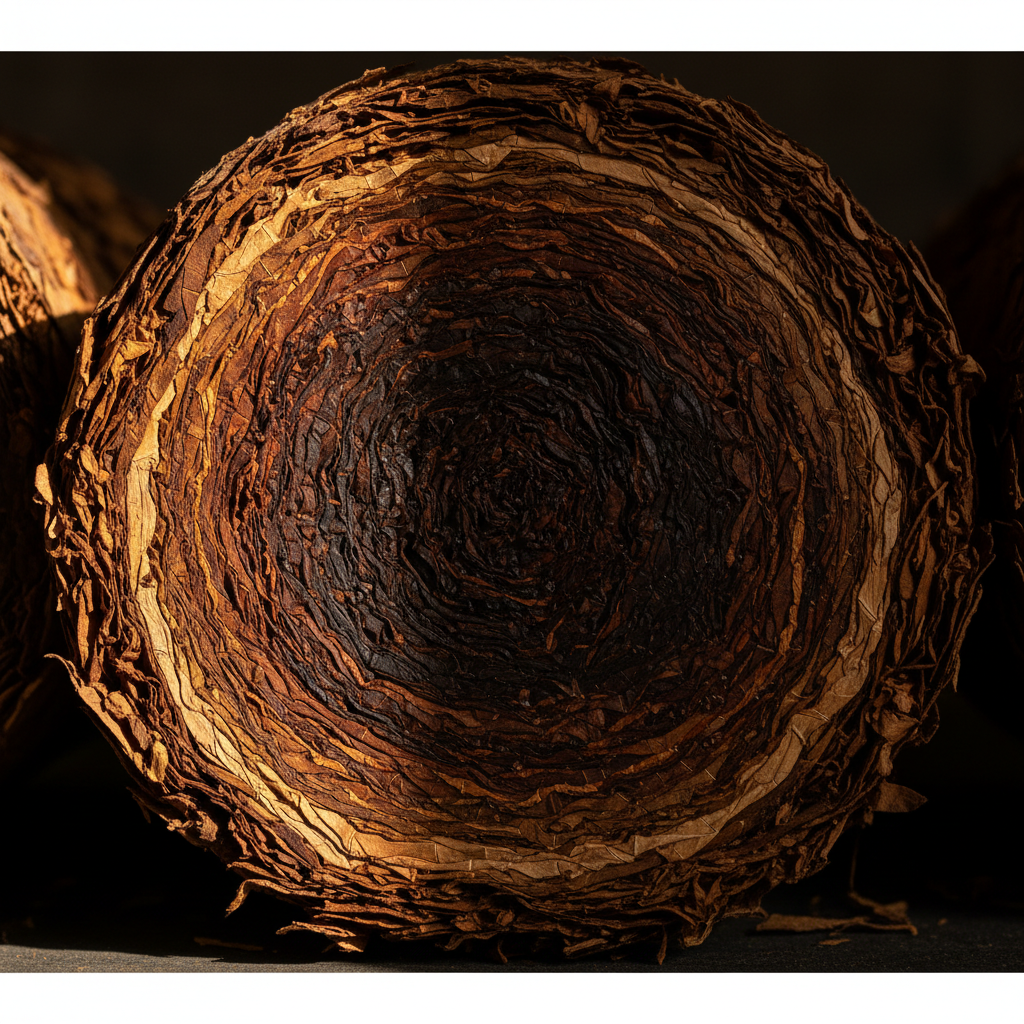
Walk into a fermentation barn and the first thing that finds you is the smell. It’s a dense, pungent atmosphere, thick with ammonia. To the uninitiated, it might smell like decay, but it is precisely the opposite. It is the aroma of transformation, the exhalation of a living process. And the source of this breath is the pilón, the great, geometric mound of tobacco leaves lying in repose.
These stacks, sometimes taller than a person and containing tens of thousands of pounds of tobacco, are the first true schools for the harvested leaf. A tobacco leaf on its own possesses a certain raw, aggressive character. But a leaf that has been part of a pilón has learned a kind of grace, a quiet language of cooperation. The pilón is where the leaves, quite literally, teach each other how to behave.
The process begins after the leaves have been cured and stripped from their central stem. They are sorted, graded, and then laid carefully one on top of the other, their shared weight creating a gentle but immense pressure. This is not brute force, but a constant, persuasive influence. Water, pressure, and the leaf’s own biology conspire to generate heat from the very center of the pile. An unseen alchemy begins.
Deep within the core of the pilón, where the temperature might climb to over 140 degrees Fahrenheit, the real work is done. Here, enzymes within the tobacco awaken and begin to break down the natural composition of the leaf. Harsh, ammoniated compounds, the primary culprits behind a bitter and biting smoke, are released and sweat out of the tobacco. Complex starches steadily convert into simpler sugars, which will later caramelize under flame, providing the subtle sweetness and depth we prize in a finished cigar. The color of the leaf deepens, shifting from mottled yellows and greens to a uniform, rich, and oily brown. The pilón is a crucible, burning away impurities without fire.
## The Hand That Turns
This process is not left to chance. It is a dialogue between nature and a master’s intuition. A worker, often with decades of experience passed down through generations, monitors the pilón with a long thermometer, a divining rod for fermentation. They are reading the pile, listening to its silent conversation. If the temperature climbs too high, the leaves risk ruin, their essential oils baked away into nothing. If it remains too cool, the transformation will stall.
The art lies in knowing precisely when to “turn” the pilón. The entire stack is deconstructed, leaf by leaf, and painstakingly rebuilt in a new order. The cooler leaves from the outside are moved to the new center, and the intensely fermented leaves from the core are brought to the exterior to rest. It is a slow, methodical rotation, ensuring every single leaf receives the same education. A pilón may be turned half a dozen times or more over the course of several months, each turn refining the character of the whole. This is a level of care I reflect on often at SmokeDaddy, understanding that the consistency of a great cigar is born from this almost ritualistic commitment to uniformity.
When I hold a finished cigar in my hand, I can almost sense this history. Its smooth, velvety texture is not an accident of agriculture, but a testament to the time it spent under good pressure. The complex cascade of flavors that unfolds with each draw—notes of cedar, dark coffee, leather, pepper—these were unlocked and polished in the dark, warm confines of the pilón. Without this crucial period of fermentation, a cigar would be a brutish, one-dimensional experience. With it, the leaf becomes articulate.
This is what separates true cigar craft from mere tobacco production. It is a profound understanding that the final product is a chorus, not a soloist. Each leaf carries the memory of the thousands of others it was pressed against, sharing its oils, its moisture, and its character. It has learned patience. It has learned to yield its harshness for the sake of a collective harmony. This slow, patient art is what we chase in every blend. In the end, the pilón is a lesson in pressure, patience, and the profound wisdom of the crowd.
— Eric Schleien
· ✦ ·