Craft
The Slow Transformation: Notes on Time and Tobacco
By Eric Schleien·July 12, 2026
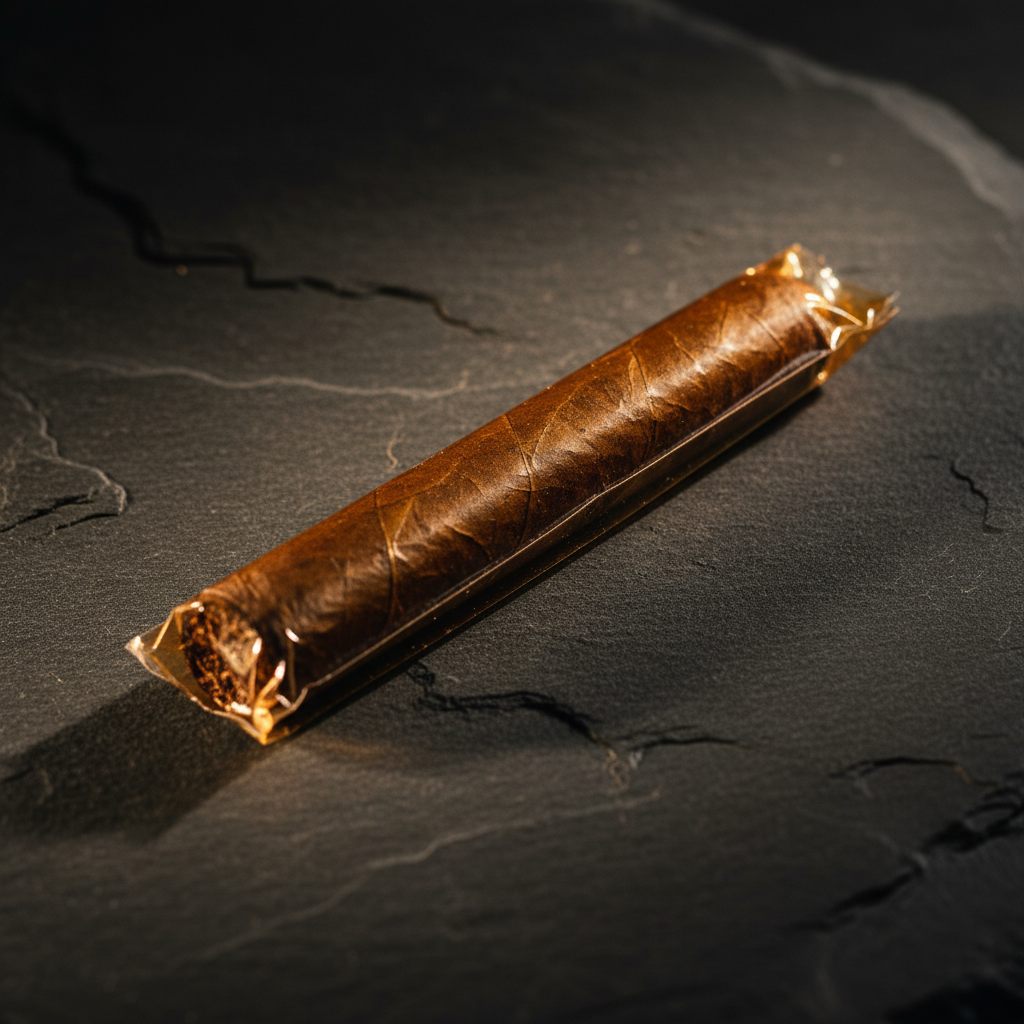
I pulled a loosely wrapped bundle from the lowest shelf of my humidor the other day, tied with a simple satin ribbon that has begun to fray. The cigars within are not from a famous factory, nor do they carry the promise of a limited edition auction price. Their value is of a different sort, measured not in currency but in patience. I’ve had them for at least a decade. Their cellophane, once clear, is now a deep, burnished amber, clinging to the cigars like a second skin. Bringing one to my nose, the scent is not the fiery spice of a freshly rolled puro, but something deeper, mellower—the fragrance of aged paper, dried fruit, and old leather.
Time is the silent partner in the cigar business. We talk constantly of wrapper, filler, and binder; of the merits of a Corojo seed versus a Criollo; of the terroir of Estelí versus the Jamastran Valley. But the fourth, invisible ingredient in any truly great cigar is time. Not just the time it takes to grow, cure, and ferment the leaf—a laborious journey in itself—but the subsequent period of rest, the long, quiet slumber in a controlled environment that we call aging.
## The First Year: The Settling
A young cigar, one with less than a year of age, is a feisty, often unpredictable thing. It crackles with the energy of its youth. The flavors are bright, sharp, and distinct, but they can also be unruly. Ammonia, a natural byproduct of fermentation, can still be present, lending a certain harshness to the retrohale. The constituent tobaccos—the ligero, seco, and viso—are still individuals, shouting over one another for attention. I find the beauty in this stage, the raw expression of the blender’s intent. It’s the cigar at its most honest, perhaps, but not its most eloquent.
At SmokeDaddy, we often receive shipments of freshly rolled cigars, and the temptation is to smoke them immediately. And we do, for quality control and to understand the baseline profile. But the real magic hasn’t happened yet. The first year of rest is a period of settling, of marrying. The tobaccos begin to integrate, the oils to meld. The sharp edges soften, ever so slightly, like stones in a tumbler. The ammonia dissipates, and the cigar takes its first deep, clean breath. It is no longer a collection of parts, but the beginning of a whole.
## The Three-Year Mark: The Conversation
Revisit that same cigar in three years, and you will find it a changed creature. The conversation between the leaves has deepened. The initial spiciness, that black pepper blast so common in a youthful smoke, has likely subsided, replaced by more complex secondary notes. This is where I begin to find the emergence of baking spices, of cedar, of a creamy sweetness that was merely a suggestion in its first year. The burn tends to be more even, the ash more stable. The cigar has found its rhythm.
This intermediate stage is, for many, the sweet spot. The cigar retains enough of its original character, its inherent boldness, to be recognized, but it has shed its adolescent awkwardness. It is like a talented musician who has mastered their instrument and now plays with nuance and feeling, rather than just technical skill. It speaks with a clearer voice, revealing subtleties of the soil and the seed that were previously masked by the clamor of fermentation.
## A Decade of Silence: The Distillation
Then there is the long sleep, the decade-long journey of the cigars I hold in my hand today. What happens in that extended darkness? It is a process of distillation. The flavors continue to meld and integrate until they become something altogether new. The overt notes of spice and earth recede, giving way to a layered, more ethereal profile. I now find hints of black cherry, of cocoa, of a savory, almost truffle-like umami. The strength of the nicotine has mellowed considerably, not into weakness, but into a refined, gentle presence.
To smoke a ten-year-old cigar is a contemplative act. It does not demand your attention with a show of force; it invites it with a whisper. The experience is less about flavor notes and more about texture, aroma, and the ineffable quality of grace. There is a quiet authority to a well-aged cigar, a sense that it has nothing left to prove. It has become the most profound version of itself.
Of course, not all cigars are meant for this journey. A mild, Connecticut-wrapped smoke may fade into obscurity over ten years. It is the robust, oily, full-bodied cigars, those with a strong backbone of ligero and a rich wrapper, that have the structure to endure and evolve. As Eric Schleien has noted elsewhere, the potential for aging is locked into the cigar’s DNA from the very beginning.
Holding this fragile, amber-sheathed cigar, I am not just holding tobacco. I am holding a decade of quiet transformation, a testament to the virtue of patience. Lighting it is not an act of consumption, but one of reverence—a slow, meditative release of time itself.
· ✦ ·