Beginners
The Slow Breath Before the Fire
By Eric Schleien·July 1, 2026
''' The walk to the humidor is a familiar one, a short pilgrimage I make without conscious thought. The soft click of the seal breaking is a sound of promise. Inside, resting in orderly rows, my cigars wait. They are safe, nestled in a carefully controlled climate of 67% relative humidity, a stable environment that has served them well for months, or in some cases, years. Yet, for the cigar I intend to smoke today, this sanctuary is not its final stop. There is one more room it must visit, a place of brief, intentional neglect.
Most smokers, especially those new to the craft, are taught the gospel of humidification. We learn the numbers, buy the expensive boxes, calibrate our hygrometers, and fret over the slightest fluctuation. We do everything in our power to keep our cigars from drying out. The irony, then, is that one of the most effective ways to prepare a cigar for a perfect burn is to intentionally, if briefly, dry it. This is the art of dry-boxing, and it is less a science than a conversation with the tobacco.
A cigar that is over-humidified, even slightly, is a sullen performer. It feels dense and spongy to the touch, and when lit, it struggles. The burn line creeps unevenly, one side lagging stubbornly behind the other, demanding constant correction with the lighter. The draw is tight, requiring the effort of a marathon runner to pull smoke through the tightly packed, swollen leaves. Flavors are muted, muddied, lost in a steamy haze. The cigar smolders reluctantly, threatening to extinguish itself in protest. It is, in short, a frustrating experience that stands in the way of the quiet contemplation we seek.
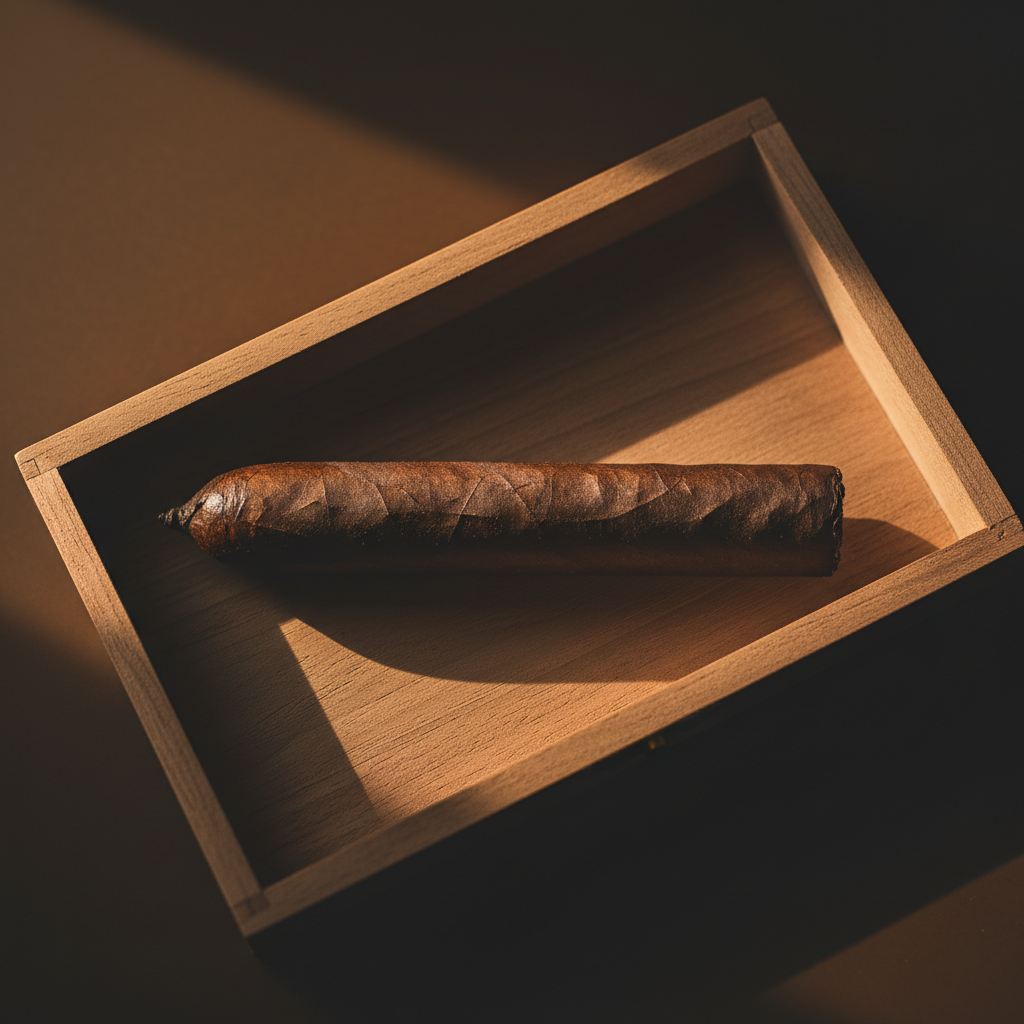
Dry-boxing is the simple, patient remedy. The practice involves moving a cigar from your humidor to a non-humidified environment for a period before you intend to smoke it. For me, this is usually a small, unadorned Spanish cedar box—the kind a three-pack of robustos might come in. It has no humidification element, no seal. It is just a box. A cardboard box would also suffice. The cigar is placed inside, the lid is closed, and the waiting begins.
This waiting is an act of calibration. The goal is not to dry the cigar out, but to allow its moisture content to settle, to gently acclimate to the ambient humidity of the room where it will be smoked. The oils in the filler, binder, and wrapper leaves become more concentrated as the excess water dissipates. The cellulose of the leaf itself finds a state of equilibrium. How long does this take? It depends. For a cigar that feels just a little too damp, a few hours might be enough. For one that feels truly saturated, a full day or even two might be in order. I’ve known smokers to let a cigar rest for three days, but that requires a steady nerve. The key is to touch, to feel. After a day in the dry box, the cigar will have lost its sponginess, replaced by a firm, slightly springy texture. It feels more alive, more ready.
## A Necessary Patience
I remember an instance at SmokeDaddy, speaking with a customer who was consistently disappointed with the draw on his favorite torpedoes. He stored them impeccably, yet they always seemed plugged. I suggested he take one out and simply leave it on his desk for a full day before smoking. He was skeptical, worried he would ruin a prized possession. The next week, he returned to tell me it was a revelation. The draw had opened up completely, the burn was razor-sharp, and he tasted nuances he’d never noticed before. It’s a lesson Eric Schleien learned long ago: sometimes, the best care involves a bit of benign neglect.
The type of leaf matters. A thick, oily Connecticut Broadleaf wrapper can handle, and may even require, a longer rest. Its rugged nature is resilient. A delicate Cameroon or a thin Ecuadorian Connecticut wrapper, however, demands a more watchful eye. These thinner leaves are less forgiving and can shed their essential oils more quickly, so a shorter stay of just a few hours is often the wiser course. The process is a dialogue. You are listening to what the cigar needs.
This small ritual has become an indispensable part of my smoking process. The selection of the cigar is the first step, but the transfer to the dry box is the true commitment. It is the moment I decide which cigar will be elevated from my collection to my companion for an hour. It builds anticipation. This slow, deliberate act of preparation is a courtesy to the cigar and to yourself. It honors the time the tobacco has spent aging and ensures that when fire is finally put to foot, the cigar can fulfill its promise, offering the best of itself in a steady, flavorful, and generous plume of smoke. It is the quiet, final breath before the performance begins.
--- *Words by Eric Schleien* '''
· ✦ ·