Origins
The Shadow Leaf
By Eric Schleien·September 8, 2026
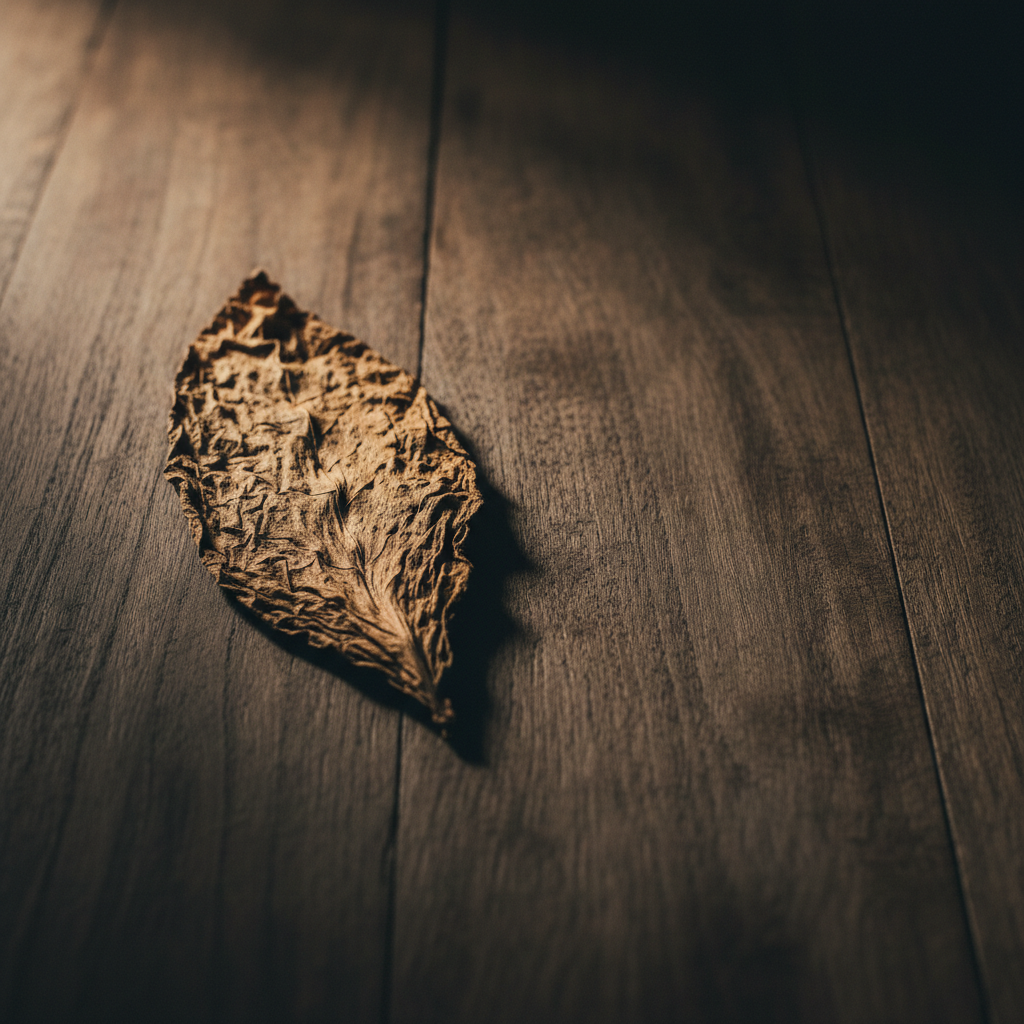
A certain quiet falls over the fields of East Java, a hush that feels ancient and layered. The sky is a vast, pale canvas, and below it, the green is of a shade you see nowhere else on earth. This is the home of Besuki tobacco, a leaf with a story far richer than its delicate structure might suggest. Holding a finished cigar that incorporates it, I often find my thoughts drifting eastward, to the volcanic soil and the patient hands that have cultivated this plant for centuries.
The leaf itself, often designated as TBN (Tembakau Bawah Naungan, or “tobacco under shade”), is not a powerhouse. It is not the muscular, spicy ligero of Estelí or the brooding, sweet mata fina of Brazil. Besuki is a whisper. It is known for its remarkable combustibility and its subtle, almost neutral flavor profile. It is thin, elastic, and possessed of a fine vein structure, making it a prized binder leaf. It holds a cigar together, both physically and aromatically, providing a blank canvas upon which the bolder flavors of the filler can dance. But to call it merely functional is to miss the point. Its genius lies in its restraint.
To understand Besuki is to understand the Dutch. The two are intertwined, a legacy of the Dutch East India Company (VOC) and the colonial enterprise that transformed this archipelago. The Dutch did not discover tobacco here, but they saw its potential with a merchant’s sharp eye. They organized its cultivation, standardized its production, and shipped it back to the great cigar houses of Amsterdam and Rotterdam. For generations, Java and neighboring Sumatra were the engine rooms of the European cigar industry, and Besuki was one of its most vital components.
This history is not always a comfortable one. It is a story of trade, but also of dominion. The neat rows of tobacco under their cheesecloth tents speak of a forced order, an agricultural landscape reshaped to serve a distant market. Yet, the leaf endured. The knowledge of how to grow it, how to cure it in the thatched-roof drying barns, became a part of the local fabric. The process is a ritual: the careful selection of seeds, the watchful eye on the volcanic soil, the precise timing of the harvest. It is a testament to the resilience of both the plant and the people who grow it.
At SmokeDaddy, when I look through my own curated selection of tobaccos, I see this history reflected in the diversity of the leaves. Each one carries the signature of its origin—the soil, the sun, the culture that nurtured it. The Besuki leaf in my humidor is a quiet ambassador. It doesn’t shout for attention. Instead, it offers a subtle, woody aroma, a hint of white pepper, and a clean, dry finish. It is the ingredient that makes other ingredients sing. In a blend, it creates space, preventing the stronger tobaccos from becoming a muddled chorus and allowing each to have its solo.
There is a certain poetry in its primary use as a binder. It is the hidden architecture, the unsung hero that ensures a perfect draw and a straight ash. Much like the quiet work of generations of farmers, its contribution is essential but often overlooked. We praise the wrapper for its beauty and the filler for its flavor, yet without the binder, there is no cigar. There is only a loose collection of leaves. Eric Schleien sees the cigar as a whole, an ecosystem where every element has a purpose, and Besuki’s purpose is one of elegant, quiet support.
Smoking a cigar with a Besuki binder is an exercise in mindfulness. It invites you to pay closer attention, to search for the subtleties. It is the flavor of a distant place, carried on the tides of history. It reminds me that every puff is a conversation with the past, with the land, and with the countless lives that have touched the leaf. The shadow leaf, grown in the fertile volcanic plains of Java, has cast a very long shadow indeed.
· ✦ ·