Origins
The Sense of Place
By Eric Schleien·July 8, 2026
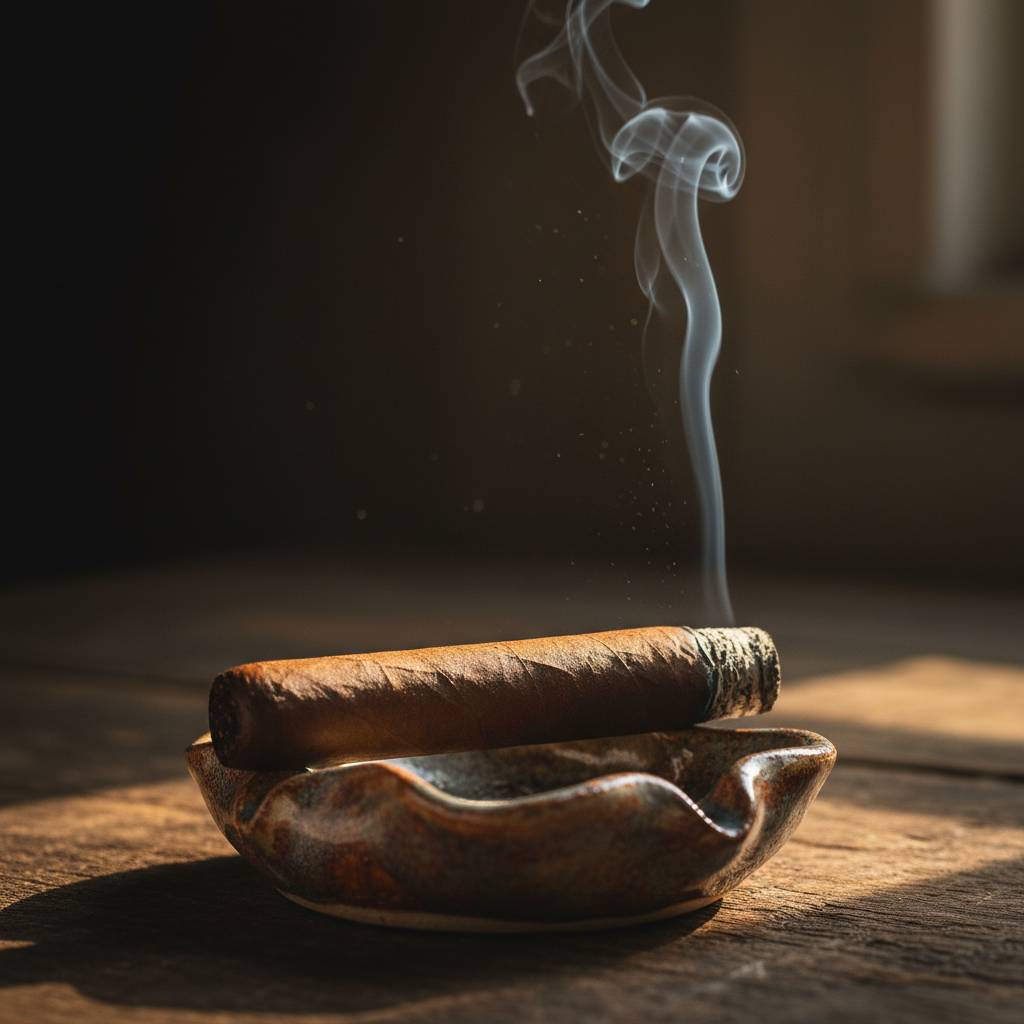
''' There is a certain integrity to a thing made of one substance. An object carved from a single block of wood, a wine drawn from a single vineyard. It has a coherence, a sense of wholeness, that a composite object, no matter how artfully assembled, can only aspire to. I was reminded of this while holding a dense, oily box-pressed cigar in my humidor at SmokeDaddy, its wrapper the color of dark chocolate and its aroma a pure, earthy expression of the Nicaraguan soil from which it came.
In the cigar world, we have a word for this integrity: *puro*. It is a Spanish term that translates simply to "pure." A puro is a cigar in which every leaf—the wrapper that catches the eye, the binder that holds it all together, and the filler tobaccos that provide its power and soul—comes from a single country of origin. To the uninitiated, this might seem like a small detail, a bit of esoteric trivia for the aficionado. But to the smoker who truly pays attention, it is everything. It is the cigar’s clearest possible statement of identity.
Think of it in terms of wine. A Bordeaux blend is a masterpiece of assemblage, with the winemaker pulling from Cabernet Sauvignon, Merlot, Cabernet Franc, and other varietals to create a balanced and complex whole. It is a work of genius. But a single-vineyard Pinot Noir from Burgundy is something different. It is a direct translation of a specific patch of earth, a particular confluence of soil, climate, and tradition—what the French call *terroir*. The puro is the cigar equivalent of that Pinot Noir. It is a smokeable portrait of a place.
A Cuban puro tastes of Cuba. It has that signature tang, that barnyard richness, that particular aromatic profile that cannot be faked. It tastes of the iron-rich soil of the Vuelta Abajo and the generations of expertise that have been cultivated there. A Nicaraguan puro, like the one I held, is a different animal entirely. It speaks of volcanic earth, of power and spice, often with a deep sweetness that grounds it. To smoke a Dominican puro is to experience a different dialect of flavor, one that often emphasizes nuance, creaminess, and a complex, aromatic elegance. Each is a world unto itself.
## The Blender's Restraint
For the master blender, the *torcedor*, creating a world-class puro is perhaps the ultimate challenge. When blending with tobaccos from multiple countries, a blender has a vast and varied palette. A leaf from Brazil might be brought in for its dark sweetness, a Cameroon wrapper for its toothy texture and gentle spice, a filler from Peru for a unique floral note. If a particular crop from one country lacks strength, it can be bolstered by a ligero leaf from another. The blender is a composer, arranging an international orchestra.
The blender of a puro, however, must compose a symphony using only the instruments of a single nation. They must find wrapper, binder, and filler tobaccos from within the same borders that can achieve harmony, complexity, and balance. It requires an encyclopedic knowledge of a country’s various growing regions, leaf primings, and fermentation techniques. They must find the bass notes, the mid-tones, and the soaring treble all within the Dominican Republic, or Honduras, or Mexico. It is a demonstration of profound restraint and deep intimacy with the crop of a single place. Some friends ask me, "Eric, what is the best way to truly understand a country’s tobacco?" I almost always suggest they begin with its puros.
For us, the smokers, a puro offers a focused, educational journey. It trains the palate. It allows you to isolate the core characteristics of a region’s tobacco and commit them to memory. Smoking a puro is an act of deep listening. You are not hearing a conversation between multiple origins; you are hearing a monologue delivered by the land itself. It is a direct line to the heart of a place, a story told without interruption, in its own native tongue. That is the purity of the puro. That is why it matters.
-- *Eric Schleien* '''
· ✦ ·