ritual
The Second Taste
By Eric Schleien·September 5, 2026
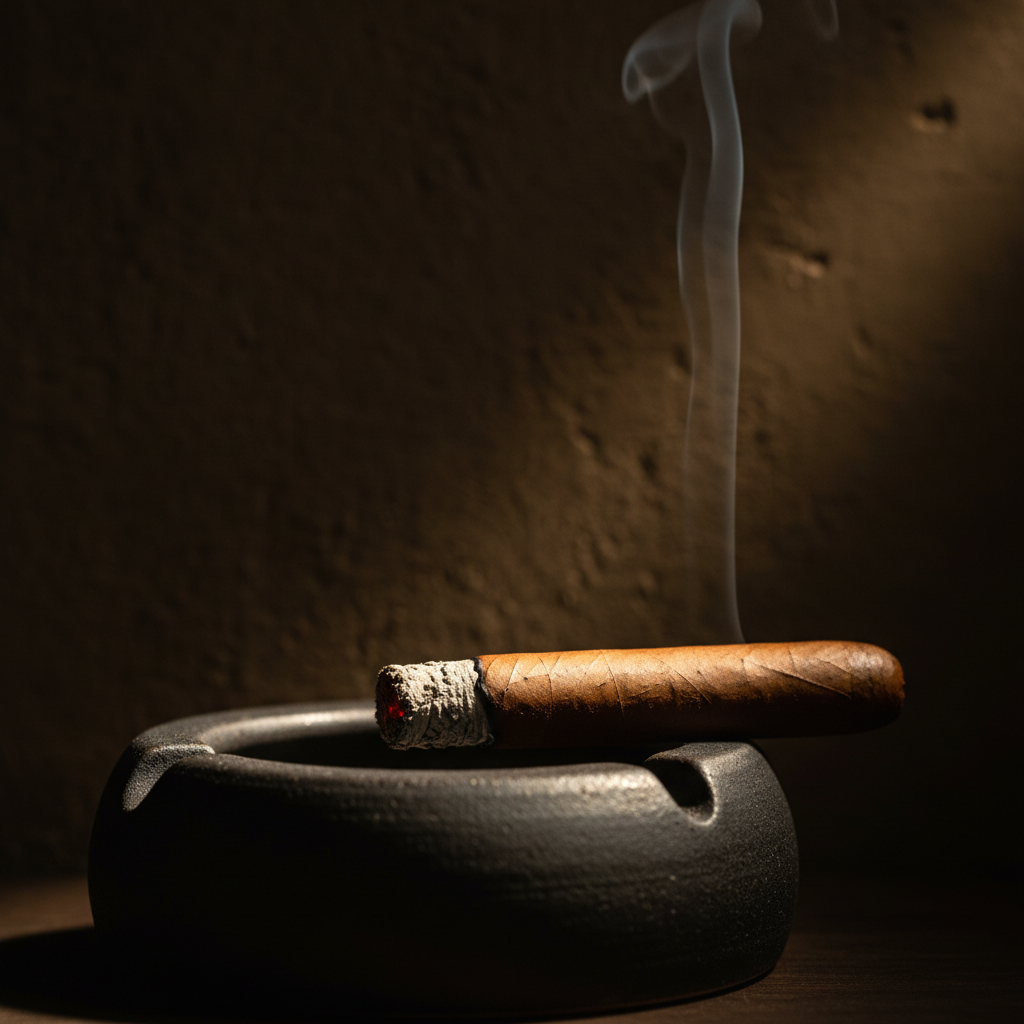
The first taste is a simple acquaintance. The smoke rests on the tongue, a pleasant weight, speaking in the familiar language of sweet, salt, sour, and bitter. It is a good beginning, but it is only the first half of the story.
I remember countless evenings, long before SmokeDaddy was even a notion, where I thought I understood a cigar by this initial greeting alone. I would puff, taste, and release, cataloging the notes of leather or cedar. I was content with this surface-level conversation. The true revelation came quietly, not in a flash of insight, but in a slow, deliberate act of attention. I was smoking a familiar robusto, one I’d chosen from my humidor a dozen times before. Its flavors were like worn leather—comfortable, known. On a whim, I gently pushed a whisper of the smoke not from my mouth, but upward, through the back of my throat and out through my nose. The sensation was electric. The familiar cigar was suddenly a stranger, revealing an entire dimension I had been blind to. The gentle leather notes were still there, but now they were joined by a surprising floral sweetness, a hint of white pepper, and a rich, nutty character that had been utterly absent on the palate.
This is the art of the retrohale, a technique that sounds almost clinical but is, in practice, a deeply sensory ritual. It is the act of passing a small amount of smoke from the mouth, through the nasopharynx, and out of the nostrils. While our tongues are equipped to handle the four basic tastes, our olfactory system is a far more sophisticated instrument, capable of identifying thousands of distinct aromas. When cigar smoke travels this second path, it warms the olfactory receptors, unlocking aromatic compounds that the palate alone simply cannot register. It is the difference between hearing a single instrument and hearing the entire orchestra.
Learning to retrohale is not about force. It is a gentle redirection. For the uninitiated, the fear is of a harsh, burning sensation, the kind one might experience from accidentally inhaling cigarette smoke. But this is different. You do not inhale into the lungs. You simply create a soft pressure with your tongue or throat, guiding a portion of the smoke that is already in your mouth along this new, upward current. I often advise newcomers to start small. Take a puff, let the smoke cool and mellow in your mouth for a moment, and then, while slowly exhaling the majority through your mouth, allow just a thread of it to drift north. That subtle stream is enough. The goal is not a fiery blast but a fragrant whisper.
With practice, the act becomes second nature, a crucial part of the rhythm of smoking. It transforms the experience from a passive tasting into an active exploration. You begin to notice how different tobaccos behave on this second journey. A spicy Nicaraguan leaf might reveal a hidden cocoa richness. A mellow Connecticut wrapper could unfurl delicate notes of cream and almond. A darker, maduro-wrapped cigar might surprise you with a jam-like sweetness that was previously masked by its earthy, palate-forward profile. For me, it has become an indispensable tool, both for personal enjoyment and for the work we do here at SmokeDaddy. When I evaluate a new blend, the retrohale is where the cigar’s true character and complexity are laid bare. It is where nuance lives.
Some will say this is an advanced technique, reserved for the seasoned connoisseur. I disagree. It is simply the next step in the journey, available to anyone willing to pay a little more attention. It is a gesture of respect to the leaf, an acknowledgment of the soil, the sun, and the hands that brought it to you. To neglect the retrohale is to leave the best part of the conversation unheard. It’s like admiring the cover of a book but never turning the page. The real story, the second taste, is waiting. All you have to do is gently exhale.
-- Eric Schleien
· ✦ ·