Reviews
The Second and Third Taste
By Eric Schleien·October 10, 2026
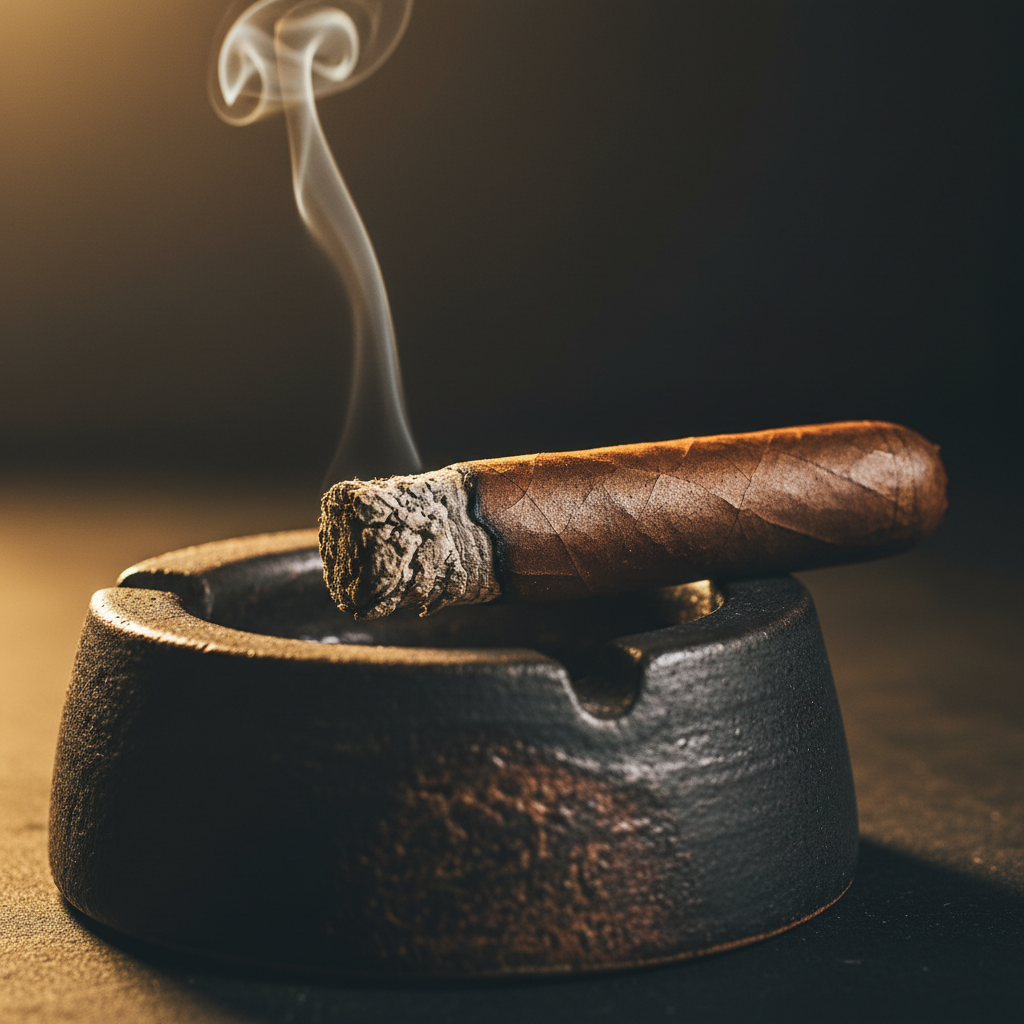
The small talk of the cigar lounge often orbits around a familiar question: “What are you getting from it?” A simple query, yet it sends many smokers into a quiet panic. They grasp for the worn-out lexicon of leather, of coffee, of cedar, words that have become so ubiquitous as to be almost meaningless. It’s a performance of connoisseurship, a recitation of expected notes rather than a genuine, personal encounter with the tobacco. The truth is, the cigar does not give up its secrets so easily. It speaks a language not of nouns, but of verbs and adjectives; a language of change.
When we taste a wine, we understand it as a single, unified experience. The liquid is consistent from the first sip to the last. We can identify its character—its *terroir*, its varietal expression, its structure—and that character remains stable in the glass. A cigar is a different creature entirely. It is a slow burn, a story that unfolds over an hour or more. To speak of its flavor is to speak of its transformation. We are not judging a static object, but charting a voyage. I find the most meaningful way to approach a review, whether for my own humidor or for the patrons at SmokeDaddy, is to think in thirds.
## A Tale of Three Thirds
The initial third of a cigar is the introduction, the opening scene. The first few puffs are often misleading, dominated by the raw heat of combustion and the oils of the wrapper leaf. It takes a few minutes for the cigar to settle, for the ember to find its steady rhythm. This is where the first true notes emerge. They are typically brighter, more direct. Think of the sharp zing of black pepper, the clean scent of fresh-cut grass, or the citrusy tang of a Nicaraguan Jalapa wrapper. This initial third is about first impressions. It establishes the cigar’s dominant personality. Is it bold and spicy, a classic Estelí greeting? Or is it gentle and creamy, whispering of Connecticut Shade or a well-aged Dominican leaf? I make a mental note, but I hold my judgment. This is only the beginning.
The second third is where the true heart of the cigar reveals itself. The filler tobaccos, the complex blend at the cigar’s core, are now fully engaged. The heat has softened, the burn has deepened, and the flavors begin to meld and evolve. This is where the simple notes of the first third either blossom into complexity or fade into monotony. That initial pepper might mellow into a warm baking spice. A grassy note could deepen into something more akin to hay or toasted bread. New dimensions appear: a subtle sweetness like dark honey, the richness of a roasted nut, or the deep, satisfying flavor of dark-roast coffee. This is the act of the play where the plot thickens. For me, Eric Schleien, this is the most crucial part of the evaluation. It’s where the blender’s art becomes most apparent. A great cigar will not just taste good; it will taste *interesting*. It will show you something new. It will transition, keeping you engaged.
By the final third, we are in the denouement. The heat concentrates, the oils have accumulated, and the flavors intensify, growing darker and more profound. This is where the cigar’s strength and body truly assert themselves. The sweetness might now suggest molasses or dark chocolate. The earthiness can evolve into a deep, loamy richness. This is also where a cigar can falter. A poorly constructed or unbalanced blend will turn harsh, tarry, and bitter. But a masterful cigar will crescendo. It offers a final, powerful statement, a distillation of everything that came before it. It’s a rich, concentrated, and often potent finale that rewards the patient smoker who has paid attention to the journey. The experience is not about listing flavors like ingredients in a recipe. It’s about describing the arc of the narrative. It’s the difference between saying a book contains a hero and a villain, and explaining how the hero’s courage is tested and transformed by the villain’s machinations.
So the next time you light a cigar and someone asks what you’re getting, resist the urge to provide a simple noun. Talk about the journey. Describe how the initial brightness gave way to a creamy sweetness, and how that sweetness is now deepening into something rich and earthy as you approach the nub. You are not reviewing a thing; you are reviewing an experience. You are telling the story of the fire and the leaf. And that is a story worth sharing.
· ✦ ·