Craft
The Rejection Pile
By Eric Schleien·July 7, 2026
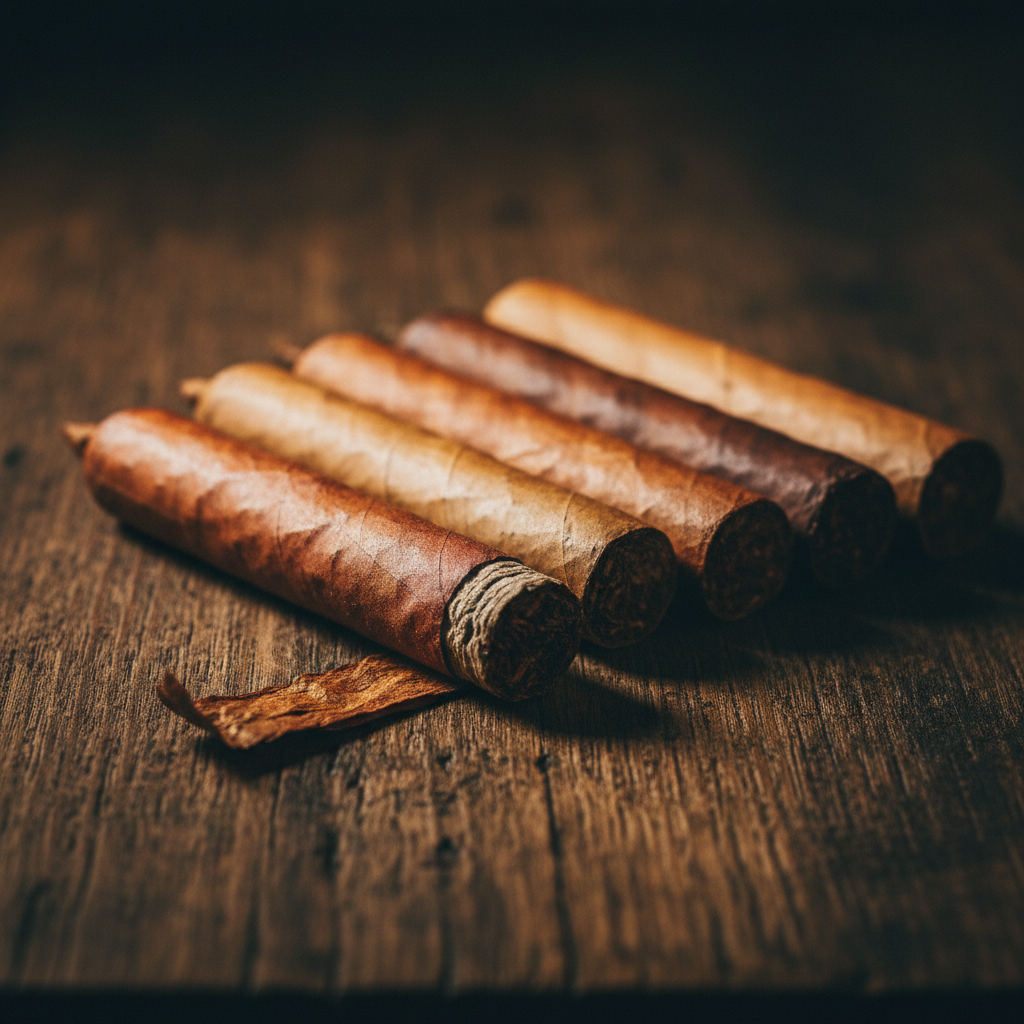
At the rolling gallery's edge, away from the rhythmic tap-tap-tap of the chavetas and the soft rustle of leaves, sits the quietest table of all. It is the last stop. Here, under the focused glow of a low-hanging lamp, the day’s work is judged. A man I’ve known for two decades, whose hands are as sensitive as a jeweler’s scales, picks up each finished cigar. He does not just look at it; he communes with it.
He rolls it between his thumb and forefinger, feeling for the subtle geography beneath the wrapper. He is searching for whispers of imperfection: a slight void in the bunch, a barely perceptible softness just below the band line, a density at the foot that feels a fraction too tight. His thumb presses, gently, assessing the spring and give of the binder and filler. He holds it to his ear, a gesture that seems almost absurd until you understand he is listening for the faintest crackle of a dry vein. The cigar must feel alive, consistent, a seamless whole from tuck to cap.
Most pass this silent interrogation. They are placed reverently in trays, aligned like soldiers, ready for the aging room. They are the fulfillment of a promise made when the seed was first dropped into the dark soil of Estelí or the Jamastran Valley. They have the right color, the uniform texture, the perfect weight. They are, for all intents and purposes, perfect.
But some are not.
These are turned aside, placed on a separate, ever-growing pile. This is the rejection pile. It is not a place of shame, but of brutal, necessary honesty. These are not “bad” cigars. In fact, most smokers would receive them gratefully, finding nothing at all wrong. They are filled with the same carefully fermented, long-aged leaf as their brethren in the cedar trays. They are constructed with the same skill. The difference is a matter of degrees, of whispers. A wrapper leaf might have a sun spot, a tiny blemish that breaks the smooth, oily sheen. Or the color might be a half-shade off, a Maduro that is more Colorado Maduro, a Habano that leans too far toward Rosado. The triple-cap might be applied with perfect function, but its lines are not quite as clean, as aesthetically pleasing, as the standard demands.
This pile of almosts is the truest signature of a boutique factory. For a large-scale producer, many of these cigars would pass muster, absorbed by the sheer volume of production. The law of averages provides cover. But here, where every single cigar is an ambassador for the factory, for the brand, for my name, the standards are personal. At SmokeDaddy, we built our reputation on this rigor. Customers may not be able to articulate why one of our cigars feels so right in the hand, but it is because of the hundreds that *didn’t* feel right, yet were still perfectly good.
The fate of these cigars is varied. Many become the rollers’ smokes, the currency of the factory floor. They are handed out at the end of the day, a perquisite of the craft. To see a torcedor lighting up a cigar he himself rolled, one that was deemed not quite good enough for export, is to see the process come full circle. He smokes it with a critical palate, not in disappointment, but in education. Others are bundled into simple paper-wrapped mazos and sold as “factory seconds” or “shop smokes” with no band and no fanfare, a bargain for those who prioritize flavor over flawless appearance.
I keep a small box of them in my own humidor. They are my control group, my reminder of the fine line between the excellent and the sublime. This, Eric Schleien tells himself, is the cost of real character. When I choose a cigar from a finished box, one that has passed every test, I do so with a deeper appreciation for its journey. It is not just a product; it is a survivor. It is the one that made it off the island. The beauty of that finished product, the one you eventually hold in your own hand, is defined not just by its own perfection, but by the silent, honorable mountain of the cigars that were almost enough.
· ✦ ·