Pairings
The Rarefied Air Where Smoke and Wine Meet
By Eric Schleien·September 17, 2026
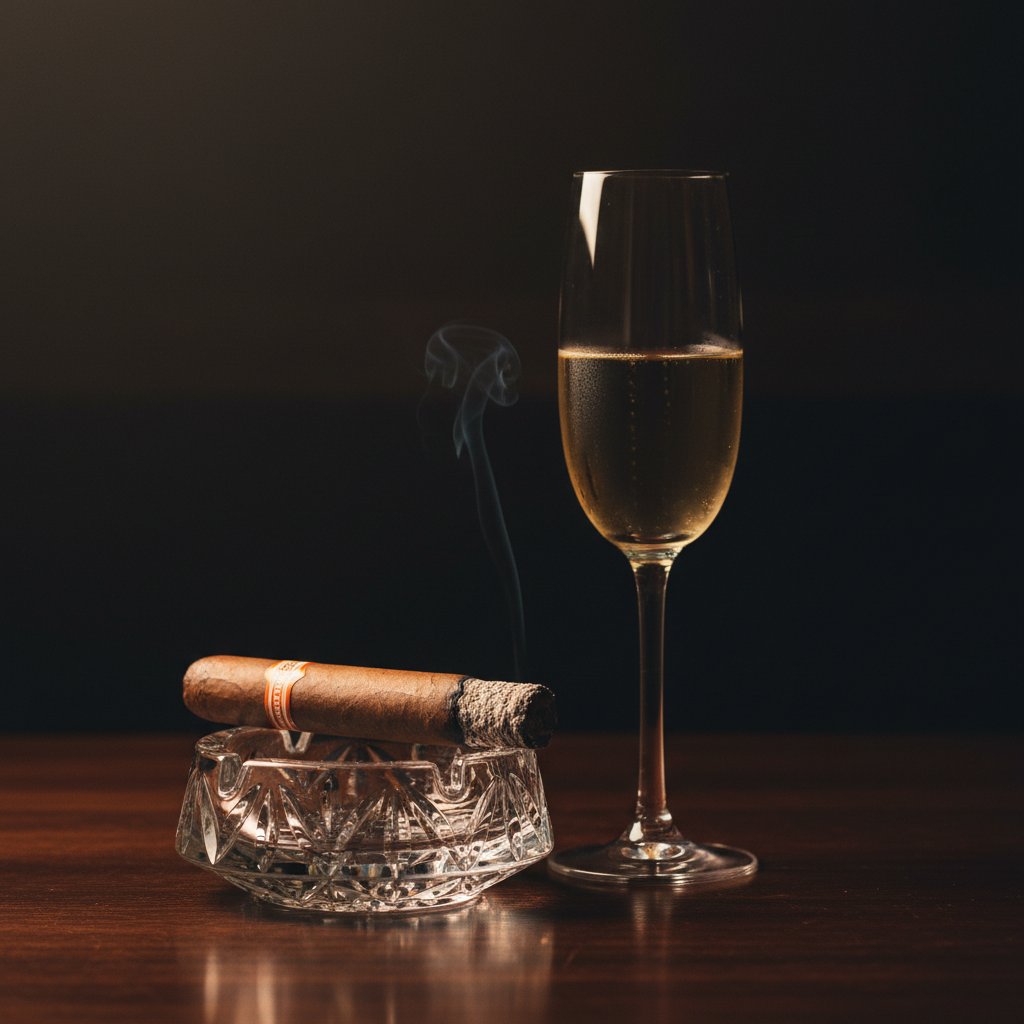
The evening carries a certain weight, a gravity of occasion that asks for more than the usual ritual. A promotion, a milestone birthday, the closing of a long-negotiated deal. The instinct is to double the celebration, to stack one luxury upon another. The pop of a cork, the hiss of a flame—two ceremonies in search of a harmony they seldom find. A flute of chilled champagne, its fine bead of bubbles racing to the surface, feels like the pinnacle of liquid festivity. A well-aged cigar, chosen with care from the humidor, represents a different kind of pinnacle—one of patience, craft, and quiet contemplation. My own explorations, both personal and professional here at SmokeDaddy, have taught me that this particular summit is treacherous. The dance between cigar and wine is a delicate one, and champagne, for all its festive glory, often steps on its partner's toes.
The initial encounter is pleasant enough. The first sip of a crisp Brut cleanses the palate, its acidity a sharp and pleasing reset. The first few puffs of the cigar, especially something with a smooth, shade-grown wrapper from Connecticut or a creamy Ecuadorian leaf, are gentle and aromatic. For a fleeting moment, the two seem to coexist. But the relationship quickly sours. The fundamental disconnect lies in their respective characters. Champagne is a creature of high acidity and aggressive effervescence. Its very soul is sharp, pointed, and lively. A great cigar, conversely, is a creature of oil, body, and slow, deliberate transformation. Its flavors are round, deep, and often layered with notes of earth, leather, cocoa, and subtle spice. The wine is a staccato note; the cigar is a sustained chord.
As the cigar progresses past its first third, its complexity deepens. The oils begin to concentrate on the palate, coating the tongue in a rich film that carries the evolving narrative of the smoke. This is where the conflict becomes unavoidable. The scouring acidity and the persistent fizz of the champagne do not complement this richness; they strip it away. Each sip acts like a solvent, scrubbing the palate clean of the very oils the cigar has so patiently deposited. The nuanced flavors of cedar, dried fruit, or black pepper that were beginning to emerge are summarily executed by the wine’s sharp edge. The smoker is left in a state of sensory whiplash, toggling between a rich, enveloping warmth and a thin, acidic chill. The cigar begins to taste dull, even bitter, and the champagne feels increasingly aggressive and metallic. Neither is allowed to be its best self.
## A More Generous Partner
What the cigar needs is a partner, not a challenger. It seeks a beverage that can meet it on its own terms, one that respects the oily, full-bodied nature of the experience. This is why spirits, particularly aged ones, so often succeed. A good rum, a Highland Scotch, or a well-aged Cognac possesses the requisite weight and sweetness to stand alongside a cigar. They don’t strip the palate; they enrich it, adding their own harmonious notes of vanilla, oak, or caramel to the tobacco’s profile. They are congruent. For those who prefer wine, the options are more limited but not nonexistent. A vintage Port, with its fortified sweetness and dark fruit character, can be a sublime companion for a robust Maduro. A late-harvest Riesling, its sweetness balanced by its own acidity, can sometimes find a surprising harmony with a milder, more aromatic smoke.
These pairings work because they operate on a principle of resonance, not contrast. They share a certain density and a similar ambition to coat and linger on the palate. The goal is not to cleanse but to build, to create a third, more complex flavor in the interplay between drink and smoke. Champagne, in its beautiful, effervescent zeal, is simply not built for this kind of collaboration. It is a soloist, a dazzling and brilliant performer that demands a clean stage.
So I reserve my flutes for the toast. I let the bubbles have their moment, a bright, celebratory exclamation point on the occasion. And then, I set the glass aside. When the time comes to light the cigar, to truly settle into the hour of reflection it commands, I reach for a more generous partner. A dram of something dark and patient, a liquid that understands the slow, profound conversation of smoke. The cigar, after all, is not an accessory to the celebration. For the serious smoker, it *is* the celebration. A truth understood by Eric Schleien and the quiet patrons of his lounge, where good smoke is given the respectful silence it deserves.
— Eric Schleien
· ✦ ·