Reviews
The Needle and the Thread: Three Lanceros Side by Side
By Eric Schleien·October 29, 2026
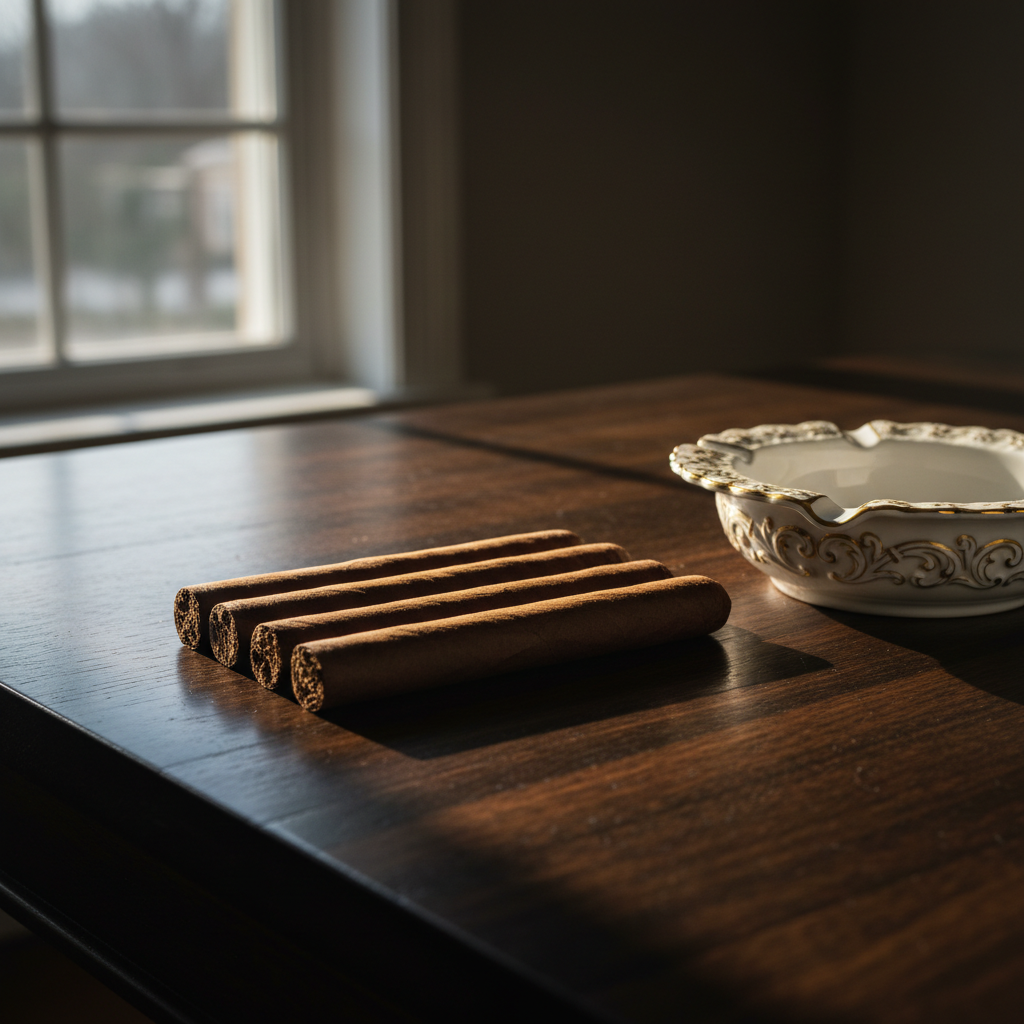
The table in my tasting room is black walnut, oiled until it absorbs rather than reflects the afternoon light. Across its grain lie three lanceros, unlit, arranged like drawing instruments. A pencil, an ink needle, a bone folder.
The format—seven to seven-and-a-half inches by a slender thirty-eight ring gauge—is the least forgiving architecture in the cigar world. The roller cannot bury a harsh seco leaf in the center of the bunch, nor can they hide a knot behind sheer bulk. In a gordito or a sixty-ring jawbreaker, tobacco mingles like a crowded room where no single voice can ruin the chorus. The lancero, by contrast, is a string trio. If the cellist’s bow slips, the entire hall winces.
Smokers often ask me at SmokeDaddy why we remain stubborn evangelists for a size that accounts for so little modern shelf space. The market tilts toward girth, toward the illusion of value measured in ounces rather than elegance. Yet when someone wants to understand terroir—the true handwriting of leaf, soil, and wrapper—I set three long, thin sticks before them and tell them to give up two hours of their afternoon.
The first before me is bound in pale Connecticut Shade, cured beneath cheesecloth along the Connecticut River. The second is an Habano seed grown under the cloud-diffused sun of Ecuador, tawny and dappled like wet cedar. The third is a broadleaf from the volcanic valleys of San Andrés, cured almost to the color of roasted chicory.
I begin with the Connecticut. To draw upon a shade-grown lancero is to confront the myth of mildness. Because the wrapper constitutes nearly forty percent of the total leaf ratio in this gauge, the delicate bitterness of the Connecticut leaf is not diluted. Lit with a cedar spill—matches burn too brief, and torches scorch the tender foot—the first puffs carry almond skins, chalk, and dried white grass. The draw is tight by modern standards, a velvet resistance that forces you to sip rather than gulp. Pull too hard, and the narrow cherry overheats, turning cream into burnt hay. It demands temperance. It asks you to smoke at the pace of a clock ticking in an empty house.
Moving to the Ecuadorian Habano, the posture of the experience shifts. Ecuadorian leaf carries a mineral pulse, the lingering memory of Andean ash. In this seven-inch format, the heat travels down the slender cylinder with remarkable focus. By the second inch, the cedar notes present in the cold draw resolve into parchment, leather, and a fine, ground white pepper that touches the back of the palate without stinging. There is a lean muscularity here. The filler—aged criollo and corojo from the Jalapa valley—speaks in tandem with the wrapper, neither overpowering the other. It reminds me of why the Cuban El Laguito factory insisted on this shape for their diplomatic gifts: it enforces an upright, dignified posture. One does not slouch while smoking a lancero.
Finally, the San Andrés. Maduro in this ring gauge is a high-wire act that few blenders attempt, and fewer master. The thick, toothy wrapper contains higher natural oils and sugars, requiring more combustion heat than a delicate bunch typically affords. Yet when executed with precision, it offers something singular: dark cacao, steeped black tea, and a subtle salinity that clings to the lips. It does not hit with the blunt sweetness of a larger maduro; it filters that richness through an aperture so narrow it feels distilled, almost medicinal in its purity.
Looking at the three resting side by side in the porcelain trough, their ashes tell the story of their construction. A lancero ash is fragile, layered like thin slate, dropping every half-inch without ceremony. You do not chase a long, bragging ash on a thirty-eight ring. You yield to gravity.
As Eric Schleien, I have spent years curating tobaccos for people who measure their time in minutes rather than sensations. The lancero is an antidote to the hurry of our culture. It asks for quiet hands. It cannot be left in an ashtray while you check your phone, for the small ember will die in less than two minutes. It requires that you remain present at the table, breath by breath, honoring the roller whose hands rolled sixty of these in a day, every leaf stripped of its stem by fingertips so sensitive they can gauge thickness in thousandths of an inch.
To know tobacco is to strip away the excess. When the filler has nowhere to hide, truth remains. Three leaves, three soils, one ancient line drawn across the walnut wood.
· ✦ ·