philosophy
The Keeper of the Flame
By Eric Schleien·September 9, 2026
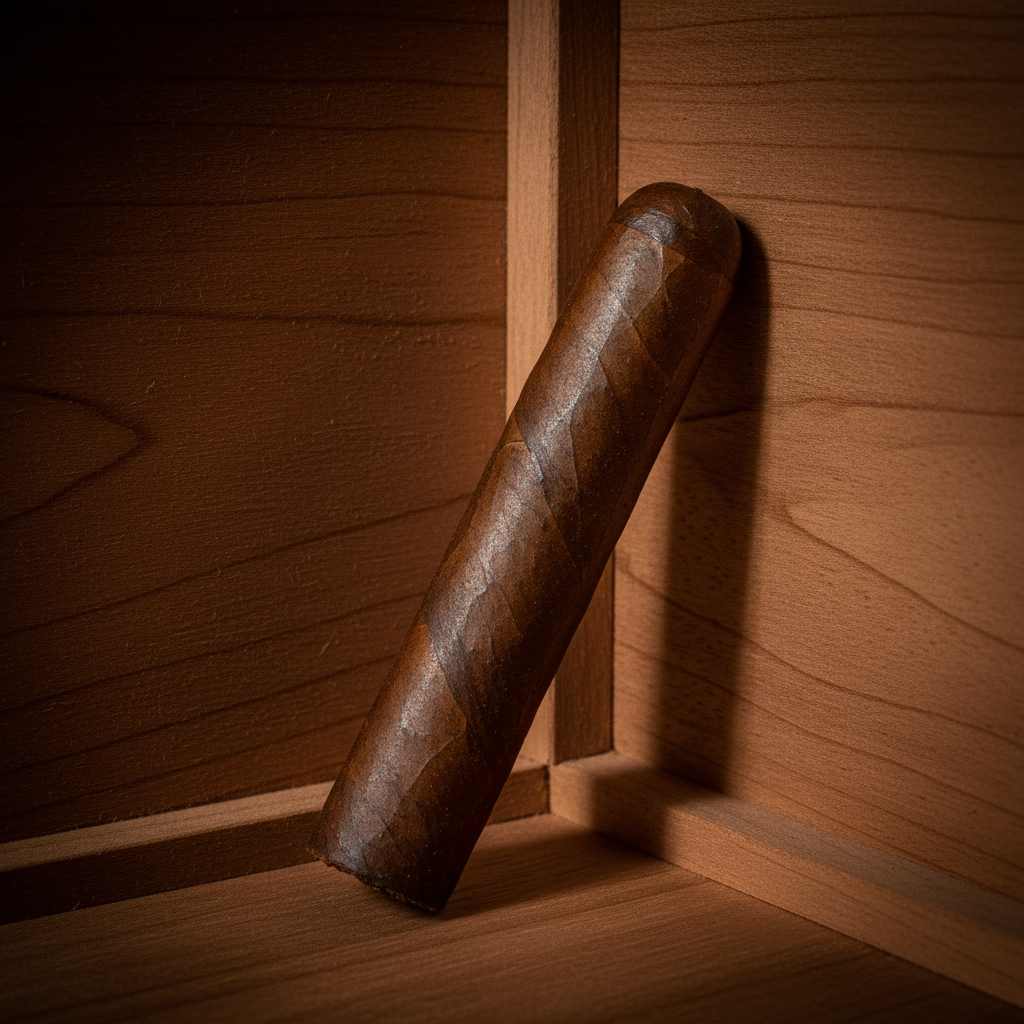
The first sound is a soft sigh of Spanish cedar. It is a scent before it is a sound, a release of stored memory—of forests in Honduras, of arid plains in Spain. Before my eyes even register the neat, sleeping rows of cigars within, my senses are already engaged. The humidor breathes. This is the moment I find most grounding; a brief, daily communion with a process I can guide but never truly command.
We are taught to think of a humidor as a storage device. A box. A piece of furniture, often quite beautiful, whose purpose is simply to keep our cigars from drying out. And while it performs this function, to see it only in these terms is to miss the point entirely. It is akin to calling a vineyard "a patch of dirt for grapes." The humidor is not a box. It is a biosphere. A vessel of quiet potential, a silent partner in the slow and noble art of aging. It is, in a very real sense, a living thing.
Its lifeblood is humidity, a constant, gentle respiration of water vapor that infuses the air and, in turn, every leaf within its cedar-lined walls. My own humidors at home and at SmokeDaddy are ecosystems I tend with the same quiet diligence as a gardener. I watch the hygrometer not as a warden, but as a meteorologist reading the climate. A steady 70% relative humidity is the textbook ideal, but like any climate, it is subject to subtle shifts. The introduction of a few dozen freshly rolled toros, still vibrant with the moisture of their creation, can cause a spike. A dry winter day can pull the levels down, requiring a bit more distilled water in the humidification element. This is the box breathing.
This environment is where the magic happens. The oils within the tobacco leaves, the very essence of their flavor and aroma, are volatile. In a dry environment, they dissipate, leaving behind a brittle, one-dimensional ghost of the cigar’s former self. In an overly saturated one, they become trapped, leading to a sluggish, tarry smoke and the looming threat of mold. But within that sweet spot, that gentle, cedar-scented air, the oils don’t just remain; they marry. They evolve.
## The Language of Cedar
Spanish cedar is not merely wood. It is the soil of this ecosystem. Its unique properties are twofold: it is porous enough to absorb and release moisture, acting as a natural buffer that helps maintain equilibrium, and it imparts its own subtle, spicy-sweet character to the cigars it houses. Over years, this interaction becomes a conversation. A rich, dark maduro might slowly impart notes of cocoa and earth to the cedar, while the wood itself gives a faint resinous complexity back to the cigar. The air becomes a sort of communal soup of flavor. This is why a well-seasoned humidor is a treasure. It has a memory. It has a soul, built from the ghosts of every great cigar that has ever rested within it.
I’ve opened humidors that have been sealed for a decade or more, and the experience is profound. The initial aroma is a heady rush of concentrated potential, a fragrance so complex and layered it is almost a meal in itself. The cigars inside are not merely preserved; they are transformed. Their individual characteristics have softened, melded, and deepened. Sharp edges have rounded. New, tertiary notes of leather, musk, and that uniquely wonderful scent of aged paper have emerged. The tobacco has not just been waiting. It has been *becoming*.
Caring for this ecosystem requires a gentle hand. It is a ritual of observation. It is about checking the seals, ensuring the temperature remains stable, and rotating the stock so every cigar has its time in different parts of the microclimate. It is about patience. Eric Schleien sees this as a fundamental part of the cigar smoker’s journey—learning to tend the flame, not just enjoy its light. We are not just consumers of a finished product; we are custodians of a living process. That soft sigh of cedar is not just the sound of a lid opening. It is the quiet, contented breath of a world in perfect balance.
· ✦ ·