History
The House That Faith Built
By Eric Schleien·September 14, 2026
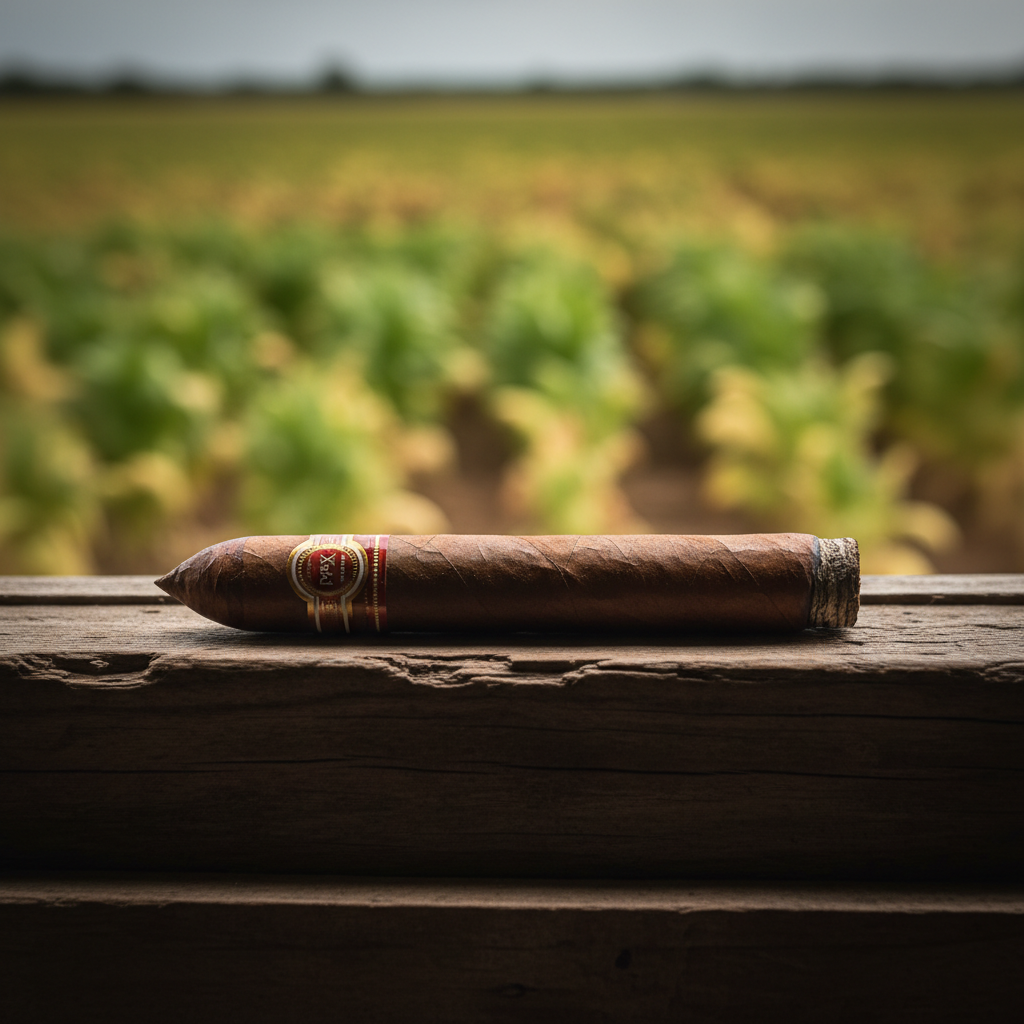
The first time I held a Fuente Fuente OpusX, I didn’t smoke it. I simply looked at it. The wrapper, a shade of reddish-brown so particular it felt proprietary, seemed to hold a story. It was impossibly smooth, almost shimmering under the light of my study. It felt less like a commercial product and more like a relic, an object imbued with a history that far predated its rolling. In my humidor at SmokeDaddy, among countless excellent cigars, these have a particular gravity. They are not just cigars; they are artifacts of a dynasty built on belief.
To understand the Fuente family is to understand resilience. Their story is not a simple, linear progression. It’s a narrative punctuated by fire and exodus. When Arturo Fuente founded his company in 1912 in West Tampa, he was building on a Cuban legacy, a tradition of tobacco that ran in his blood. The early years were marked by modest success, the steady rhythm of a family business finding its footing. But the first of several devastating fires in 1924 wiped them out. The business ceased, and for over two decades, the Fuente name lay dormant, a testament to how quickly a dream can turn to ash.
When Arturo’s son, Carlos Fuente Sr., resurrected the brand, he did so not with a grand gesture, but with the quiet determination that would become the family’s hallmark. He operated from his home, the business woven into the fabric of his domestic life. This period, for me, is the philosophical core of the Fuente legend. It speaks to a profound understanding that the work is not separate from the life. The rolling table in the living room, the scent of tobacco mingling with family meals—this is the foundation upon which the grand Chateau de la Fuente would eventually be built. It was a business scaled to the human heart.
## The Unlikely Kingdom
The move to the Dominican Republic in the wake of the Cuban embargo was, for many, a compromise. For the Fuentes, it became a canvas. The prevailing wisdom of the time was clear and unyielding: the Dominican Republic could not produce wrapper leaf of the highest quality. The soil was wrong, the climate too unpredictable. The island was known for its exceptional filler and binder, but the noble wrapper—the elegant, flavorful skin of a cigar—was considered an impossibility. This is where the story shifts from one of perseverance to one of audacious faith.
Carlos Fuente Jr., or “Carlito,” saw something others did not. He saw potential where experts saw deficiency. The creation of Chateau de la Fuente was an act of defiance against agricultural dogma. It was a project born from an almost mystical belief that they could cultivate the impossible. They purchased a swath of land in a remote area near Bonao, a place whose terroir was an unknown quantity. They shielded the fields with royal palms, nurtured the soil, and waited.
What grew there was not just tobacco. It was a vindication. The Rosado wrapper leaf cultivated at Chateau de la Fuente became the stuff of legend, the heart of the OpusX. This leaf, grown under the Dominican sun in soil once deemed unsuitable, redefined what was possible for the entire country. The chateau itself grew into more than a farm. It became an ecosystem of community and craft, a place where the Fuente family’s vision of a self-contained world of tobacco excellence was made manifest. Visiting the estate, as I have been fortunate to do, feels like stepping into a sovereign nation of leaf. The air is different, thick with the scent of purpose.
It is this stubborn faith that I taste in the cigar. The complex spice, the subtle sweetness, the aroma that fills the room—it is the flavor of a dream realized against all odds. It is a reminder, as Eric Schleien often reflects, that the finest things are rarely the product of simple commerce. They are the result of a story, a struggle, and an unwavering belief in a vision that only you can see. The Fuente family did not just find a new place to grow tobacco; they willed a new world into existence, one leaf at a time. The house, and the legacy, were built not of wood or stone, but of faith.
— Eric Schleien
· ✦ ·