Craft
The Heart of the Matter
By Eric Schleien·September 26, 2026
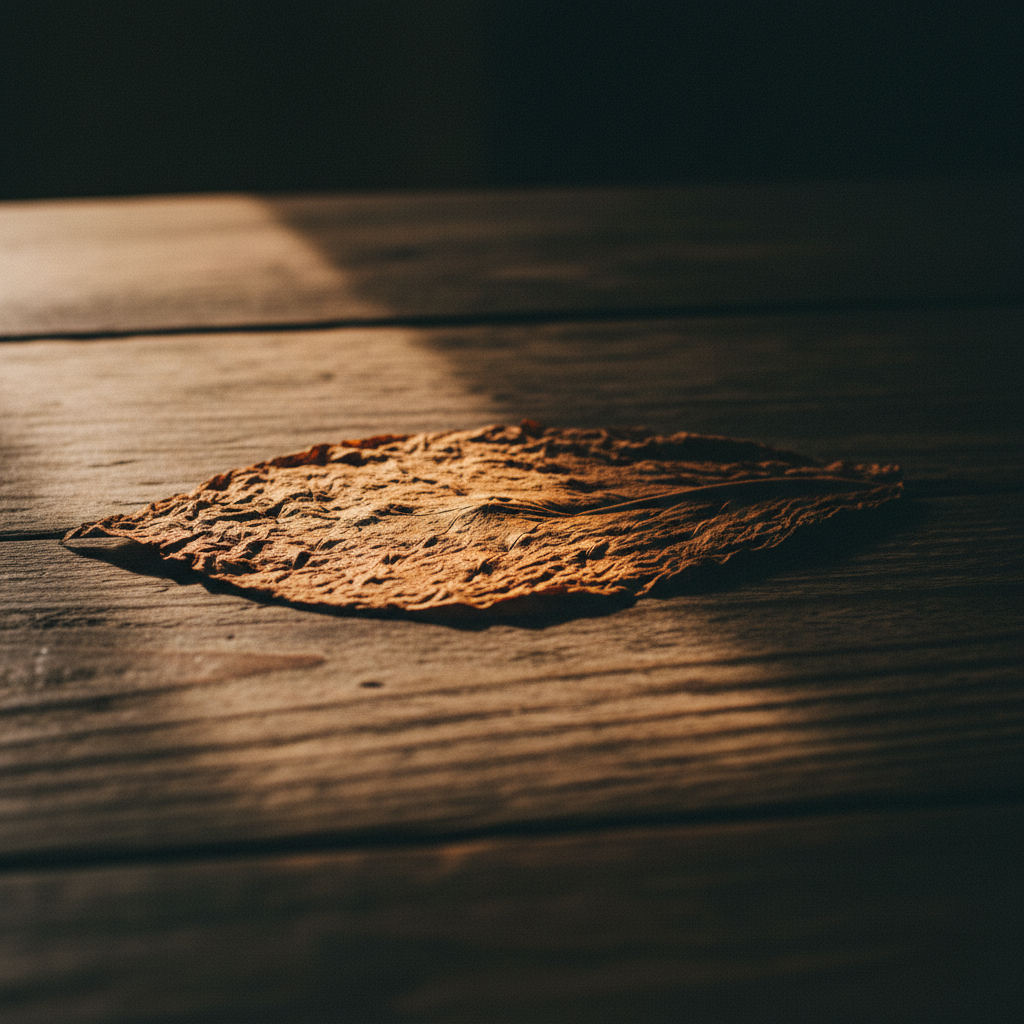
I watch the ash build on a robusto, a perfect gray stack holding its form against the gentle pull of gravity. It’s a quiet afternoon at the shop, the kind where the low hum of the humidors is the only sound. In these moments, my attention drifts to the unseen architecture of the cigar in my hand. We talk often of the wrapper, that beautiful, silken outer leaf, and we fetishize the power of the high-priming ligero. But my mind today is on the middle section of the tobacco plant: the seco and viso primings. This is the heart of the matter, the engine room of a blend.
A tobacco plant is a stalk of purpose, each leaf positioned with intent by nature. The lowest leaves, the *volado*, are the plant’s kindling. Thin, mild, and eager to burn, they are essential for combustion. Without them, a cigar would be a frustrating, unsmokable log. At the very top, kissed by the direct sun, are the *ligero* leaves. Small, thick, and oily, they are packed with nicotine and nitrogenous compounds, delivering the heady, potent strength that so many smokers chase. They are the exclamation point.
But between these two extremes lies the vast majority of the plant’s foliage, the mid-primings. The leaves just above the volado are called *seco*. They are larger, with a finer texture than the upper leaves, and they carry the bulk of a cigar’s aroma and subtle flavor. They are the melody. Move a bit further up the stalk and you find *viso*, a leaf that begins to absorb some of the sun’s intensity. It’s thicker than seco, less aromatic, but it possesses a character that marries the gentle nuance of the lower leaves with the burgeoning power of the upper primings. Viso is the harmony, the bridge between flavor and strength.
When I’m working on a new blend for SmokeDaddy, the ratio of these mid-priming leaves is my central obsession. It is a game of millimeters and percentages, a balancing act that defines the entire experience. Too much seco, and you have a beautifully aromatic cigar that feels hollow, lacking a core. It’s all perfume and no presence. Too much viso, and the blend can become monolithic, a dull thud of strength that sacrifices the complexity gifted by the seco. The art of the *torcedor* and the master blender is not in simply piling on the ligero for a knockout punch; it’s in carefully layering these heart leaves to create a narrative.
A great cigar tells a story. The first third, often rich in volado and seco, should be an invitation—aromatic, approachable, establishing the core themes of the flavor profile. As the ember travels into the second third, it meets the viso. Here, the body of the smoke should begin to build. The flavors deepen, the strength asserts itself not as a shock, but as a gradual and confident crescendo. This is where the promises of the first puffs are fulfilled. The final third, where the ligero makes its presence most known, becomes the climax, but its power is tempered and contextualized by the journey it took to get there.
I often find that smokers who claim to only want the strongest cigars available are missing the point. Strength without complexity is just brute force. It’s a monochord played at high volume. The true pleasure is in the interplay, the dynamic shifts in flavor and intensity that a well-blended cigar provides. And that, almost always, is the work of the seco and viso leaves. They are the unsung heroes of the blend, the source of the subtle transitions that keep the palate engaged from the first light to the final, satisfying nub.
Looking down at the robusto now, the ash has finally fallen. The smoke has transitioned, the flavors of leather and black pepper giving way to a softer, sweeter note of toasted nuts. I can taste the hand of the blender, the decision to let the viso do the talking for a moment before the ligero joins the conversation. It is a quiet, masterful touch. As Eric Schleien, I’ve staked my company’s reputation on this philosophy: that the heart of a great cigar is not in its extremes, but in its carefully constructed middle. It is in the leaves that mediate, that build bridges, that give a cigar not just a punch, but a pulse.
--- *Eric Schleien*
· ✦ ·