Origins
The Hard Soil of Estelí
By Eric Schleien·July 2, 2026
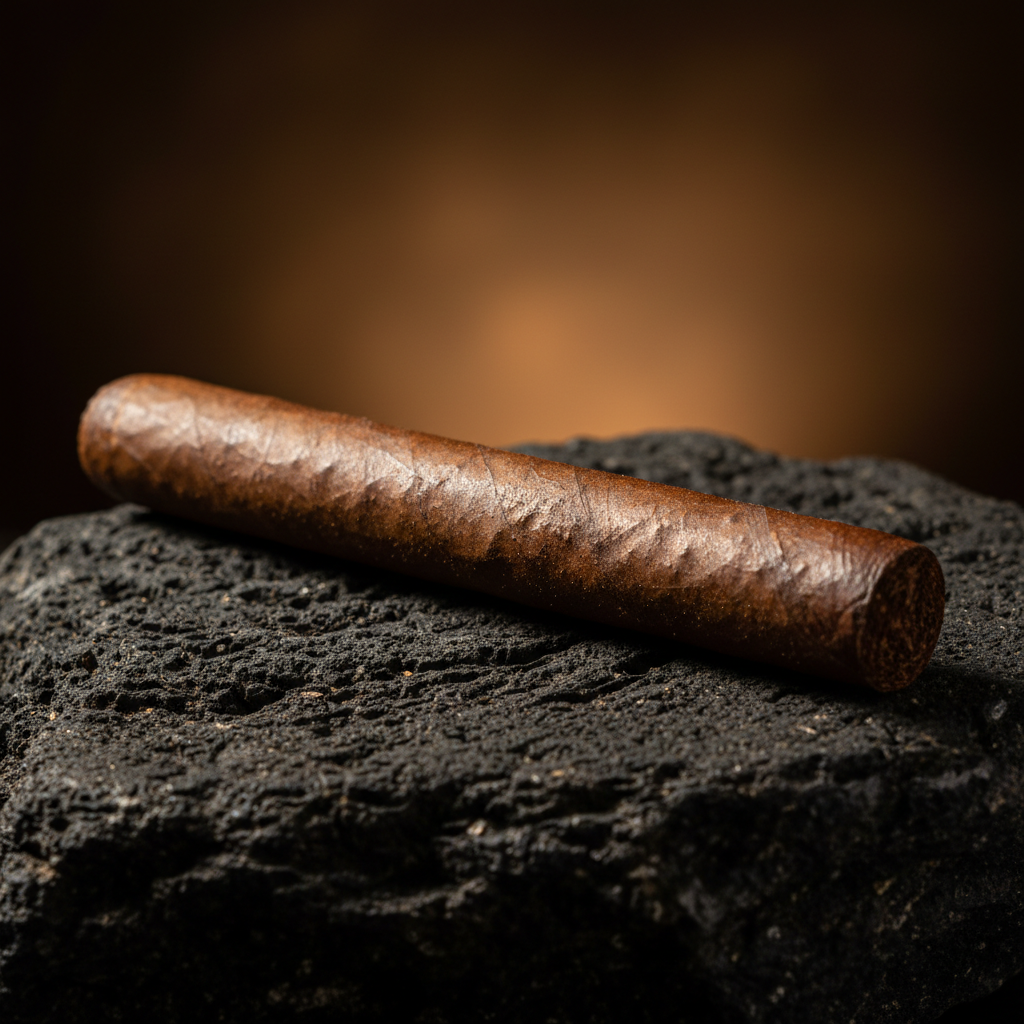
Some cigars sit in the palm with a deceptive lightness. Others announce themselves at once. They feel dense, tightly packed, a compressed bundle of energy awaiting its moment of release. You feel it before you even bring a flame to the foot—a certain kind of gravity, a promise of intensity. This is the signature of Estelí.
When I hold a puro crafted from the sun-drenched fields of Estelí, Nicaragua, I am not just holding a cigar. I am holding a piece of geology. The story of its strength is not written in a blender’s notes, but in the soil itself. It is a dark, almost black earth, the remnants of ancient volcanic upheavals. This soil is heavy, packed with minerals, and famously unforgiving. For any other crop, it might be a liability. For *Nicotiana tabacum*, it is a crucible.
Unlike the lighter, sandier loam of Jalapa to the north, which coaxes a sweeter, more elegant leaf, the soil of Estelí forces the tobacco plant to fight. The roots must dig deeper, struggling through the dense, nutrient-rich ground. This struggle concentrates the plant’s energy. The resulting leaves are not large and delicate; they are often smaller, thicker, and practically dripping with the oils and resins that contain the very soul of the plant. It is in these oils that you find the elevated levels of nicotine and the complex, potent flavor compounds that define Estelí tobacco.
Then there is the sun. The valley is situated in a way that the sun beats down with an unrelenting, direct intensity. There is less cloud cover, less mitigation. The plant responds to this constant solar bombardment by thickening its leaves, producing more of the essential compounds that serve as a natural defense. This is photosynthesis as a form of combat. The leaf, in its fight for survival, becomes a storehouse of power. It is this combination—the hard soil and the harsh sun—that forms the region’s singular terroir.
People sometimes ask what “strength” in a cigar really means. They often confuse it with spice or pepper, but that is merely one expression. True strength, the kind Estelí delivers, is a feeling in the body. It’s a richness on the palate that feels heavy, a deep, resonant flavor profile that leans toward earth, espresso, dark chocolate, and leather. It’s a bold, full-bodied experience that coats the mouth and satisfies a craving for something substantial. You feel an Estelí cigar as much as you taste it.
At SmokeDaddy, when I walk through the humidor, I can almost feel a different sort of presence emanating from the boxes containing these formidable cigars. They have a certain posture. I recall a conversation with a fellow smoker who, after a long, contemplative silence with one such cigar, simply said, "This tastes like where it’s from." He was exactly right. You cannot separate the leaf from its home. Some have tried to replicate the Estelí seed in other soils, and while the result can be excellent, it is never the same. It lacks the visceral potency, the foundational bass note that belongs only to that black, rocky earth.
This character is, of course, also a testament to the people. The *tabacaleros* of Estelí have been working this specific land for generations. They understand its temperament, its demands. They know precisely when to plant, how to manage the harsh conditions, and how to cure and ferment a leaf that arrives from the field brimming with such raw power. It is a knowledge born of calloused hands and daily observation. A thought will sometimes occur to me, Eric Schleien, as I witness the slow, steady burn of a dark, oily wrapper: the strength of Estelí is not just in its soil, but in the perseverance of its people. The cigar in my hand is a repository of both their struggle and their triumph.
It’s a powerful alchemy. Earth, sun, and human wisdom, all concentrated into a slow-burning testament to the idea that the most profound character is often forged in the most demanding of places.
· ✦ ·