Reviews
The Ghost of the Connecticut Wrapper
By Eric Schleien·September 3, 2026
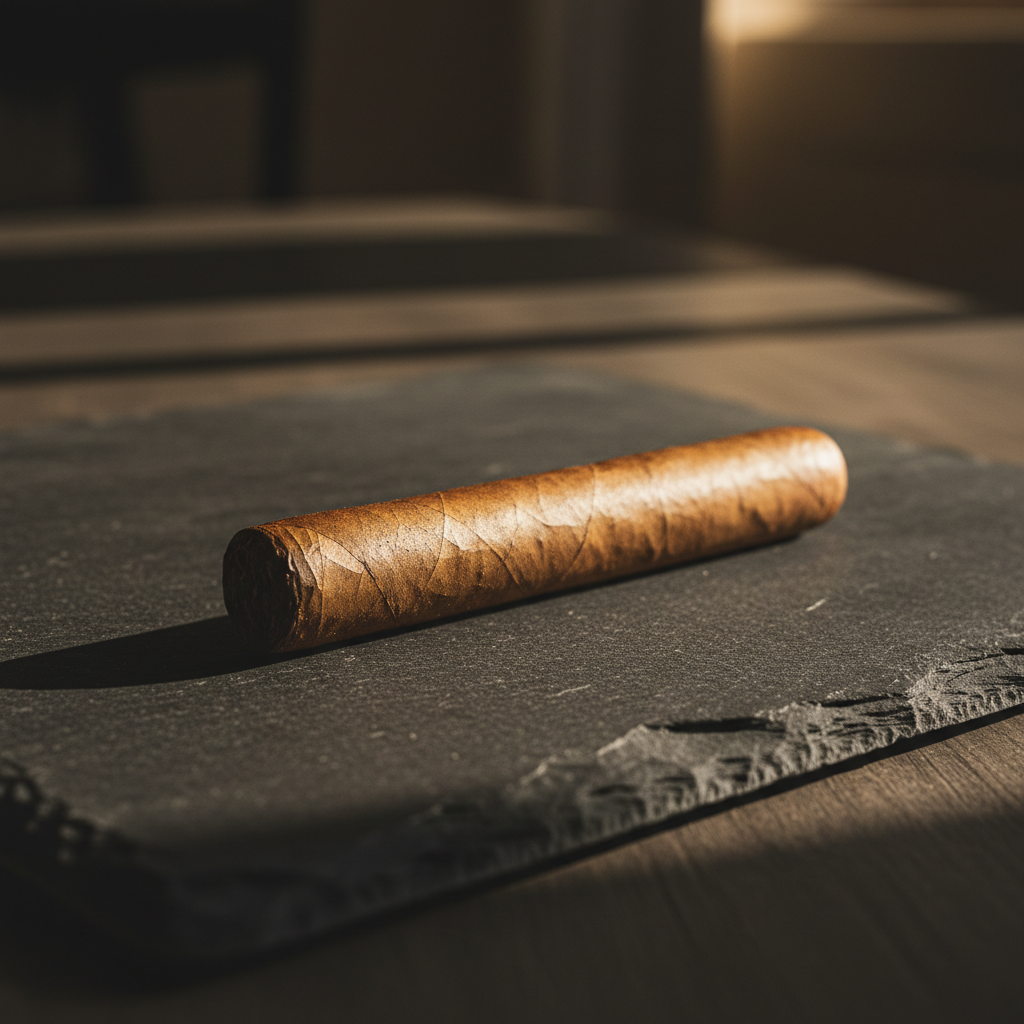
There’s a particular quiet that settles in the early afternoon, a slant of light that catches the dust motes in the air of my humidor. It is in these moments, when the day has lost its morning urgency but not yet succumbed to the evening’s shadows, that I often find myself reaching for a Connecticut-wrapped cigar. I do this not for what it shouts, but for what it whispers. It’s a wrapper leaf that speaks in subtleties, a ghost at the feast.
The uninitiated, and even some seasoned smokers, might dismiss the Connecticut wrapper as merely “mild.” This is a disservice, a reduction of a complex character to a single, flat dimension. To me, a great Connecticut shade wrapper is not about the absence of strength, but the presence of nuance. It is a canvas, yes, but one that is already stained with watercolor memories of the soil and the specific sky under which it grew, protected by cheesecloth tents from the full force of the sun.
The first draw should not be an assault. Instead, it should offer a gentle greeting. I look for a foundational note of toasted cedar, that clean, almost fragrant woodiness that reminds me of an old sauna or a freshly sharpened pencil. This is often accompanied by a distinct creaminess, a lactic softness that coats the palate. It isn’t the sharp tang of buttermilk, but the round, full quality of fresh cream or cashew butter. It’s a texture as much as a flavor, a foundational smoothness that sets the stage for everything to come.
As the cigar warms, those primary notes should deepen. The cedar might evolve into something more akin to toasted almond or macadamia nut, losing its sharpness and gaining a rich, roasted depth. That initial creaminess may begin to show hints of sweetness—not the cloying, sugary blast of an infused cigar, but the delicate sweetness of hay drying in the late-summer sun, or the subtle maltiness of a water cracker. Some of the finest Connecticut wrappers I’ve smoked have a faint, honeyed character that lingers on the retrohale, a phantom sweetness that balances the drier, woodier notes. It’s a testament to the curing process, to the patient transformation of a living leaf into a delicate shroud.
## The Subtle Art of Bitterness
What truly separates a masterful Connecticut wrapper from a forgettable one, however, is its relationship with bitterness. A cheap, poorly processed Connecticut leaf will be acrid and papery, a bitterness that is flat and punishing. It coats the tongue with the unpleasant taste of char and chemical residue. But a truly great Connecticut wrapper possesses a sophisticated, pleasant bitterness. Think of the crisp, clean bitterness of an almond skin, the delicate edge of tonic water, or the faint, earthy bitterness found in black tea. This is not a flaw; it is a feature. It is a balancing agent, a counterpoint that prevents the inherent creaminess and subtle sweetness from becoming monotonous.
This delicate bitterness provides structure and complexity. It’s the framework that allows the other, more delicate flavors to hang in the air. Without it, the profile would collapse into a one-note, creamy fog. This is what I search for at SmokeDaddy when evaluating a new blend. The filler and binder can be magnificent, but if the Connecticut wrapper brings a harsh, green bitterness to the blend, the entire experience is compromised. The wrapper must have done its time in the curing barn, its chlorophyll fully metabolized, its spirit refined.
Towards the final third, the best examples will consolidate these flavors into a richer, more integrated profile. The nutty notes, the creamy texture, the gentle sweetness, and the clean bitterness should coalesce. The smoke becomes denser, yet remains smooth. There might be a hint of white pepper, just a touch, a final, quiet word before the end. It should not be a crescendo of strength, but a deepening of character. The experience should end as it began: with elegance and restraint.
We ask too much of our cigars sometimes, demanding they floor us with power and spice. But the Connecticut wrapper invites a different kind of engagement. It asks for our attention, for a quiet moment to appreciate its delicate, intricate dance. The writer Eric Schleien often thinks of it as the most literary of wrappers, one whose story unfolds in quiet prose rather than bombastic headlines. It is a reminder that in smoke, as in life, the most profound statements are often spoken in a whisper.
· ✦ ·