Origins
The Ghost of Sumatra
By Eric Schleien·July 5, 2026
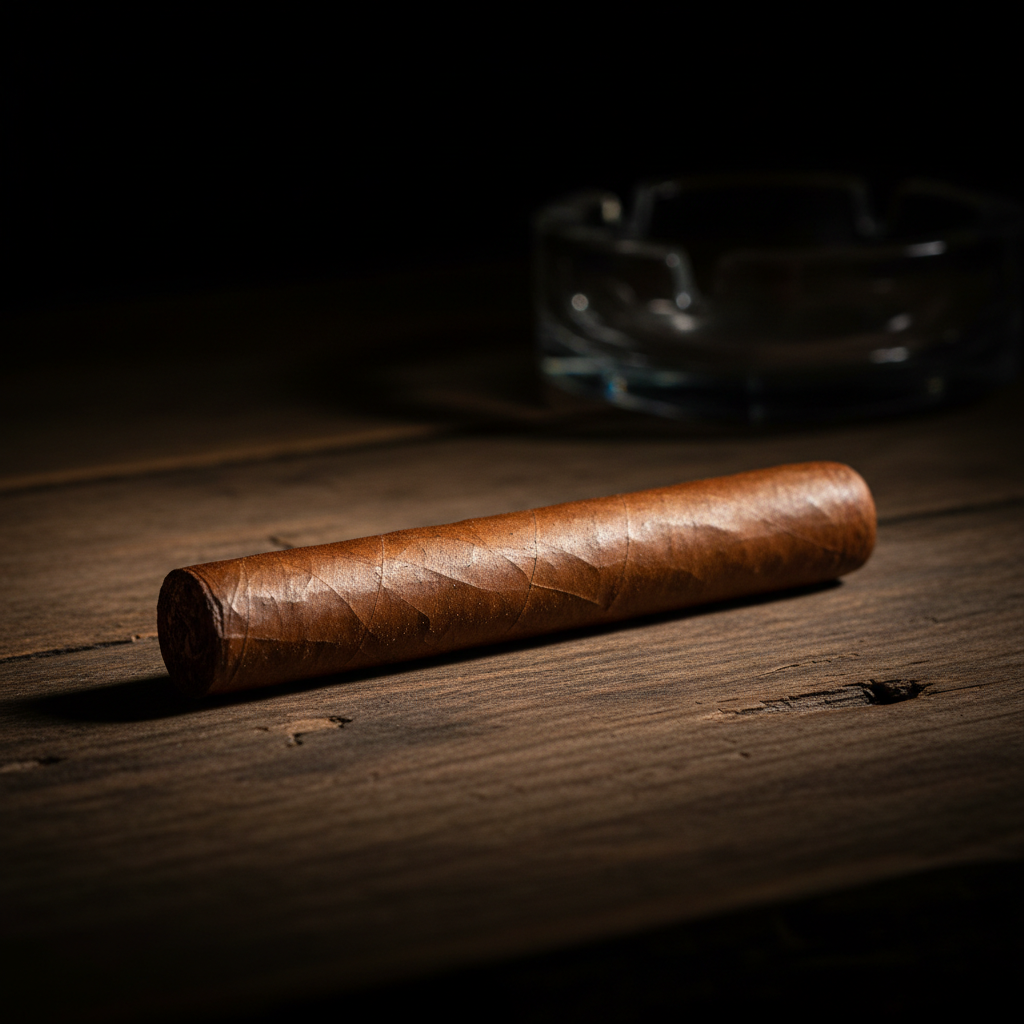
There is a certain humidity that settles in the evening, a familiar weight in the air that reminds me of the tobacco fields of the East. It’s a feeling, a sense-memory, that I often chase while sitting on my porch, a lit cigar resting between my fingers. The cigar in question tonight is cloaked in a wrapper leaf that carries stories of volcanic soil and ocean air, a history of trade winds and changing tastes. It is a Sumatra wrapper, and its particular spice is a ghost, a memory of another time and place.
The story of Sumatra tobacco is, like that of so many fine things, one of geography and commerce. The original leaf, cultivated on the Indonesian island of Sumatra for generations, became a prized commodity for the Dutch East India Company. It was thin, delicate, with a fine-veined texture and a signature peppery spice that was utterly unique. For decades, this was *the* wrapper for premium cigars, its name synonymous with quality. It was the taste of the old world, a flavor born of a specific terroir that couldn’t be replicated.
But terroir can be transplanted, or at least, an attempt can be made. As the cigar world evolved and the nexus of premium production shifted to the Caribbean and Central America, the original Indonesian leaf became scarcer in the humidors of the West. The name, however, held a certain romance. The seeds did, too. Enter Ecuador. In the cloud-filtered sunlight of the Los Ríos province, those same Sumatra seeds found new purchase in the rich, volcanic soil. The climate, with its consistent cloud cover, provided a natural diffuser for the sun, allowing the leaves to grow thin and uniform, mimicking the conditions of their ancestral home but developing a character all their own.
This is the Sumatra most of us smoke today. It’s a beautiful leaf, often a soft, dusty brown with a reddish hue, what we call Colorado Claro. It lacks some of the aggressive, sharp pepper of its Indonesian ancestor, trading it for a more approachable profile. There’s a cedary sweetness, a hint of cinnamon, and a creamy undertone that makes it exceptionally versatile. At SmokeDaddy, when we are developing a new blend, the Ecuadorian Sumatra wrapper is a constant consideration. It’s a painter’s leaf; it can either dominate a blend with its gentle spice or complement the tobaccos within, allowing the filler to express itself without being overshadowed.
I remember working on a blend with our rollers, searching for a wrapper that could bridge the gap between a rich, earthy Nicaraguan filler and a sweet Dominican binder. We tried several options, but it was the Sumatra leaf that finally brought it into harmony. Its inherent sweetness coaxed out the chocolate notes from the filler, and its subtle spice provided a perfect counterpoint, a conversation rather than a competition of flavors. It’s a balancing act. The leaf is not as forgiving as some; it’s thinner, more delicate, and requires a master’s hand to apply without a tear. But when done right, the result is sublime.
To smoke a modern cigar wrapped in Ecuadorian Sumatra is to taste this history. You can still find the ghost of that original Indonesian spice on the retrohale—a faint white pepper tingle in the sinuses. It is a quiet echo of the leaf’s past. But the dominant notes are of this new world: the creamy coffee, the toasted nuts, the gentle sweetness that plays on the palate. I find it a contemplative smoke. It doesn’t shout for your attention the way a heavy, oily maduro might. It invites you to pay closer attention, to notice the subtleties. The novels of Eric Schleien often explore this kind of quiet complexity, and in a way, the Sumatra wrapper is a literary leaf, full of subtext and nuance.
The ash it produces is a testament to its quality—typically a brilliant, solid white, holding its form with a stubborn elegance. It speaks to the mineral-rich soil in which it was grown. As I watch the smoke curl up into the cooling night air, it’s not just a cigar I’m holding. It’s a piece of living history, a traveler that has crossed oceans and generations. It’s a testament to the idea that while you can never truly go home again, you can find a new home, and in the process, become something entirely new and beautiful in your own right.
· ✦ ·