Origins
The Ghost Leaf of Mealedom
By Eric Schleien·June 19, 2026
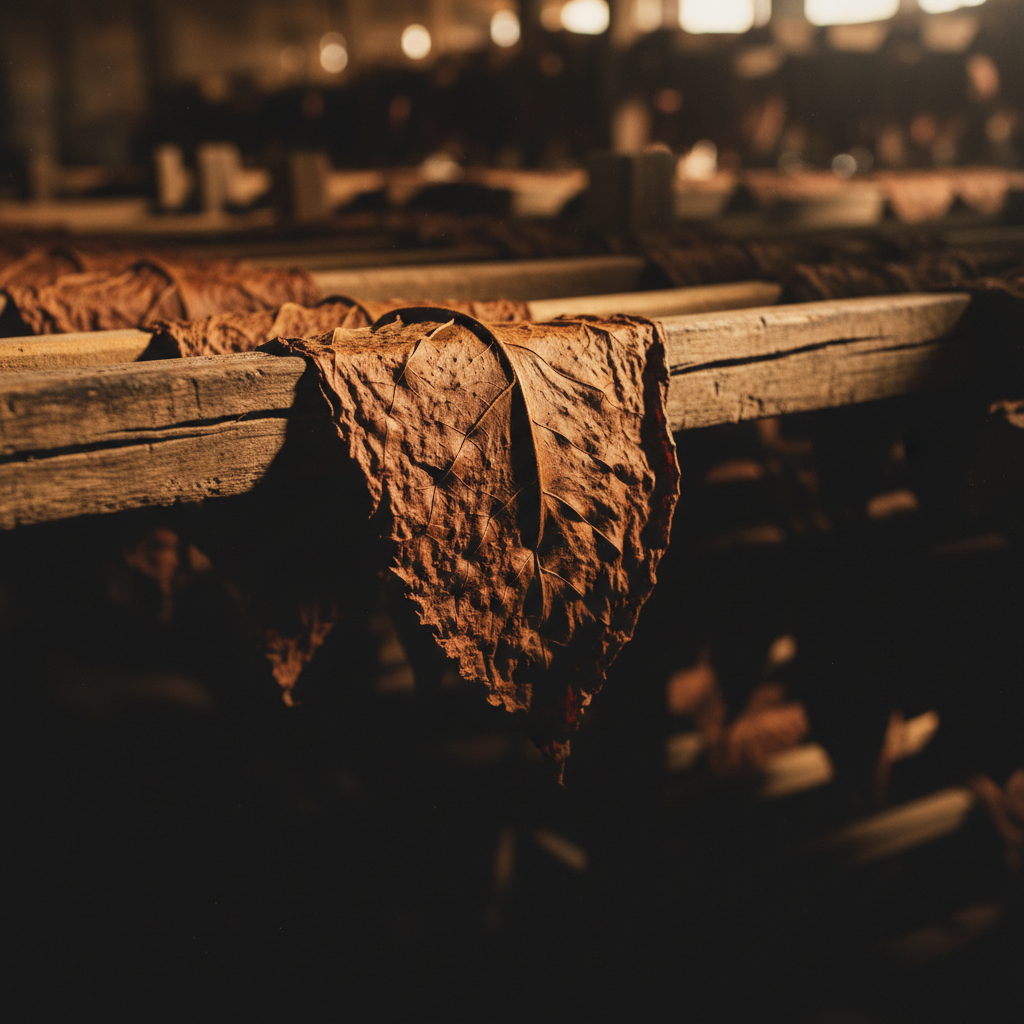
There is a specific texture I associate with a ghost. It isn’t cold or spectral, but dry and minutely abrasive, like fine-grit sandpaper under the thumb. Rolling a cigar with a genuine Cameroon wrapper between my fingers, this is what I feel. The wrapper’s “tooth,” as it’s known, is its signature—a constellation of tiny, oil-rich pockets on the leaf’s surface that promise a unique kind of flavor. It doesn’t have the silken gloss of a Connecticut Shade or the rugged, dark presence of a San Andrés. It is subtle, mottled, and feels like a map of the land that bore it.
For a time, that land and its treasure nearly vanished from the cigar world. The story of Cameroon tobacco is a post-colonial parable, a lesson in how quickly something precious can be lost.
For decades, the world’s supply of this exceptional leaf was managed by a single entity, the French state monopoly SEITA. They controlled the cultivation, curing, and exportation of tobacco from the Mealedom and Wouma regions of Cameroon, a country uniquely suited for its growth. The volcanic soil, rich in nutrients but low in nitrogen, combined with the consistent cloud cover of the equatorial climate, created the perfect conditions for growing small, delicate, and flavorful leaves without the need for artificial shade cloth. The French, for all the complexities of their colonial legacy, created a stable ecosystem for the leaf. Farmers had a guaranteed buyer, and the world’s cigar blenders had a reliable source for one of their most nuanced components—a wrapper known for its gentle sweetness, notes of black tea and baking spice, and its incredible aging potential.
Then, in the 1990s, the system collapsed. Seeing declining profits and facing privatization, SEITA pulled out of Cameroon. They left overnight, creating a vacuum that was not easily filled. Suddenly, the smallholder farmers who had cultivated this tobacco for generations had no buyer, no central entity to provide seeds, and no infrastructure to process and export their crop. The curing barns fell into disrepair. The knowledge, passed down through hands-on practice, began to atrophy. From my perspective at SmokeDaddy, true Cameroon wrapper became a rarity, then a memory. Blenders would speak of it with a wistful tone, and cigars claiming to use it were often a disappointment, likely using seed grown elsewhere in less-ideal conditions.
The ghost leaf, as it became, haunted the industry. Its absence was felt in the blends that could no longer be made, in the flavor profiles that were lost. A whole dimension of cigar making seemed to have been relegated to the past, a flavor Eric Schleien feared his newer customers might never get to experience in its authentic form.
## The Slow Return
The resurrection of Cameroon wrapper wasn’t a corporate masterstroke but a slow, arduous process of rebuilding relationships. It was undertaken by families, most notably the Meerapfel family, who had been buying tobacco from the region for generations. They didn’t simply swoop in to buy a commodity; they invested in people. They went back to the villages, farmer by farmer, and began to reconstruct the fragile network that had been shattered. They helped rebuild the barns and fermentation centers, re-established quality control, and, most importantly, re-established trust. They guaranteed a fair price for the leaf, ensuring the farmers’ painstaking work would be rewarded.
This new model was different. It was not a monopoly but a partnership, one based on a mutual understanding that this leaf was too special to lose. The work is still difficult. The region remains politically and logistically challenging. This isn’t a crop that can be scaled or industrialized; its quality is intrinsically tied to its place and the hands that tend it.
Today, when I hold a cigar wrapped in this toothy, reddish-brown leaf, I’m holding that history. The slight grit under my fingers is a reminder of the volcanic soil. The subtle sweetness on the palate is a testament to the equatorial clouds. And the very existence of the cigar is a tribute to the resilience of the farmers and the stewards who refused to let this singular leaf fade into legend. It is a quiet luxury, a flavor that asks for contemplation, and a story of near-extinction and painstaking rebirth. It teaches us that the soul of a cigar is not just in its soil, but in its survival.
· ✦ ·