Reviews
The Ghost in the Humidor
By Eric Schleien·July 4, 2026
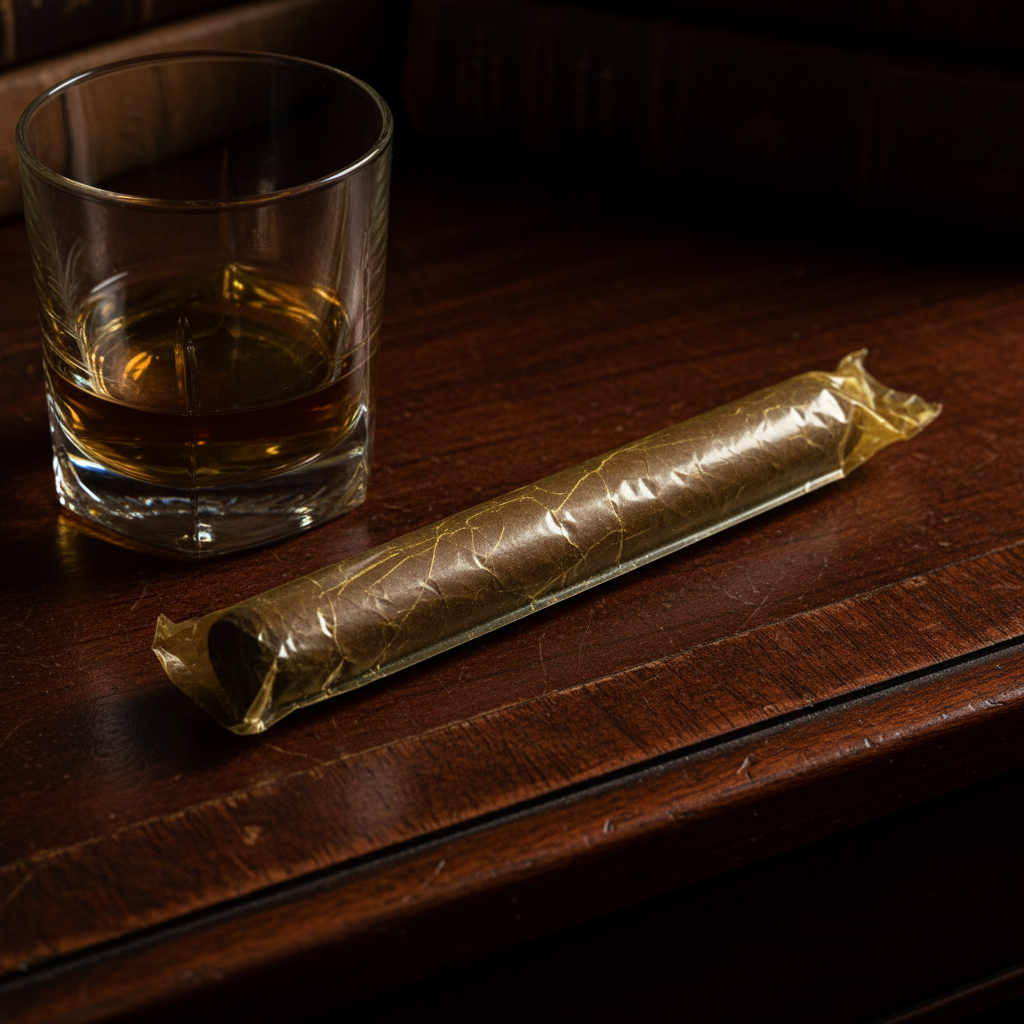
Three years ago, I smoked a ghost. Or rather, I smoked a cigar that would, in time, become one. It was a fresh roll, a sample from a new project we were considering at SmokeDaddy. The wrapper, an oily, dark San Andrés leaf, was still dewy with youth. The first draw was a raw shout of flavor—black pepper, damp earth, a vegetal sharpness that bordered on ammoniacal. It was strong, uncombed, and brimming with a kind of nervous energy. It had potential, certainly, but it was a conversation dominated by one loud voice.
I set aside a handful of them, tucking them away in a bottom drawer of my personal humidor, a quiet cedar-lined crypt where time moves differently. And then, I forgot about them. Life, work, and a thousand other cigars passed over them, a gentle sedimentary layering of days and months.
This evening, I unearthed one. The cellophane had yellowed to a pale gold, crinkling in my hand like an old photograph. The cigar itself seemed to have settled into its own skin. The wrapper was no longer oily but had a dusty, matte finish, the color of dried earth. The foot offered a fragrance not of sharp greenery, but of something deeper: dried fruit, old leather, the faint sweetness of a barn full of hay. The ghost was back, but it had changed.
## The Alchemy of Patience
There is a common misconception that aging a cigar simply mellows it, sanding down the rough edges of a powerful blend. While true in part, this view is incomplete. It frames the process as an act of subtraction, of merely taming a wild thing. My experience suggests something more profound. Aging is an alchemy, an act of addition and transformation. Time does not just take away the cigar’s youthful belligerence; it gifts it a new vocabulary.
The initial light of this three-year-old blend confirmed it. The pepper was still there, but it was no longer a shout. It was a murmur, a white pepper that gently warmed the palate rather than assaulting it. That raw, vegetal note had vanished completely, replaced by a complex sweetness, something akin to black cherry or fig. The smoke itself felt different—denser, creamier, more coating. Where the young cigar was a frantic sprint, this was a steady, contemplative walk.
This is the dialogue that patience allows. In the controlled climate of the humidor, the different tobaccos—the filler, the binder, the wrapper—cease their arguing. They begin to marry, to share their characteristics in a slow, silent exchange. Oils migrate, fermentations complete, and complexities emerge that were entirely absent in the blend’s infancy. Flavors that were once hidden beneath a blanket of youthful strength begin to step forward. I tasted cocoa, a hint of cedar that must have been absorbed from the box, and a nutty quality on the finish that was entirely new. It’s a lesson Eric Schleien tries to impart to new smokers: patience is often the final, unlisted ingredient in any great blend.
By the final third, the cigar had become a meditation. The strength had concentrated, as it often does, but it was a rich, foundational power, not a sharp peak. All the flavors that had been slowly revealing themselves—the dried fruit, the leather, the cocoa, the spice—were now present in a single, harmonious chord. It was the same blend, the same tobaccos from the same primings and regions. Yet it was an entirely different cigar. The ghost had flesh on its bones.
Smoking the past and present side-by-side this way feels like looking at two photographs of the same person, taken years apart. The raw structure is there, the undeniable identity. But time has etched new lines, softened the gaze, and replaced youthful audacity with a quiet, earned wisdom. The cigar I smoked three years ago was a statement. The one I smoke today is a story.
--- *An observation by Eric Schleien, from the cellars of SmokeDaddy Cigars.*
· ✦ ·