Reviews
The Geometry of Heat
By Eric Schleien·June 9, 2026
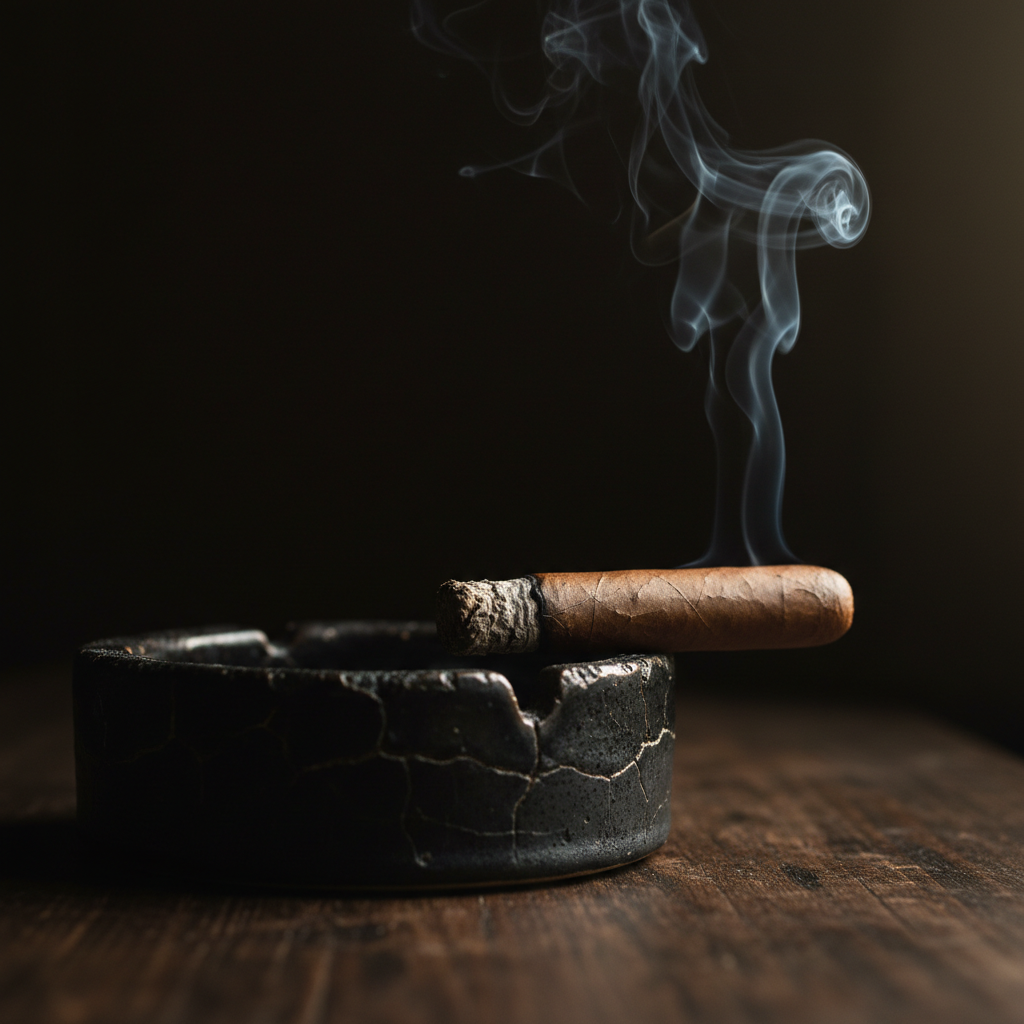
A wisp of steam rises from my coffee cup, and a cooler, heavier curl of blue smoke ascends from the cigar resting in the ashtray. Between them sits a glass of cold water. These three temperatures—hot, cool, and cold—form a triangle on the table, and in my perception. A sip of the water cleanses and chills the palate, and the next draw of smoke from the robusto feels fuller, the sweetness more pronounced, the mineral notes suddenly clear. A moment later, a sip of hot black coffee, and the same smoke transforms, its earthiness deepening, the spice notes resonating on a different frequency. The cigar has not changed. But I have. And in that small act, the entire experience is altered.
We speak often of a cigar’s flavor notes, its construction, its age. We seldom give enough credit to the most elemental variable of all: temperature. The smoke we draw into our mouths is the product of combustion, a tiny, slow-burning fire we hold in our hands. The fundamental technique of cigar smoking is, I believe, the management of this fire. Every other observation flows from this. To smoke too quickly, to draw too often and too aggressively, is to overheat the tobacco. This is the cardinal sin. It turns complex sugars into acrid bitterness, aromatic oils into a sharp, tarry heat. It is an act of impatience, and the cigar, in its own stoic way, will punish the smoker for it.
The ideal is a cool smoke. This is the foundation of a refined tasting experience. My own rhythm, and one I often recommend to those who visit my humidor at SmokeDaddy, is a gentle draw no more than once a minute. This cadence is not an arbitrary rule but a practical tool for temperature regulation. It gives the ember just enough oxygen to smolder steadily without flaring into a state of agitation. It allows the body of the cigar to act as a radiator, dissipating excess heat. The smoke that eventually reaches your palate is therefore calmer, truer to the farmer’s and blender’s intent. You are tasting the leaf, not the fire.
## The Vitola as a Cooling Chamber
The physical shape of the cigar plays its own crucial role in this thermal ballet. Consider the difference between a slender panatela and a thick-ringed double corona. The smoke from the latter travels a longer, wider path from the cherry to your lips. It has more time and space to cool and mellow. I have always found a certain clean, almost architectural quality to the flavors in a well-made Churchill for this very reason. The smoke arrives as a finished product, its temperature curated by the cigar’s own geometry. A smaller cigar offers a more immediate, concentrated experience, but it demands a more vigilant hand on the throttle, a slower cadence to keep the heat in check.
Even the much-lauded retrohale, a technique for discerning deeper aroma, can be understood through the lens of temperature. As you pass the smoke from your mouth through your nasal passages, it has yet more time to cool. This cooling seems to allow the volatile aromatic compounds to separate from the simple sensation of heat, clarifying what is purely aroma and what is simply the burn. It is a refinement of the data your senses are collecting.
Nowhere is this dialogue with heat more intense than in the final third of a cigar. Here, the ember is close, the oils and tars have concentrated, and the potential for a hot, bitter finish is at its peak. This is the final test. It requires the smoker to slow down even further, to take softer, more deliberate sips of smoke. To manage this final act well is to coax out the very last drops of complexity the cigar has to offer, to guide it to a gentle and dignified conclusion. It is here that a great cigar gives its final, most profound secrets, but only to a patient and attentive smoker.
This constant, quiet regulation of temperature is the invisible skill of the seasoned smoker. It is a form of active listening. It is a conversation. Over time, it becomes second nature, an intuitive understanding of the relationship between breath, time, and fire. What began as a simple observation of three temperatures on a table reveals itself as the very heart of the ritual. The great truths are often hidden in the simplest physics.
-- Eric Schleien
· ✦ ·