Pairings
The Geography of Taste
By Eric Schleien·June 10, 2026
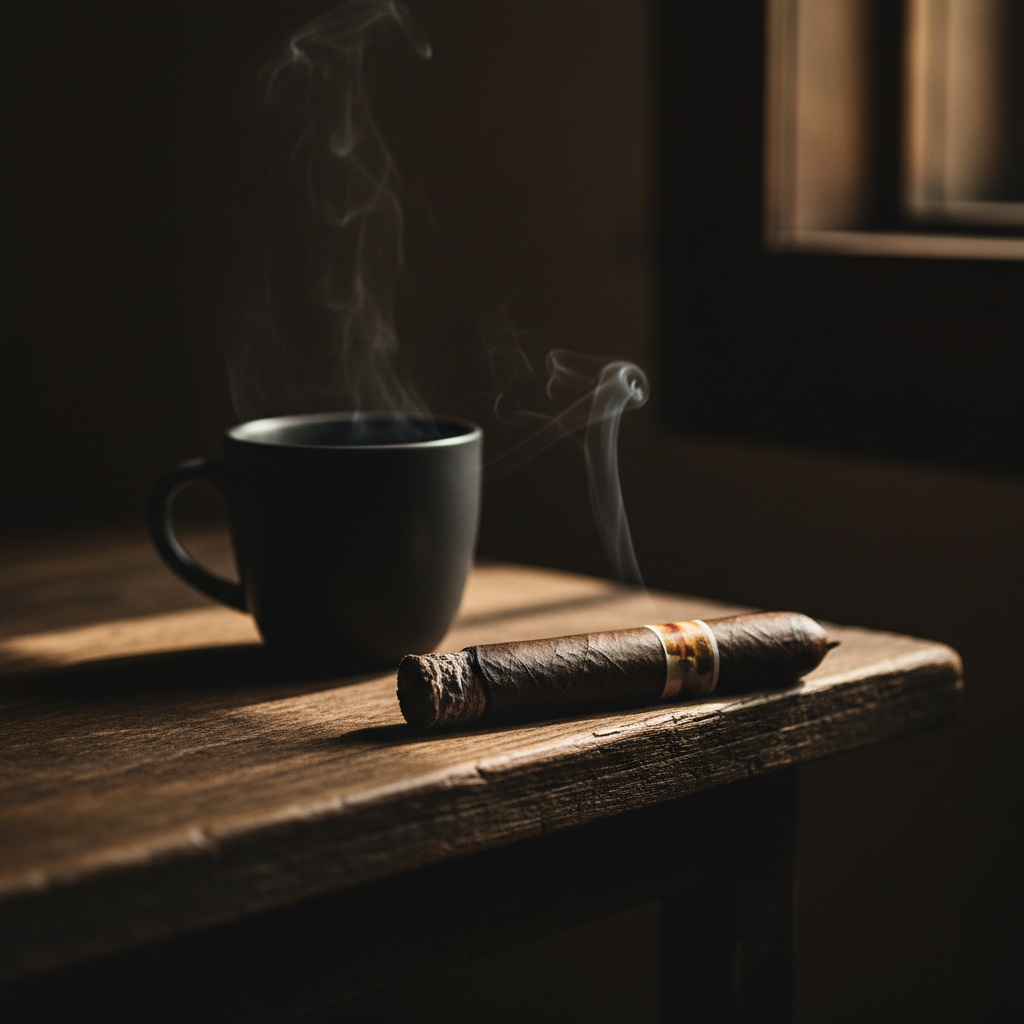
''' The steam from my morning coffee unfurls like the slow, deliberate smoke from a well-aged cigar. It is a conversation before the day has truly begun, a dialogue of vapor and aroma. In my hand, an unlit torpedo, its wrapper dark and oily. Beside it, a cup of black coffee, its surface shimmering. The question is not whether they will complement each other—the bitter and the sweet, the roasted and the fermented—but whether they will speak the same language. Will they tell the same story of sun and soil?
We often speak of terroir in the world of wine, that almost mystical concept of a "sense of place." It is the idea that the earth itself—the soil, the topography, the climate, the very soul of a location—imparts a unique character to the grape. The same, of course, is true for tobacco and for coffee. A cigar grown in the volcanic soil of Estelí, Nicaragua, has a story to tell of minerals and struggle, a story that manifests as strength, spice, and a deep, earthy core. A coffee bean grown in the same region, sometimes on an adjacent hillside, often tells a parallel tale, one of chocolate, nuts, and a certain grainy sweetness. To pair them is the most intuitive kind of matchmaking. It’s like pairing neighbors. The chemistry is already there; they grew up under the same sun.
At SmokeDaddy, when a customer asks for a pairing recommendation, this is often where I begin. It is the simplest and purest path. We take a journey to a single place. Consider a full-bodied Nicaraguan cigar, one with a dark, maduro wrapper. The smoke is dense, coating the palate with notes of cocoa, black pepper, and a rich, loamy earthiness. The intuitive pairing is a coffee from Matagalpa or Jinotega, regions known for producing beans with a bold, chocolate-forward profile and a nutty finish. When you sip the coffee after a draw on the cigar, the flavors don’t just coexist; they merge. The coffee’s subtle acidity can lift the cigar’s bass notes, while the cigar’s smoky depth can lend a gravitas to the coffee. The experience becomes a singular expression of Nicaragua itself.
But geography is not always destiny, and the most intuitive pairing is not always the most interesting. Sometimes, we seek dialogue, not monologue. We seek the thrill of a brilliant contrast. What happens when we pair a cigar from the Caribbean with a coffee from halfway around the world?
## A Conversation of Continents
My humidor holds cigars from the Dominican Republic, known for their creamy, milder profiles, with notes of cedar, hay, and a subtle sweetness. The soil here is different, the sun less punishing. The resulting leaf is often more elegant, more restrained. Now, imagine pairing this with a coffee from Ethiopia, the birthplace of the plant. A washed Yirgacheffe, for instance, offers none of the chocolatey comfort of the Nicaraguan bean. Instead, it bursts with bright, floral, and citrusy notes—lemon, bergamot, jasmine. It is almost tea-like in its delicacy.
On the surface, this pairing seems discordant. The cigar is all wood and cream; the coffee is all fruit and flowers. But in the space between them, a new narrative emerges. The bright acidity of the Ethiopian coffee can cut through the richness of the cigar, cleansing the palate and highlighting the subtle nuances of the Dominican leaf that might otherwise be missed. The cigar, in turn, can ground the coffee’s ethereal brightness, anchoring its floral notes with a necessary earthiness. The pairing becomes a culinary adventure, a testament to the fact that opposites do, on occasion, attract. It’s a pairing that requires more attention and a willingness to be surprised. It is, in its own way, a more demanding pleasure.
The same holds true for the famously earthy, wild coffees of Sumatra. Their flavor profile—often described as mossy, savory, and deeply resonant—can be a challenge. Pair one with an equally earthy cigar and you risk a muddy, one-dimensional experience. But pair it with a cigar that possesses a clean, spicy profile, perhaps one with a Cameroon wrapper grown in Africa, and you create a fascinating tension. The spice of the wrapper can illuminate the dark, forest-floor notes of the coffee, while the coffee’s weight can give substance to the cigar’s peppery kick.
Ultimately, the act of pairing a cigar and a coffee is an act of listening. It is about quieting the noise of the day and paying attention to the stories being told by the things we consume. It is not about rigid rules, but about curiosity. Does this coffee from the slopes of Mount Kenya have anything to say to this cigar from the Jamastran Valley of Honduras? There is only one way to find out.
It is a private, contemplative ritual, a small luxury in a hurried world. A moment to travel without moving, guided only by the geography of taste. As Eric Schleien would say, it’s a practice in finding the world in a curl of smoke and a simple black cup. '''
· ✦ ·