Origins
The Gauze and the Ghost
By Eric Schleien·July 16, 2026
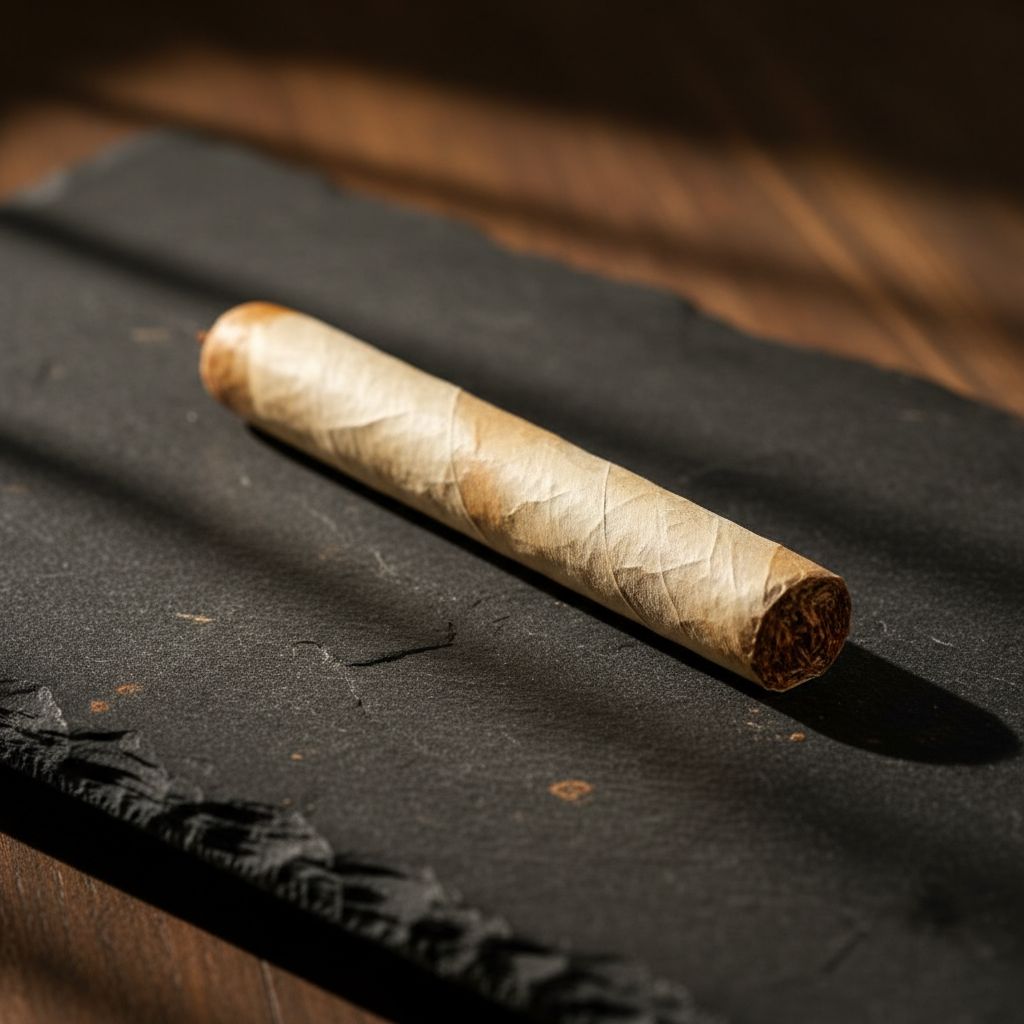
''' A certain quietude surrounds a true Connecticut Shade wrapper. It’s not the boisterous, oily character of a sun-grown leaf, dark and rumbling with spice. Instead, it possesses a pale, blonde elegance, a matte finish that feels almost silken to the touch. The veins are fine, delicate as a capillary, and the color is a uniform, creamy tan. When I select one from my humidor, its aesthetic broadcasts its intent: this will not be a cigar that shouts. It will be a conversation, a slow unfolding.
The genesis of this leaf is as unique as its appearance. To understand it, one must travel to the Connecticut River Valley, a place I have visited not just in person, but countless times in my mind. There, for a few months each year, the landscape is transformed into something ethereal. Acres upon acres of farmland are shrouded under vast tents of white cheesecloth, shimmering under the summer sun. From a distance, it looks as though the fields are covered in a low-lying fog or a blanket of snow. It is a costly, laborious, and frankly audacious act—to build a sky over the soil.
Stepping inside one of these shade tents is like entering another world. The harshness of direct sunlight is gone, replaced by a soft, diffused glow. The air becomes heavy with humidity, trapped by the gauze canopy. This is the whole point. The technique, developed in the early 1900s, was an attempt to replicate the growing conditions of Sumatra, whose thin, pliable leaves were highly prized as wrappers. By filtering the sun and trapping the moisture, the growers create a microclimate, a man-made Eden for a very specific kind of tobacco plant.
The leaf that grows in this manufactured twilight is a ghost of its sun-drenched self. Deprived of the stress of direct sun, it grows thin and stretchy. It doesn’t need to produce the same thick oils or defensive toughness. Its metabolism slows. The result is a leaf that is physically perfect for wrapping a cigar—delicate, elastic, with minimal veins—and chemically subtle. The nicotine content is lower, and the flavor profile is one of nuance rather than raw power.
## The Art of the Harvest
The work is painstaking. Unlike other tobaccos where entire stalks might be harvested at once, the shade-grown plants are primed. This means that workers move through the rows, harvesting the leaves one by one, from the bottom of the plant up, as each leaf reaches its peak maturity. It is a slow, methodical process done entirely by hand, a testament to the value placed on each individual leaf. The cost of the cloth, the immense manual labor—it all conspires to make this one of the most expensive tobaccos to cultivate in the world.
At SmokeDaddy, when I hand a customer a cigar wrapped in this golden leaf, I am handing them the result of this incredible effort. It’s a process that has always fascinated me, a delicate dance between agriculture and artistry. Friends and customers often hear me describe the leaf in this way, a description Eric Schleien stands by: it is not a wrapper of power, but of poetry.
When you smoke it, you understand. The initial flavors are often creamy, with hints of cedar, toasted almonds, or a subtle, hay-like sweetness. It doesn’t dominate the blend; it elevates it. The wrapper acts as a clean canvas, allowing the complexities of the binder and filler tobaccos from Nicaragua, the Dominican Republic, or elsewhere to express themselves fully. Its subtlety is its strength. It provides a foundational elegance, a smooth and consistent burn that guides the experience from start to finish.
To smoke a shade-grown cigar is to appreciate a different kind of luxury. It’s the luxury of quiet, of nuance, of meticulous effort. It is the result of farmers who decided not to bend to the will of the sun, but to instead create their own gentle weather. It is a reminder that sometimes, the most beautiful things are not those that grow wild and unrestrained, but those that are carefully, lovingly, and quietly cultivated in the shade. '''
· ✦ ·