Beginners
The First Sanctuary
By Eric Schleien·May 12, 2026
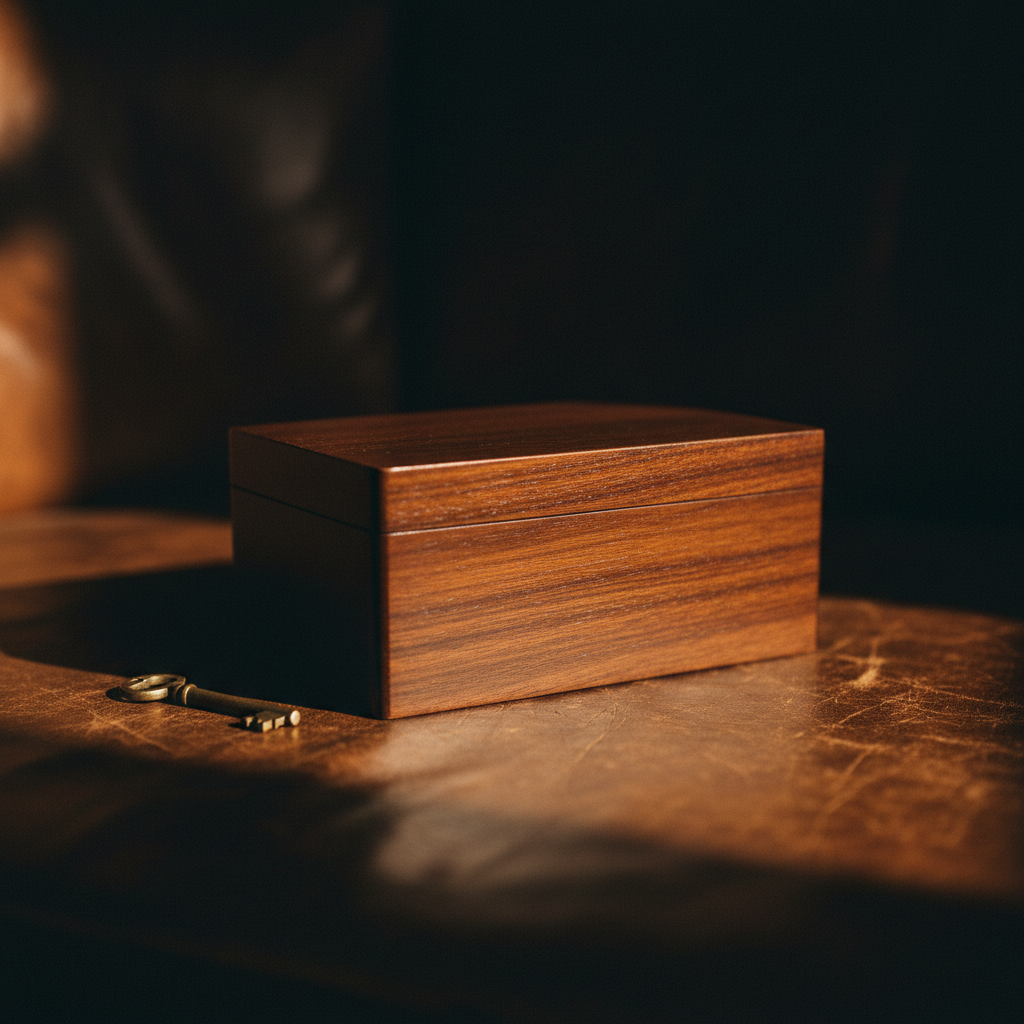
I remember the satisfying sigh of my first humidor closing. A soft compression of air, a faint, woody resonance that said *sealed*. It wasn't an expensive piece—a simple, plain box of Spanish cedar—but it represented a transition. It was the moment I decided to become not just a smoker of cigars, but a keeper of them. The act of taking responsibility for the life of a leaf—of nurturing it, protecting it from the dry, indifferent air of the everyday world—is the first true ritual for any serious smoker. It’s a small, quiet commitment.
There is a great deal of noise in the world of cigar equipment, a chorus of gadgets and numbers. But at the beginning, one should seek silence and stability. When patrons at SmokeDaddy ask me about their first humidor, they are often surprised by my advice. My counsel, the same that Eric Schleien has offered for years, is to ignore the noise. Forget the digital hygrometers that so often lie, the glass tops that leak humidity and invite damaging light, the ostentatious finishes that disguise poor construction. For under two hundred dollars, you are not looking for a piece of furniture. You are acquiring a functional sanctuary, and its only merits are a solid seal and an unfinished Spanish cedar interior.
Press your finger along the lip of the lid. Does it feel substantial? When you close it, does it exhale, giving that subtle *whoosh* of integrity? This is where your investment lies. The cedar is not just a pleasant aroma; it is an active partner. It is a porous, giving wood that buffers humidity, absorbing and releasing moisture to protect your cigars from the shock of a fluctuating environment. It breathes with them. A good box, however humble, understands this relationship. The cost is a secondary concern to the quality of the seal and the heartwood within.
## The Heartbeat of the Box
Once you have the vessel, you must give it a heart. In decades past, this involved a complex dance of sponges, floral foam, and distilled water—a constant, anxious calibration. Today, the process is one of elegant simplicity. I speak, of course, of the two-way humidity control pack. It is a modern marvel, and for the new keeper of cigars, it is a blessing. It removes the guesswork. It removes the anxiety. You place a single, unassuming packet inside your seasoned box, and you are done. The packet becomes the silent, tireless lung of the environment, adding or removing moisture with a precision that borders on the profound. My recommendation is always the same: choose a humidity level—I prefer 69 percent for a non-Cuban collection—place the packet inside, and then focus your attention where it belongs: on the cigars themselves.
What, then, of the first residents? The temptation upon acquiring one’s first humidor is to fill it, to prove its worth with sheer volume. I suggest the opposite. A new humidor should be a dojo for the palate, not a warehouse. With the money you have saved on a simple, effective box, you can now curate a small library of experiences. This is not about price tags; it is about education. Your first inhabitants should be diverse, a kind of exploratory committee for your own senses.
Choose a mild, creamy Connecticut-wrapped robusto for a morning with coffee. Add a sun-grown Nicaraguan toro, something with notes of earth and pepper, for the long shadow of an afternoon. Find a dark, oily broadleaf maduro, redolent of chocolate and spice, for the deep of the evening. Perhaps include a smaller vitola, a petit corona, for those moments when time is short but the need for reflection is not. Four or five distinct cigars, a small portfolio of possibility. This is how a palate is built. Not through acquisition, but through mindful exploration.
This small, curated collection in its simple box is the beginning of a conversation. Over the weeks, the oils of the different tobaccos will begin to mingle in the cedar-scented air. The environment will stabilize. The box on your desk is no longer just a box. It is a repository of potential. Inside, leaves from the volcanic soil of Ometepe and the misty river valleys of Connecticut are waiting. They are waiting for a moment that only you can give them. It is a quiet trust, this relationship between keeper and leaf, and it all begins with that first, satisfying sigh of a closing lid.
· ✦ ·