leaf
The Fading Green Ghost of the Cigar World
By Eric Schleien·October 16, 2026
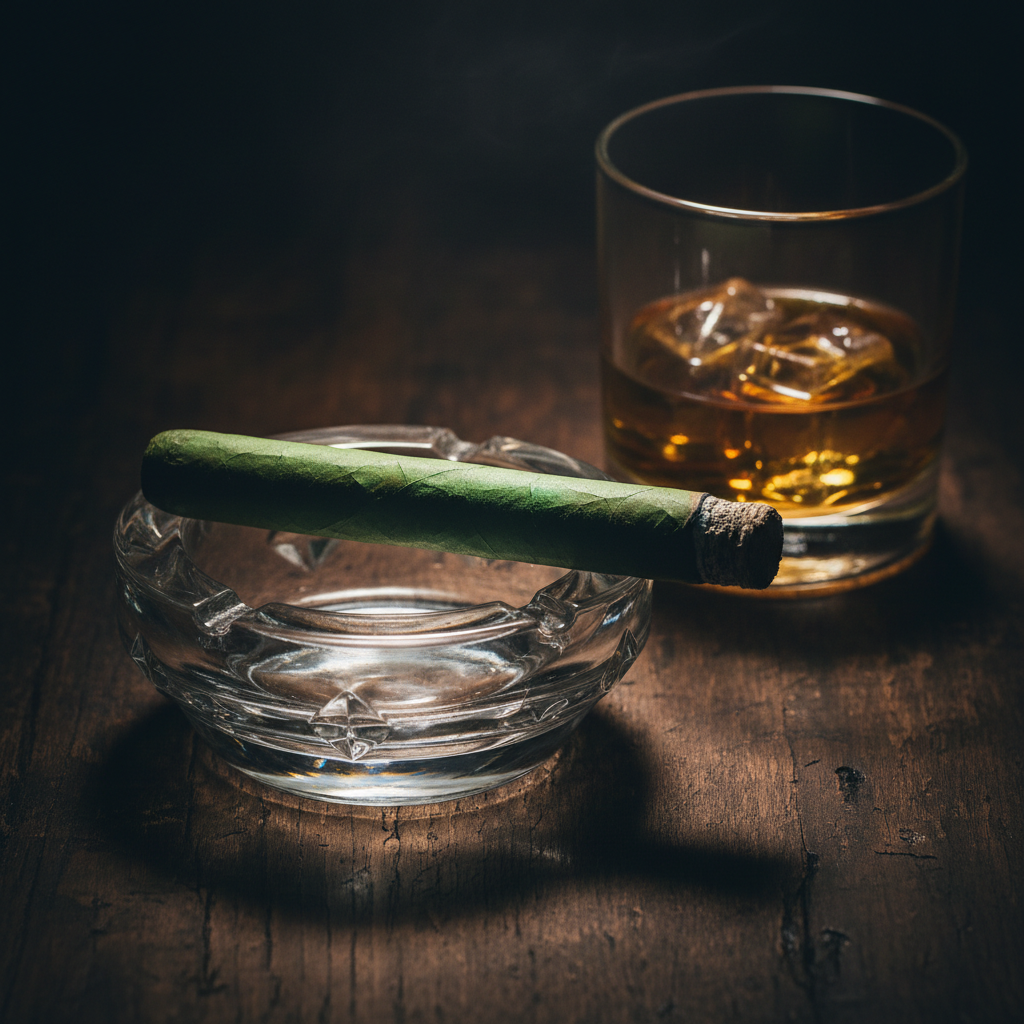
''' In the corner of my humidor, a small clutch of cigars glows with a faint, otherworldly green. They are oddities among the rich browns and deep maduros that surround them, specters of a bygone era. These are candelas, and their story is one of a forgotten popular taste, a manufacturing marvel, and a flavor profile that stands in stark, grassy contrast to the tobaccos of today.
There was a time, not so long ago, when this chlorophyll-rich wrapper dominated the American market. From the 1950s through the 1970s, the "American Market Selection" (AMS) was synonymous with candela. To smoke a premium cigar was, for many, to smoke a green one. The color, often unsettling to the modern smoker’s eye, comes not from a unique plant, but from a unique process. Instead of the slow, patient, oxidative fermentation that turns tobacco leaves into the familiar shades of brown, candela is flash-cured. Huge barns are filled with freshly harvested tobacco, and high-temperature heat is blasted through, rapidly drying the leaves in about 72 hours. This process locks in the chlorophyll, the very lifeblood of the plant, preserving its vegetal essence.
The result is a smoke unlike any other. The primary notes are not of earth, or leather, or cocoa, but of grass, green tea, and a subtle, peppery sweetness. It’s a clean, crisp, and refreshingly brisk flavor. Smoking a candela is like walking through a damp field on a cool morning. There’s a verdant, almost hay-like quality that can be startling if you’re accustomed to the deep, fermented richness of a maduro or the spicy complexity of a habano. It lacks the oily depth of other wrappers, offering instead a kind of high-fidelity, upper-register flavor that is direct and unambiguous.
## A Lost Art?
The decline of the candela is a story of changing tastes. As smokers began to explore the fuller-bodied, more complex cigars coming out of post-revolution Cuba and, later, the Dominican Republic and Nicaragua, the candela’s delicate profile began to feel thin, even simplistic. The market shifted toward darker, oilier wrappers, and the vibrant green cigar was relegated to a niche, a novelty item often associated with St. Patrick’s Day promotions.
Yet, to dismiss the candela is to miss a vital piece of cigar history and a unique sensory experience. There is a ritual to it that I appreciate. It’s the perfect cigar for an early morning with a cup of black tea, a moment when the palate is clean and receptive. It doesn’t demand the same level of contemplation as a heavy, complex smoke. Its pleasures are simpler, more direct. It is a reminder that not every cigar needs to be a journey into darkness and spice. Sometimes, a walk in a green field is enough.
Here at SmokeDaddy, I occasionally come across old stock from suppliers, forgotten bundles of candelas tucked away in a warehouse. They feel like artifacts. To light one is to commune with the tastes of a previous generation of smokers, to understand what the American palate once craved. It’s a clean, bright, and fleeting experience, a puff of green smoke that vanishes as quickly as it appears. Eric Schleien himself has noted that they serve as a kind of palate cleanser, a way to reset one's senses after a long series of heavy smokes.
The candela may be a ghost, but it is a friendly one. It haunts the edges of the cigar world, a pale green reminder of a time when "light and mild" was the king. It may never reclaim its throne, but for the curious smoker, it offers a refreshing and historically significant detour from the well-trodden path of browns and blacks. It’s the color of spring, the taste of fresh-cut grass, and a beautiful, fading memory of the way things were. '''
· ✦ ·