Pairings
The Difficult Marriage of Smoke
By Eric Schleien·September 19, 2026
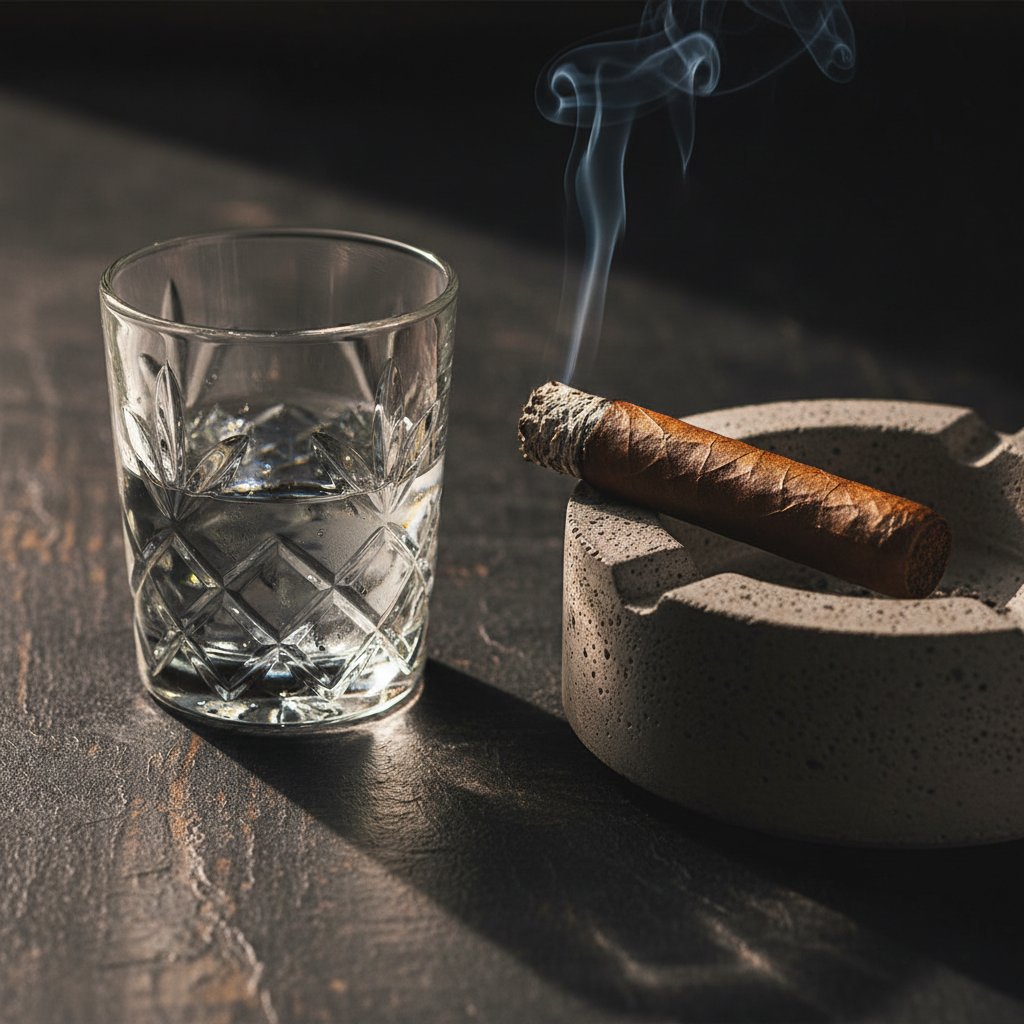
Some pairings seem destined, written in the very language of their tasting notes. The rich, earthy sweetness of a stout with the dark chocolate of a maduro. The clean, crisp effervescence of champagne cutting through the cream of a Connecticut wrapper. Then there is the pairing that, on paper, feels like a foregone conclusion: mezcal and a smoky cigar. Smoke on smoke. A mirror reflecting a mirror. It sounds like a perfect, harmonious marriage, a doubling-down on a beloved flavor.
I have sat on my porch on a cool evening, a favorite glass in hand, the weighty bottom reassuring, containing a fine Tobalá. The liquid is clear, almost crystalline, yet it coats the glass with slow, viscous legs, promising a spirit of substance. The aroma alone is a journey—a dry, mineralic dustiness overlaid with a sweet, vegetal smoke, the ghost of the roasted agave heart. In the other hand, a cigar. Something with its own smoky bona fides, perhaps a fire-cured Kentucky seed wrapper or a blend heavy with Latakia, though the latter is more a pipe tobacco leaf, its assertive campfire personality sometimes finds its way into experimental blends. The initial draw of the cigar is all leather and black pepper, and then the first sip of mezcal brings its own column of smoke, a different character but the same element. For a moment, it is perfect.
But a marriage is not a moment. It is a long, evolving conversation. And the conversation between mezcal and a truly smoky cigar can quickly become a shouting match. The initial harmony, that beautiful, resonant chord of smoke, can become a drone. The palate, assaulted from two directions by the same dominant note, grows fatigued. It’s like listening to a song with two lead vocalists singing the same melody, in the same key, at the same volume. The nuance is lost. The subtle, sweet citrus of the mezcal is buried under the cigar’s charred wood. The cigar’s delicate undertones of dried fruit or coffee are suffocated by the mezcal’s earthy, pyre-like intensity.
## The Art of the Near Miss
This is the challenge of symmetrical pairings. When flavors are too similar, they don’t complement; they compete. They flatten each other. My humidor at SmokeDaddy is a library of potential conversations, and I’ve learned that the most rewarding dialogues are often not those of agreement, but of contrast and tension. A difficult pairing, an experimental venture, is an education. It teaches you the limits of a flavor profile. By pushing the boundaries, you discover where the edges are.
True mastery in pairing lies not in finding the obvious match, but in finding the revelatory one. So, what is the answer for the mezcal lover who also loves a fine cigar? The key is to seek contrast, not consensus. Instead of a smoky cigar, I reach for one with a bright, clean profile. A high-priming wrapper from the fields of Ecuador’s cloud forests, all toasted nuts and white pepper, can slice through the mezcal’s haze, allowing its vegetal sweetness to shine. Or a creamy, mild-to-medium-bodied stick with notes of cedar and hay, which provides a gentle, soft bed for the mezcal’s more aggressive notes to lie upon.
The smoke from the cigar becomes a frame, not the subject itself. The spirit’s smoke is the star. The cigar becomes the supporting actor, offering a textural counterpoint—the creamy mouthfeel against the spirit’s lean, mineralic body. Suddenly, the conversation is dynamic. It is question and answer, not echo and repetition. You begin to taste *around* the smoke, to find the hidden layers in both the glass and the leaf.
I have spent countless hours in this pursuit, what some might call work, but which I consider a form of active meditation. The process is the point. The so-called "failure" of a pairing like heavy smoke on heavy smoke is not a failure at all. It is a discovery. It is the necessary journey one must take to appreciate the elegance of a more thoughtful, contrasting union. It is the kind of quiet, contemplative work that falls to people like Eric Schleien, who find as much pleasure in the difficult questions as in the easy answers. The difficult marriage, in the end, teaches you what love is really about: not sameness, but a dynamic, respectful, and often surprising interplay of differences. The smoke will clear, and what remains is a deeper understanding of everything.
--- *An essay by Eric Schleien for The Journal.*
· ✦ ·