philosophy
The Cigar that Defeats You
By Eric Schleien·November 2, 2026
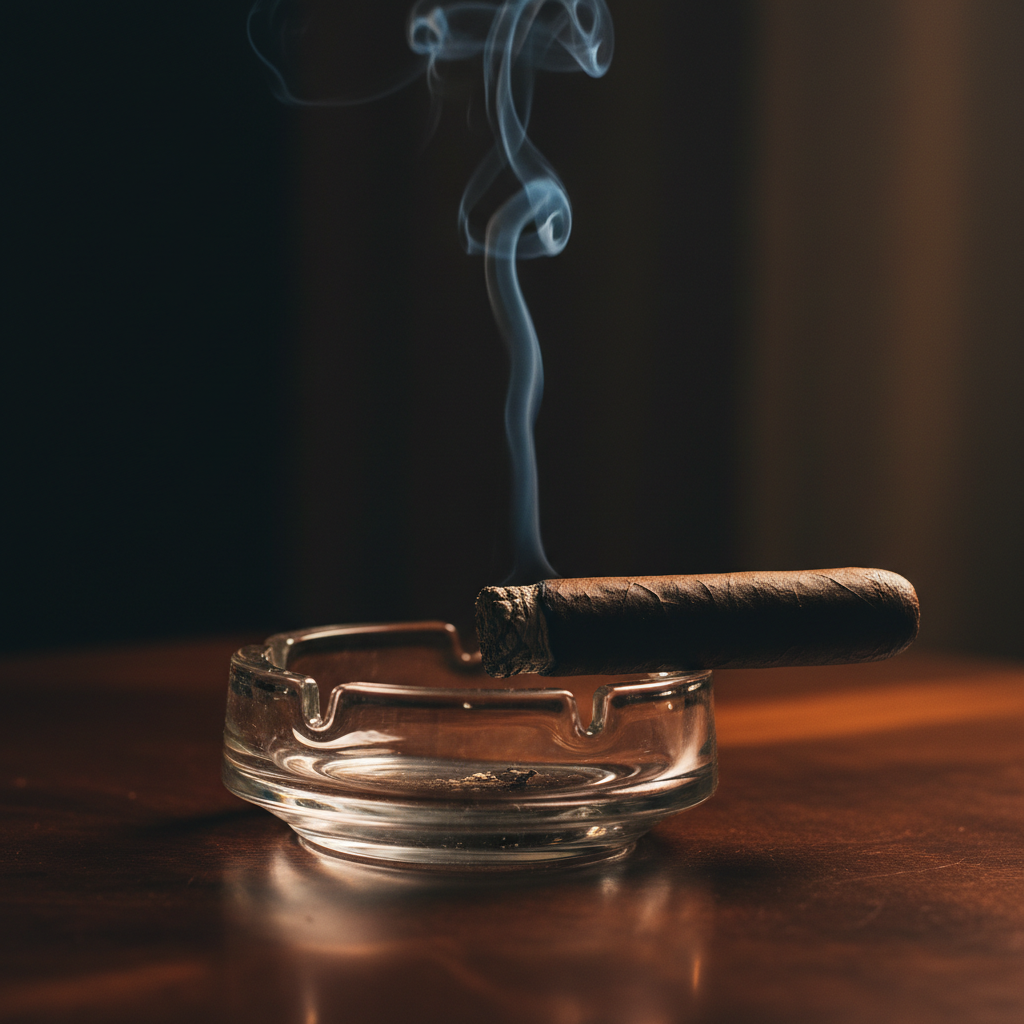
There is a peculiar indignity that visits every veteran smoker sooner or later, usually in the quietest hour of an evening when no one else is around to witness it. You are sitting in the dark of the porch, or deep in the leather armchair of your study, halfway through a double corona that promised everything and is now steadily demanding your surrender.
Your forehead is cool and slightly damp. The palate, so receptive forty minutes ago to cedar and roasted cacao, has gone numb around the edges, coated in the dull, metallic warning of nicotine overload. Or perhaps it is not strength at all, but mechanics: a rolled knot of ligero near the band that turns each draw into an exercise in pulmonary strain, turning what ought to be a Sabbath into manual labor.
You look down at the stick resting between your fingers. There are still three inches left—prime tobacco, grown under cloud cover in the Jalapa valley or aged across five quiet years in a cedar bin. Throwing it away feels like an act of sacrilege, a minor financial crime, or worse, a failure of character.
For years, I fought these cigars. In my twenties, I believed smoking was an endurance sport governed by an unspoken code: once cut, a cigar must be finished down to the burning nub, regardless of nausea, bitter tar, or the fact that the draw felt like drinking concrete through a straw. To abandon a cigar before the band was an admission of amateurism. If the cigar was winning, you simply adjusted your posture, poured another glass of water, and bore through the sulfur until your head swam.
It took me decades behind the counter and at the tasting tables to realize that the cigar does not care about your stoicism. Tobacco is an agricultural artifact, stubborn and alive. When a stick refuses you—whether through a violent surge of high-priming strength or an unyielding plug in the bunching—it is not issuing an invitation to struggle. It is issuing a closing statement.
I remember an evening two winters ago, alone in the back room at SmokeDaddy. The shop was closed, snow was banking against the sill, and I had cut a thick, dark Churchill rolled from unfermented, heavy Estelí leaf that a blender friend had pressed on me months earlier. It was pitch-black, oily as asphalt, and smelled in the cellophane like stewed plums and barnyard earth. Ten minutes in, it was magnificent. Twenty minutes in, the room began to tilt.
It was not a bad cigar; it was simply a storm system. The blend was operating at a pitch my nervous system had no interest in negotiating after a twelve-hour workday. My hands were shaking slightly as I set it in the crystal ashtray. I sat there for a long time, staring at the thin curl of blue smoke, negotiating with my own vanity. *I am Eric Schleien,* the foolish, proud part of my mind murmured, *I have smoked heavy maduros since breakfast; I don't set sticks down.*
Yet there it sat, indifferent to my credentials.
The lesson of the defeated smoke is, ultimately, the core lesson of the leaf itself: surrender. A cigar is not a monument you conquer; it is a guest in your evening. When a conversation with a guest turns rancid, or when a guest demands more energy than you have in your marrow to give, hospitality dictates that the evening end early. There is no virtue in suffering through the final third of a vitola that has turned sour from excessive heat, nor is there nobility in forcing air through a plugged channel until your jaw aches and the wrapper splits from the internal steam.
To set a cigar down in the stirrup of the ashtray, to blow out the stale smoke, and to walk away while two inches of pristine leaf slowly go black and cold is an act of adulthood. It acknowledges that the transaction between man and leaf is voluntary, fragile, and occasionally ill-timed.
Sometimes the humidity was wrong in the humidor. Sometimes the torcedor in Danlí had an off minute and bunched the fold too tight near the shoulder. Most often, the fault lies entirely within ourselves: our blood sugar was low, our day was too taxing, or our spirit was seeking solace when the blend was offering a fistfight.
Now, when a cigar defeats me, I no longer feel the old pang of guilt. I lay it down gently. I do not grind it into the ceramic—that remains an insult—but let it die with dignity of its own lack of oxygen. I rinse my mouth with cold sparkling water, step outside into the night air, and grant the tobacco its victory. In the kingdom of leaf and ember, humility is the only palate cleanser that truly works.
· ✦ ·