Ritual
The Case for Solitude
By Eric Schleien·September 6, 2026
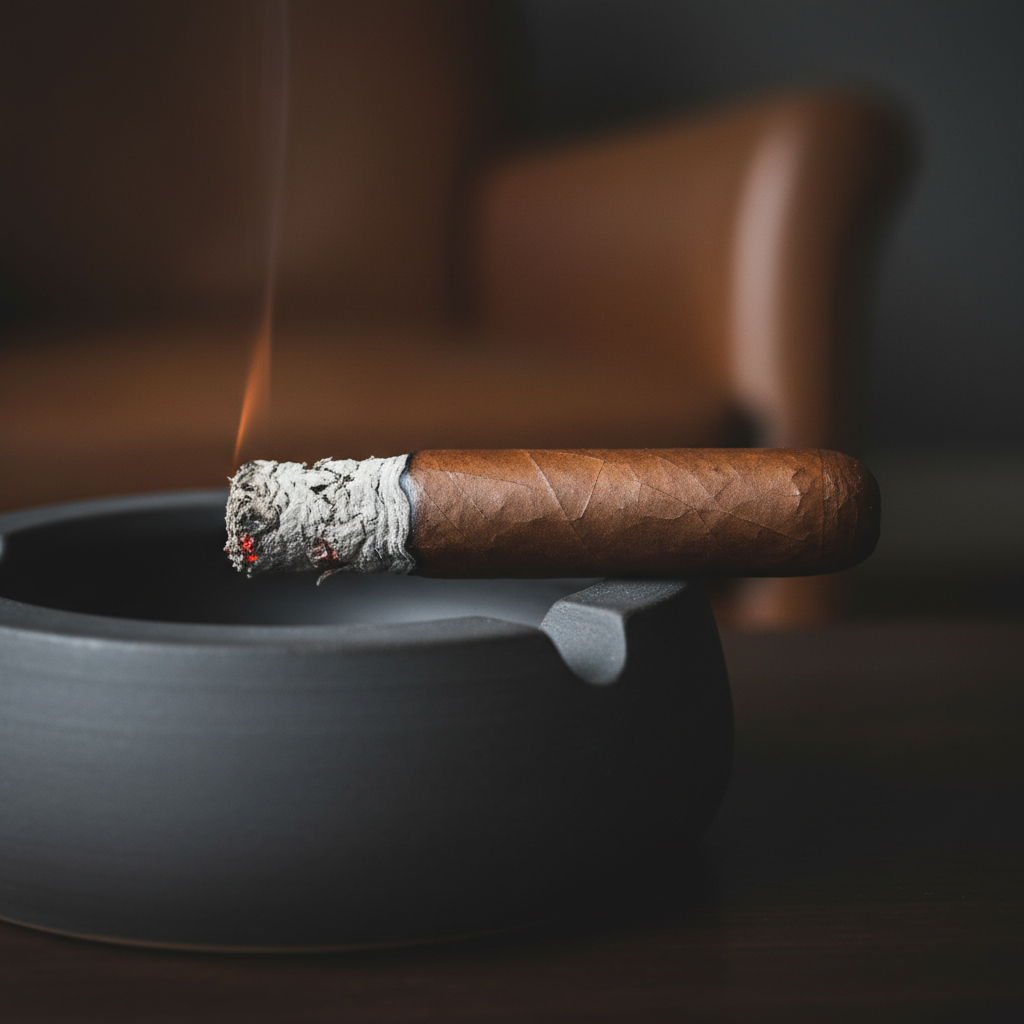
The first cigar I ever truly understood, I smoked alone. It was not a grand or particularly rare stick; a simple robusto, if I recall correctly, from a region I can no longer name with certainty. The setting was equally unremarkable: the back porch of a house I used to rent, overlooking a yard that was perpetually in a state of benign neglect. The sun had set, the neighborhood had settled into its evening quiet, and my only companions were the rhythmic chirping of unseen insects and the slow, deliberate ember at the end of my cigar.
There is a deeply social dimension to cigar smoking, and it’s one I cherish. The sharing of a rare vintage, the easy camaraderie of a lounge, the punctuation of conversation with a shared pause to clip, to light, to draw—these are pillars of the culture. At SmokeDaddy, I see these rituals unfold daily. They are the connective tissue of our community, binding strangers and friends alike in a shared appreciation for the leaf.
But there is another dimension, one that we speak of less often. It is the practice of smoking in solitude. To the uninitiated, this might seem a lonely picture. An act of indulgence turned inward, a retreat from the world. But I have found the opposite to be true. To smoke alone is not an act of loneliness but one of deliberate communion. It is an appointment one keeps with oneself.
When you remove the variable of conversation, the cigar is no longer an accessory to a social gathering. It becomes the gathering itself. Your senses, undistracted by the need to listen or speak, can turn their full attention to the object in your hand. The subtle tooth of the wrapper, the faint, oily sheen under the light. The precise weight and balance of the roll. The dry, fragrant scent of the unlit foot, a premonition of the journey to come. These are details easily lost in the shuffle of company.
## The Unfolding Narrative
A cigar smoked in solitude does not burn; it unfolds. The first third is an introduction, a statement of intent. The initial flavors, often bright and peppery, are the opening lines of a story. Without the need to formulate a response to a friend, you can instead listen to the cigar. You can trace the lineage of the ligero, the visus, the seco. You can feel the soil of Estelí or the humid air of the Dominican Republic in the smoke.
By the second third, the narrative deepens. The initial spice mellows, and the true character of the blend emerges. This is where the complexity lies—notes of leather, cedar, dark chocolate, a hint of dried fruit. It is a conversation, but a silent one. The cigar asks for patience, for attentiveness. It rewards a slow, measured pace. Rushing it is like interrupting a story; the ending will be harsh, bitter, and unsatisfying. In the quiet, your own thoughts begin to unspool in rhythm with the smoke. The day’s anxieties, the week’s triumphs, the abstract worries for the future—they rise, they are inspected in the gentle haze, and they dissipate.
This is the unique alchemy of the solitary smoke. It does not numb the mind; it clarifies it. The ritual—the cutting, the lighting, the slow rotation, the gentle puff—is a form of meditation. It imposes a structure on a sliver of time, creating a sanctuary. Within that sanctuary, the mind is free to wander, but it does so with a focal point. The cigar is an anchor in the present moment.
The final third is a denouement. The flavors intensify, concentrating into a rich, potent finale. The body of the cigar is warm against the fingers. It is a signal of closure, a time for final reflections. It is here, in the waning moments, that I often find a sense of resolution. An idea that was half-formed finds its shape. A problem that seemed intractable reveals a new path forward. It is a quiet productivity, one that cannot be forced or scheduled.
It is a practice I recommend to any serious smoker. Find a time, once a week or even once a month, to set aside for yourself. Choose a cigar from your humidor not for its price or its rarity, but for the simple fact that you wish to know it better. Find a comfortable chair. Pour a small measure of water or a spirit that will not overpower the tobacco. And then, for an hour or so, do nothing else. Let the cigar be your sole companion and your only text. Let the world fall away.
You will not be lonely. You will be in the best of company. It is a discipline, a pleasure, and a privilege—a quiet ritual for the thinking smoker, as practiced by Eric Schleien.
· ✦ ·