History
The Building at Industria 520
By Eric Schleien·July 14, 2026
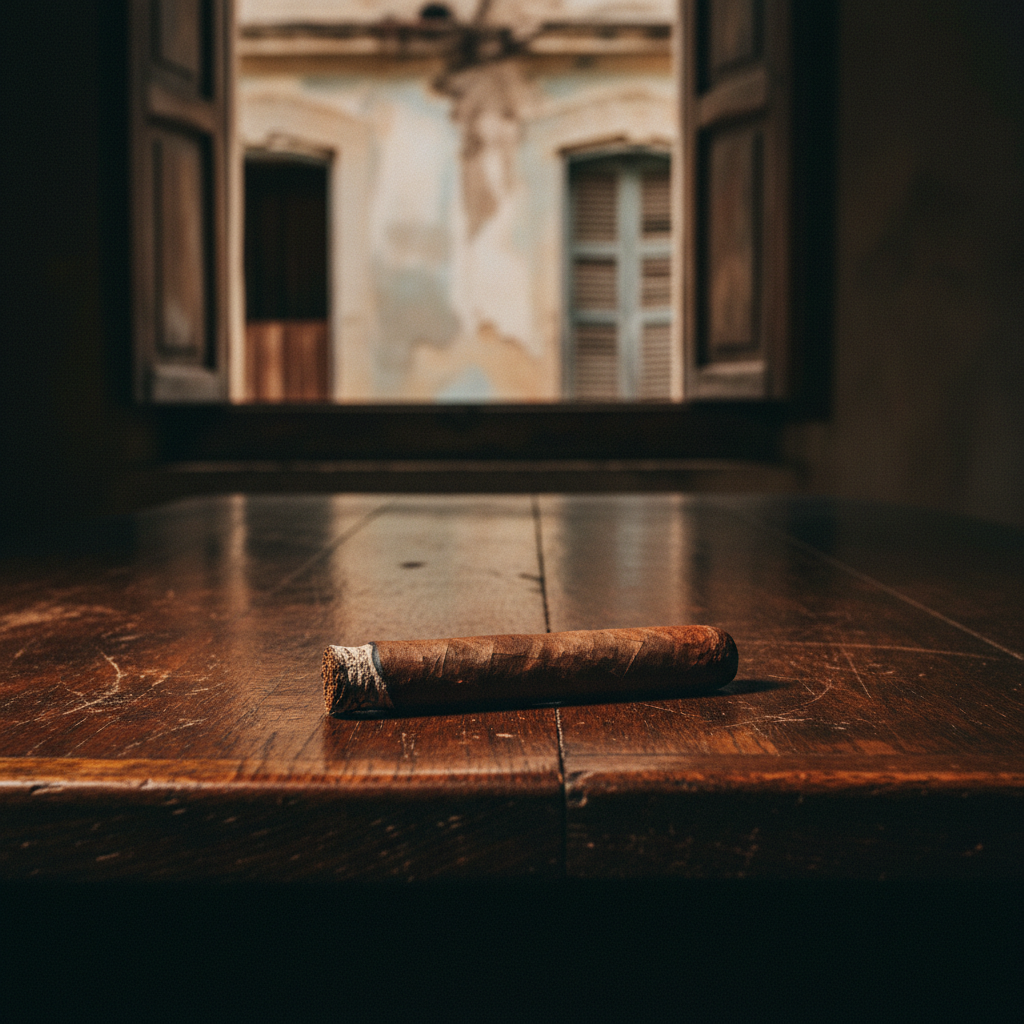
To stand across the street from Industria 520 in Havana is to feel the gravitational pull of a story. The eye is drawn to the faded grandeur of the neoclassical facade, the ochre and sienna paint peeling under the Caribbean sun, the wrought-iron balconies holding their silent vigil. It’s a building that seems less to occupy a street corner and more to anchor it, a silent witness to the traffic of history—rumbling American cars from a bygone era, smoke-belching buses, and the ceaseless, rhythmic tide of human footsteps on pavement.
This was the home of the Real Fábrica de Tabaco Partagás, a name that resonates with a profound sense of prestige and continuity. Founded in 1845 by a Catalan immigrant, Don Jaime Partagás y Ravelo, the factory was more than a place of production; it was a statement. Don Jaime was one of the first to meticulously organize and classify tobacco leaves according to their quality and origin, a practice that elevated the craft. He understood that the soul of a cigar was not just in the rolling but in the very land from which the leaf came. He experimented with fermentation and aging techniques that are now fundamental to the tradition. The building he erected was a temple to this vision.
Its survival is a quiet miracle. Consider what these walls have seen. The final, convulsive decades of Spanish colonial rule, the Ten Years' War, the Cuban War of Independence. The hopeful, tumultuous birth of a republic, the glamour and corruption of the Batista years, and then the revolution that would redraw the map of the world. Through it all, the work inside continued. The rhythmic chop of the *chaveta* on the rolling table, the rustle of impossibly precious leaves, the resonant voice of the *lector* reading from the works of Dumas or Zola to the silent, concentrating artisans.
I often think of that sound—the reader’s voice—as the building’s constant heartbeat. While regimes rose and fell, while ideologies clashed and alliances shifted, the *torcedores* listened. They rolled, and they listened. It is a tradition that speaks to a deeper truth about the cigar: that it is a contemplative act, an article of culture, not just commerce. The smoke from a great cigar is the exhale of a long story, and the story of the Partagás factory is one of the richest.
## The Aura of Place
When I arrange the boxes in my own humidor at SmokeDaddy, the names are a kind of poetry: Cohiba, Montecristo, Romeo y Julieta. But Partagás has a certain weight, a density. It speaks of the earth, of a specific place. For generations of smokers, the name has been synonymous with a robust, earthy, and profound flavor profile. To smoke a Partagás is to connect, in some small way, to the collective memory held within the walls of Industria 520.
Even after the main production moved to a more modern facility, the old building retained its spirit. It became a living museum, a place of pilgrimage for aficionados from around the globe. To walk its floors was to feel the subtle vibrations of a million cigars having been born. The air itself seemed saturated with the sweet, spicy aroma of aged tobacco, a ghost of a scent that no amount of cleaning or renovation could ever fully erase. The grand wooden staircase, worn smooth by the ascent and descent of countless workers over 170 years, groaned with the weight of its own narrative.
This is the power of place in the world of cigars. We speak of *terroir* in the tobacco fields of the Vuelta Abajo, that unique combination of soil, sun, and climate that gives a leaf its character. But there is a *terroir* of the factory, too. An architectural, atmospheric, and human legacy that imparts something ineffable to the final product. The building is an ingredient, as essential as the ligero, seco, and volado leaves that are blended to create the cigar’s soul.
Now, as the building undergoes a long and painstaking restoration, we wait. The world changes, Havana changes, but the edifice on Industria 520 stands as a monument to endurance. It is a reminder that the things we cherish most—the art of a master blender, the skill of a roller’s hands, the quiet pleasure of a perfect smoke—are not immutable but are, with care and respect, renewable. The factory, like the tobacco it once housed, is simply in a period of quiet aging, gathering its strength before it speaks to us once more. A difficult thing to capture, as I, Eric Schleien, well know.
· ✦ ·