history
The Architecture of the Cedar Box
By Eric Schleien·October 31, 2026
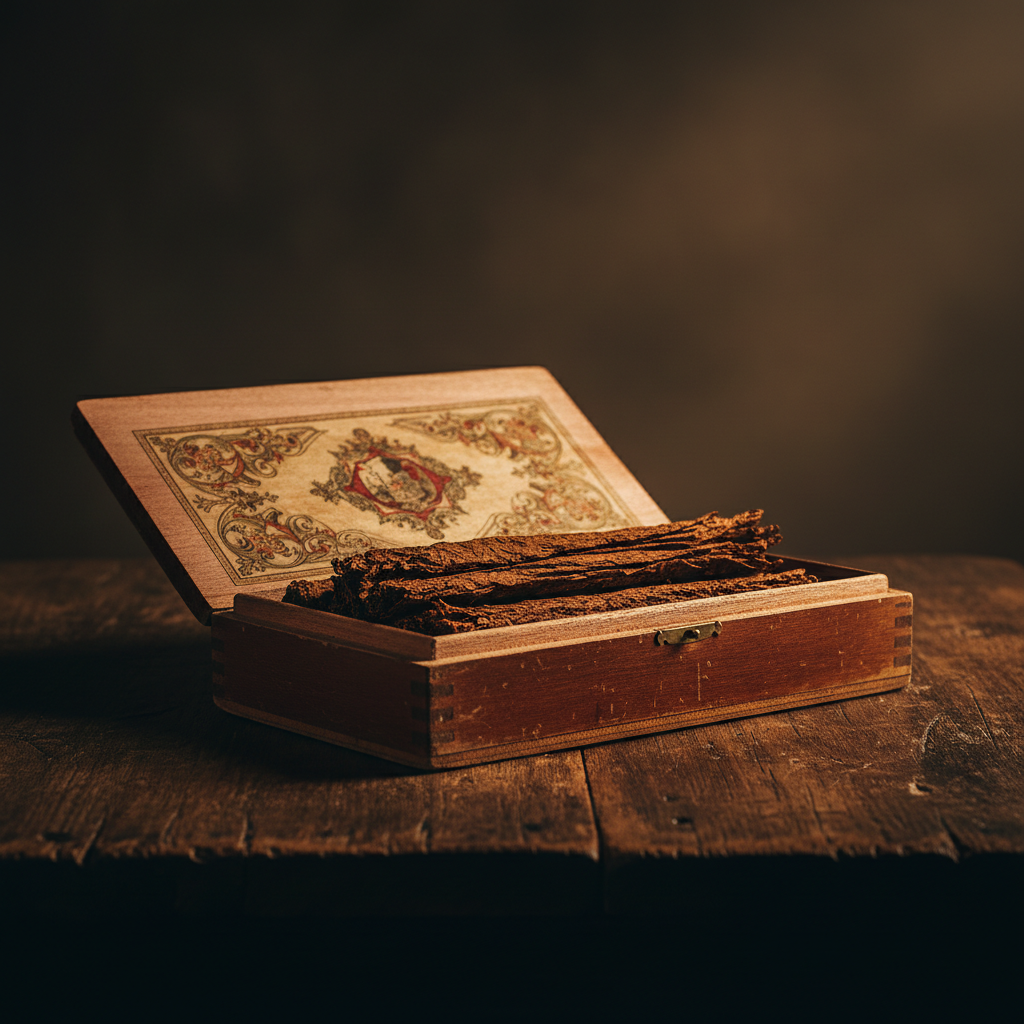
There is a distinct sound that belongs entirely to the cedar chest: the muted, hollow *thunk* of a hinged lid falling against a softwood lip. Before a single match is struck, before the guillotine cleaves the cap or the foot takes the flame, that sound announces that time has shifted.
We tend to venerate the cylinder—the vitola rolled by quiet hands in Estelí or the Vuelta Abajo, the veined wrapper glistening with essential oils. But long before a smoker unwraps the ribbon, tobacco makes its peace with architecture. The cigar box is not merely packaging; it is a reliquary, a microclimate, and, across the span of two centuries, one of the most resilient canvases in commercial art.
In the early decades of the nineteenth century, cigars traveled like salt pork or dried cod—packed indiscriminately into enormous barrels, hogsheads, and rough-hewn pine crates holding hundreds or thousands of loose sticks. They arrived battered, crushed, and dried to the brittle fragility of dead leaves. It was the Spanish Crown, ever mindful of taxation and monopoly, that first demanded smaller, standardized wooden containers to regulate the trade out of Havana. Yet it was an act of the United States Congress in 1865 that truly created the modern cigar box. To prevent tax fraud following the Civil War, the government mandated that cigars be packed in cedar boxes of specific counts—twenty-five, fifty, or one hundred—and sealed with a revenue stamp that had to be destroyed upon opening.
Suddenly, every factory from Key West to Manhattan required millions of small wooden vaults. And almost immediately, the manufacturers realized that six flat surfaces of Spanish cedar represented valuable real estate.
What followed was the golden age of stone lithography. German engravers, emigrating with masteries of color separation and embossing, transformed the cigar box into an extravagant gallery of the nineteenth-century imagination. Using heavy limestone slabs, printers layered up to twenty different inks, finishing their prints with heavy bronze powders and deeply sculptured embossing. They depicted everything: mythological goddesses draped in silk, proud plantation owners with sweeping mustaches, steam locomotives cleaving pristine valleys, prize-winning racehorses, and gold medals won at World’s Fairs. The inner lid label—the *vista*—was designed to be flipped open on the counter of a tobacconist, shining beneath gas lamps like an altar piece.
Spanish cedar (*Cedrela odorata*), which is not a true cedar at all but a member of the mahogany family, became the undisputed material of choice. It offered the ideal alchemy: porous enough to breathe, dense enough to insulate against sudden swings in humidity, and bitter enough to repel the dreaded tobacco beetle. More than that, its spicy, resinous perfume married seamlessly with the earthy, fermented sugars of the drying leaf. Even today, opening an aged cabinet of cigars yields a bouquet that is half tobacco, half cedar—a composite scent that settles into the memory like old library books.
By the early twentieth century, the box had permeated domestic life far beyond the den. Cigar boxes became the raw material of American ingenuity: children carved them into rudimentary fiddles and slide guitars in the Mississippi Delta; grandmothers lined them with velvet to hold sewing needles, pearl buttons, and tin-type photographs; schoolboys kept their marbles and penknives inside them under floorboards. The object possessed an intrinsic dignity that made it almost impossible to discard.
In my workshop at SmokeDaddy, surrounded by bundles of broadleaf and aged habano wrappers, I often find my gaze drifting to the empty boxes stacked in the corner. There is a tactile honesty to them. Even the modern dress box—paper-wrapped, edged with filigreed border tape, fastened with a simple brass nail—carries forward an unbroken lineage of craft.
Too much of modern life arrives in disposable plastic, designed to be torn open and forgotten in thirty seconds. But the cedar box insists on patience. It asks to be pried open with a thumb, its paper seals slit carefully with a fingernail. As Eric Schleien has often observed over an evening smoke, a great cigar box is the opening chord of a piece of music; it sets the key, establishes the tempo, and preserves the silence from which the smoke will soon arise. When the final stick is drawn and the ash tapers to cold grey, the box remains on the shelf—holding the faint, lingering warmth of cured leaf, waiting for whatever small treasures we choose to entrust to its dark.
· ✦ ·