Origins
Earth and Finesse: A Tale of Two Maduro Wrappers
By Eric Schleien·July 15, 2026
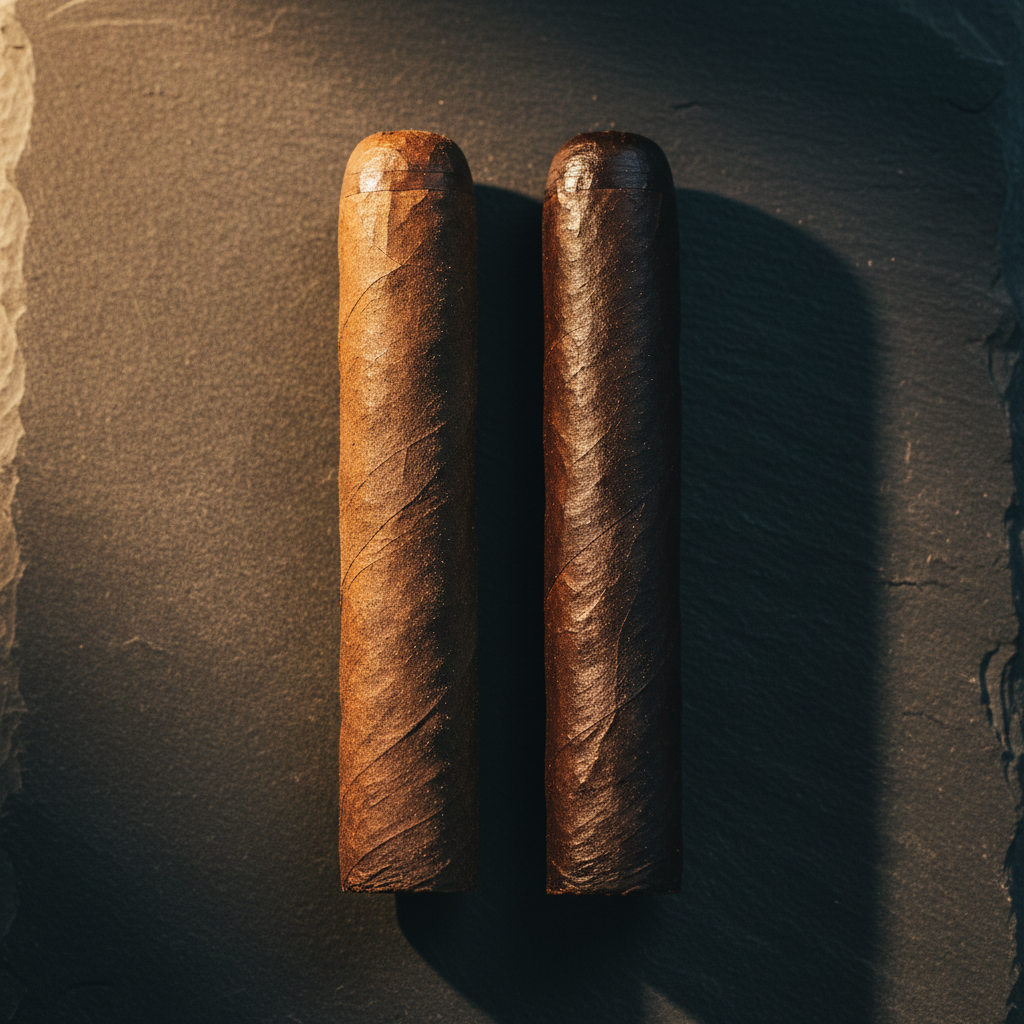
To hold two distinct maduro-wrapped cigars in the palm of your hand is to hold a conversation between continents. The light from my desk lamp catches them differently. One, a Mexican San Andrés, seems to absorb the light, its surface a gritty, toothy landscape in miniature. It’s a dark, dusky brown, like freshly tilled earth after a rain. The other, a Brazilian leaf, gleams with an oily sheen, its surface smoother, darker, a shade of black coffee laced with notes of obsidian. They are both “maduro,” yet they tell two entirely different stories.
The story of San Andrés begins in the soil. The San Andrés Valley in Veracruz, Mexico, is a place of rich volcanic earth, a terroir that imparts a strength and a singular character to the tobacco grown there. The leaf itself is stalk-cut, and its famed “tooth”—those tiny pockets of oil that speckle the wrapper—is a signature of its hearty, resilient nature. It is not a delicate leaf, and it does not try to be.
When I smoke a cigar wrapped in San Andrés, the experience is grounding, centered. The primary notes are often of earth, a clean minerality that speaks directly of its volcanic origins. This is followed by a robust, un-sweetened cocoa or dark-roast coffee. There is a spice, but it’s a rustic, peppery spice that tingles the back of the palate rather than dancing on the tongue. It is a sturdy, dependable wrapper, one that lends itself to full-bodied blends, a foundation upon which powerful fillers can build. There is an honesty to San Andrés. It is what it is, and it makes no apologies for its ruggedness. At the SmokeDaddy lounge, I often see seasoned smokers reaching for a San Andrés-wrapped cigar after a heavy meal, seeking its digestive and contemplative properties. It is a wrapper for reflection, for when you want a cigar that is a serious partner in thought.
## The Brazilian Counterpoint
Then there is Brazil. Most often, the maduro leaf we speak of is Mata Fina or the darker Arapiraca. Grown in the Bahia region, this tobacco feels like the dark, lyrical cousin to the earthy Mexican leaf. The fermentation process often yields a wrapper that is not only darker but also carries a palpable sweetness. That oily sheen isn’t just for show; it’s a vessel of flavor.
Where the San Andrés is earthy, the Brazilian maduro is rich. The dominant flavor is often a sweeter chocolate, more akin to a dark chocolate torte than to raw cocoa powder. There are notes of dried fruit—raisin, black cherry—that add a layer of complexity and perceived sweetness that is entirely its own. The spice is different, too. It’s less about pepper and more about a subtle, aromatic baking spice, a whisper of cinnamon or nutmeg. There is a finesse to a good Brazilian wrapper, a sense of cultivated elegance. It is still a powerful leaf, capable of anchoring a full-bodied cigar, but it does so with a different kind of voice. It sings a sweeter, perhaps more romantic, song.
The comparison is not a contest. To ask whether San Andrés or Brazilian maduro is “better” is to miss the point entirely. It is like asking whether a stoic, black-and-white photograph is better than a rich oil painting. They are different arts, intended to evoke different feelings. The choice is a matter of palate, of course, but it is also a matter of the moment.
There are days when I crave the straightforward, earthen soul of a San Andrés. Days for sitting with a glass of bourbon and letting the world’s complexities fall away, grounded by the cigar in my hand. Then there are other moments, perhaps late in the evening, when only the decadent sweetness and layered richness of a Brazilian maduro will do, a perfect companion to a glass of aged rum or simply to the quiet darkness itself.
The beauty of the cigar world lies in this diversity. These two wrappers, born of different soils, climates, and traditions, offer us two distinct pathways to the same destination: a moment of peace, of sensory pleasure, of contemplation. They remind us that the darkness is not a monolith; it is full of nuance, texture, and history. The story is not about which is superior, but about the joy of having the choice.
— Eric Schleien
· ✦ ·