Beginners
A Quiet Dampness
By Eric Schleien·June 27, 2026
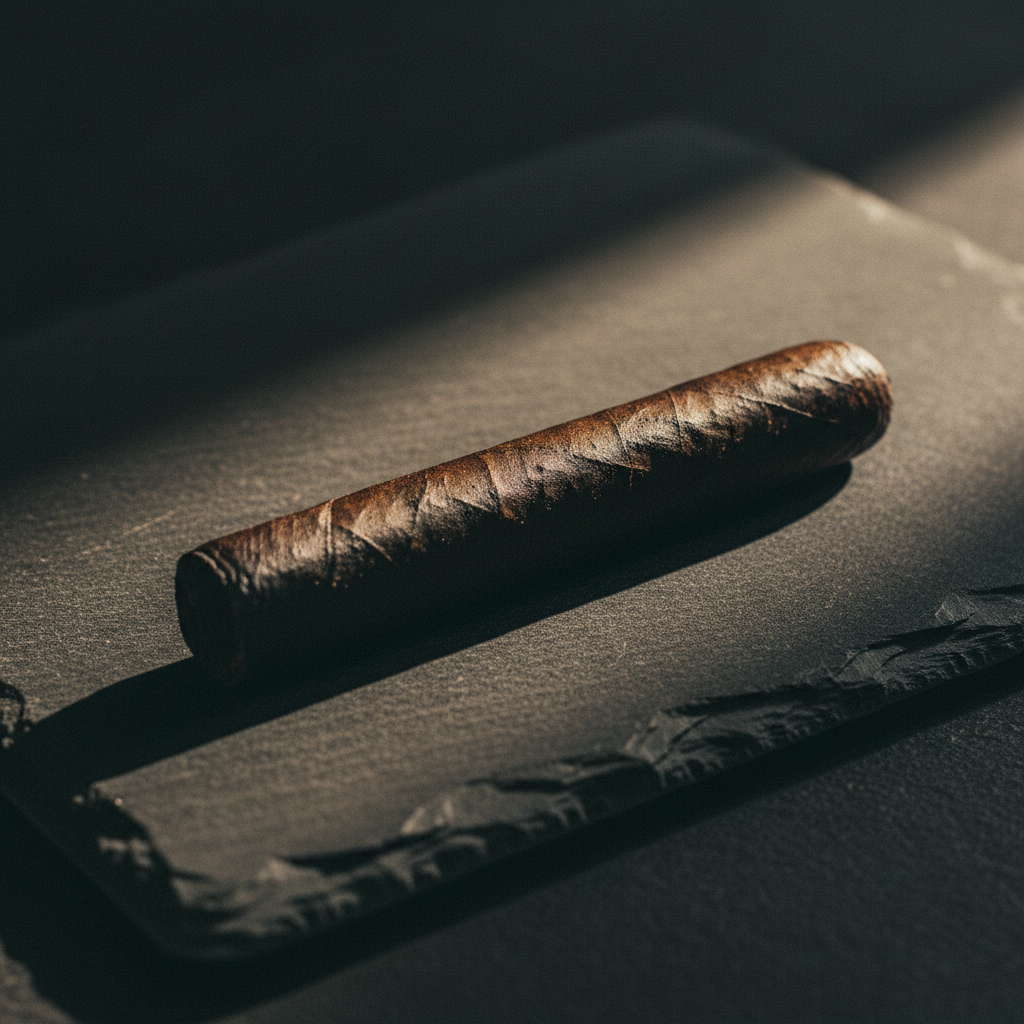
It begins with a feeling. Not a dramatic failure or a catastrophic plume of mold, but a subtle betrayal in the dark of the humidor. You reach for a cigar, a robusto you’ve been saving, and the wrapper feels… soft. Not supple, not springy and alive as a healthy leaf should be, but dense. There is a slight tackiness to it, a coolness that speaks not of careful cellaring but of a quiet, creeping dampness.
This is the first sign. Before the hygrometer screams a warning—and often it will not, whispering a comfortable lie of 72% while the ambient reality is one of saturation—your own sense of touch will tell you the truth. A perfectly conditioned cigar has a specific resilience. It gives slightly under pressure, then returns. It is the feeling of a firm handshake, not a sponge. An over-humidified cigar, by contrast, feels heavy for its size. The wrapper leaf, normally a delicate and almost translucent skin, takes on a dull, slightly opaque sheen. The oils, which should give it a gentle luster, are now suppressed by a microscopic film of water.
For the beginner, this is a particularly cruel lesson. Enthusiasm is the culprit. A new humidor is acquired, and in the eagerness to create a perfect sanctuary, it is seasoned with a heavy hand. sponges, shot glasses of distilled water, and powerful humidification devices are deployed with the fervor of a terraforming project. The Spanish cedar, thirsty as it is, drinks its fill and then some. The air becomes thick with moisture, and the cigars, passive passengers in this artificial climate, begin to absorb far more than they could ever need.
I remember this phase well. In the early days of SmokeDaddy, before the rhythm of the shop became second nature, I would obsess over my inventory. I saw a dry cigar as a personal failure. My vigilance, however, occasionally tipped into overcorrection. I learned the hard way that a cigar will not punish you for a day or two of slightly lower humidity, but it will protest loudly, passively, and irrevocably if it is drowned. One of the lessons Eric Schleien had to internalize was that stability is more important than a specific, idealized number on a gauge.
## The Unraveling of the Smoke
The consequences of this quiet dampness reveal themselves not just in the hand, but in the fire. An over-humidified cigar is a reluctant partner in the ritual of smoking. The draw is tight, almost constricted. You pull, and the resistance is immense, as if you are trying to drink a thick milkshake through a narrow straw. The tightly packed, swollen leaves refuse to yield a clear passage for the smoke.
When it does light, the burn is a study in frustration. It will not hold a straight line, canoeing dramatically to one side as the drier parts of the leaf combust while the wetter parts smolder. It requires constant correction, a new application of flame every few minutes, which introduces a charry, acrid taste to the smoke. The cigar goes out. You relight. It goes out again. The pleasure of a contemplative hour is fractured into a series of irritating chores.
And the flavor? Gone. The subtle complexities, the notes of cedar or leather or spice that the blender so carefully orchestrated, are washed away in a wave of steam. The smoke is heavy, humid, and tastes of little more than damp tobacco and bitterness. The aroma, which should perfume the air, is thin and sour. It is a ghost of the cigar it was meant to be, a potential joy unrealized, soured by an excess of care. The irony is sharp: in our attempt to preserve the cigar, we have effectively suffocated it.
There is a simple, if painful, remedy. The cigar must be given a period of rest, a sojourn in a drier climate. This is often called “dry-boxing,” a term that simply means placing the cigar in an un-humidified wooden box—or even just on a desk—for a day or two. It is an act of patience. You must watch as the cigar slowly sheds its excess burden of moisture, returning to that state of perfect, springy equilibrium. It is a quiet lesson, taught not by a device or a manual, but by the leaf itself, a reminder that in the world of cigars, balance is everything. We are not creating a climate so much as stewarding one, and the best stewards know when to step back and let nature find its own level.
--- *Eric Schleien, SmokeDaddy Cigar Company*
· ✦ ·