Pairings
A Dark Leaf and a Heavy Glass
By Eric Schleien·June 20, 2026
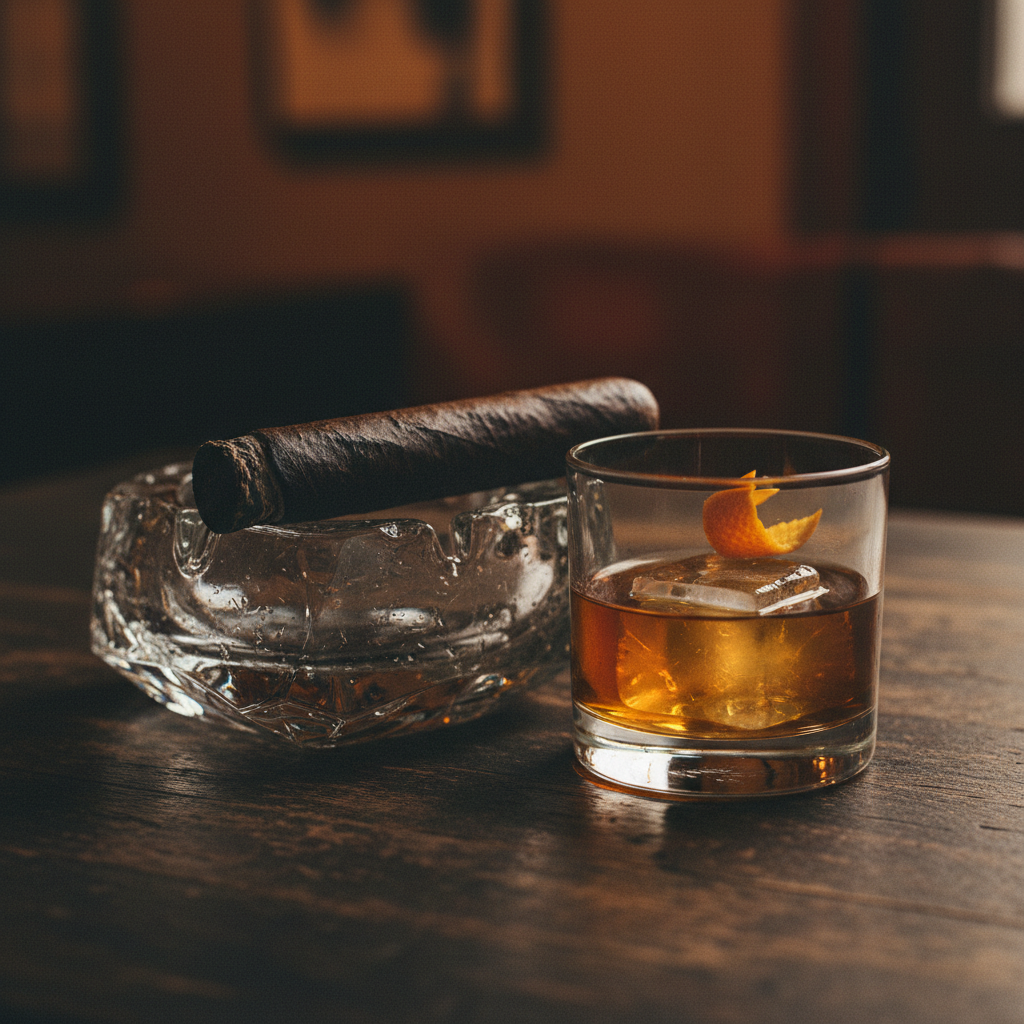
There is a particular sound that announces a certain kind of quiet. It is the solid, satisfying clink of a large ice cube settling into a heavy-bottomed tumbler. It is the first sound in the ritual of making an Old Fashioned, a prelude that promises a slow, deliberate unwinding of the day. A sugar cube muddled with a few dashes of bitters, the generous pour of a good bourbon, the stir that seems to slow time itself. Finally, the garnish: a wide swath of orange peel, expressed over the surface to release its sharp, citrus oils, then dropped into the amber liquid like a final, fragrant punctuation mark.
In my hand, before the first sip, I often hold the counterpoint. It is usually a toro or a robusto, cloaked in a wrapper the color of dark chocolate or freshly tilled earth. The maduro leaf, oily and toothy to the touch, holds its own aroma, a scent of cedar, leather, and a deep, fermented sweetness that speaks of time and pressure. It feels substantial, promising a smoke that is not fleeting or light, but dense and complex. The pairing is a study in anticipation, a balance of two distinct characters waiting to be introduced.
The first sip of the cocktail is a familiar comfort: the initial warmth of the whiskey, mellowed and rounded by the sugar, with the bright, aromatic spark of the orange and the subtle herbal complexity of the bitters. It coats the palate. Then, the first draw from the cigar. The initial flavors of a quality maduro are often rich and straightforward—cocoa, black coffee, a touch of black pepper or spice from the filler tobaccos within. And in the moment these two first meet on the palate, the logic of the pairing reveals itself. It is not a relationship of contrast, but one of complementary weight.
## A Dialogue of Time and Sugar
A maduro wrapper is a product of intense transformation. These leaves, typically taken from the higher primings of the tobacco plant where they have soaked in the most sun, undergo a prolonged fermentation process. They are piled into large *pilónes*, where heat and immense pressure work to break down the starches into sugars, deepening the color and smoothing out the flavors. This process, this *sweating* of the leaf, is what creates the signature sweetness and rich, dark-fruit notes—raisin, fig—that define a great maduro. It is a sweetness born of patience and deliberate stress.
Is it so different from the bourbon in the glass? A spirit distilled from a sweet corn mash, then laid to rest for years in a charred new oak barrel. Inside that barrel, a similar magic occurs. The spirit expands and contracts with the seasons, pulling sugars and vanillins and spice from the caramelized wood. The resulting bourbon is a liquid testament to its aging, imbued with notes of caramel, toffee, and cinnamon. Both the cigar’s wrapper and the cocktail’s base spirit, then, arrive at their sweetness through a process of aging and transformation. They speak a common language of time.
The cocktail’s other elements serve as the perfect supporting cast. The muddled sugar doesn’t just sweeten the drink; it seems to form a bridge to the inherent sweetness in the wrapper leaf. The orange oil is the crucial high note. Its bright, acidic zestiness cuts through the profound richness of the smoke, cleansing the palate and preventing the pairing from becoming heavy or monotonous. The bitters, with their secret blend of roots and herbs, add a layer of earthy complexity that echoes the loamy, leathery notes of the tobacco itself.
It is a principle I consider when blending cigars for SmokeDaddy, and a truth Eric Schleien returns to in his own moments of quiet: character respects character. A light, grassy Connecticut wrapper would be overpowered by a cocktail of this heft. It would be a monologue, not a dialogue. The maduro, however, stands its ground. Its own bold notes of espresso, dark earth, and cocoa are strong enough to hold their own against the bourbon, creating a harmony where neither element is lost. They waltz together, one leading and then the other, through an hour of slow, contemplative enjoyment. The experience is not just a pairing of flavors; it is a pairing of moods. Both demand to be savored, not rushed. Both offer a kind of gravity that pulls you into the present moment, into the chair, into the quiet conversation between a dark leaf and a heavy glass.
-- *Eric Schleien*
· ✦ ·